


Blog
Connections Hint Forbes: Networking Insights


We’ve all been there: standing in a crowded room with a lukewarm drink, wondering how to talk to a stranger without feeling “icky.” Or maybe you’re staring at a LinkedIn profile, hovering over the “Connect” button, but you don’t know what to say. Networking often feels like a chore, but it is actually the secret sauce to professional success.
When people search for a connections hint forbes, they are usually looking for two things: a way to solve the popular NYT Connections game or, more importantly, a way to crack the code of human networking. This guide focuses on the latter—giving you the connections hint forbes: networking insights you need to build a powerful circle of contacts in 2026.
Connections Hint Forbes
Networking has become a crucial aspect of personal and professional success in the modern world. As industries become more interconnected and the professional landscape increasingly competitive, having strong and strategic connections can make all the difference. According to experts, the ability to network effectively can lead to career advancement, new business opportunities, and personal growth. The aim of this article is to provide insights into how networking works, why it is important, and the best practices you can use to develop and maintain meaningful connections. We will break down actionable strategies, share expert advice, and outline the key factors that can help you improve your networking skills and grow your professional network.
What is the Connections Hint Forbes?
In the business world, a “Forbes Connection” isn’t just about being on a list. It’s about the strategic way top-tier professionals build their networks. Forbes often highlights that the best networkers aren’t the ones who hand out the most business cards. They are the ones who provide the most value.
Networking has moved away from “transactional” exchanges. It is no longer about “what can you do for me?” Instead, the modern connections hint forbes is all about “how can we grow together?”
Understanding the Importance of Connections Hint Forbes

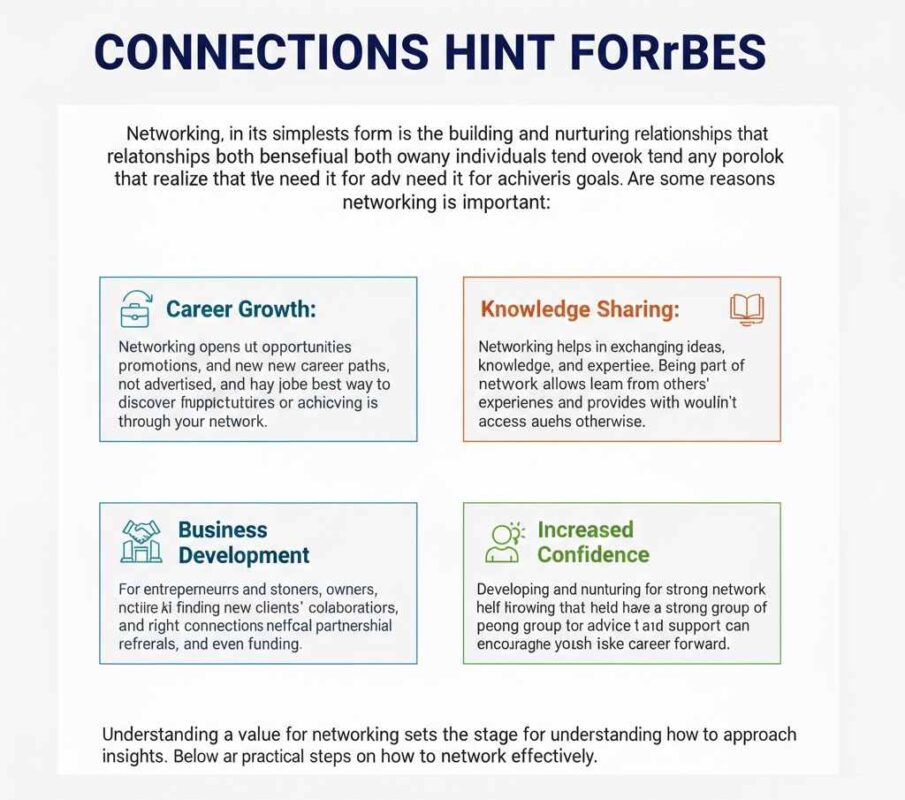
Networking, in its simplest form, is the process of building and nurturing relationships that can be beneficial both personally and professionally. Many individuals tend to overlook the power of networking until they realize that they need it for advancing their careers or achieving specific goals. Here are some reasons why networking is important:
- Career Growth: Networking opens up opportunities for promotions, collaborations, and new career paths. Many job opportunities are not advertised, and the best way to discover these opportunities is through your network.
- Knowledge Sharing: Networking helps in exchanging ideas, knowledge, and expertise. Being part of a network allows you to learn from others’ experiences and provides you with insights you wouldn’t have access to otherwise.
- Business Development: For entrepreneurs and business owners, networking is crucial for finding new clients, collaborators, and partners. The right connections can lead to mutually beneficial partnerships, referrals, and even funding.
- Increased Confidence: Developing and nurturing a strong network can help build self-confidence. Knowing that you have a strong group of people you can turn to for advice and support can encourage you to take risks and push your career forward.
Understanding the value of networking sets the stage for understanding how to approach building relationships. Below are practical steps and insights on how to network effectively.
Building the Foundation: How to Start Networking
The first step in networking is to create a solid foundation. This involves identifying your goals, understanding the value you bring to a relationship, and choosing the right platforms for networking. Here are a few key points to consider:
Identifying Your Networking Goals
Before reaching out to people, you need to clearly understand what you want from networking. Your goals can include finding a mentor, seeking new career opportunities, or expanding your knowledge. Once your goals are clear, it becomes easier to identify who you should connect with and why.
Examples of Networking Goals:
- Finding job opportunities
- Gaining insights into an industry
- Connecting with potential business partners
- Seeking advice on a personal project
Evaluating the Value You Can Offer
Effective networking is not just about what you can gain; it’s about the mutual value you can offer. Whether it’s your knowledge, your resources, or your network, always think about how you can give back to those you connect with.
Ways to Offer Value in Networking:
- Share useful articles or research with your connections
- Offer to help someone with their project or challenge
- Introduce connections who could benefit from knowing each other
Choosing the Right Platforms
Different platforms offer different networking opportunities. For instance, LinkedIn is a great platform for professional networking, while Twitter and Instagram can be useful for connecting with industry influencers and thought leaders. Offline networking through events, conferences, and meetups is also essential.
Popular Networking Platforms:
- LinkedIn: For professional connections and job opportunities
- Twitter: To follow and engage with industry experts
- Facebook: For personal connections and niche groups
- Industry-Specific Events: Conferences, webinars, and meetups
The key is to choose the platform where your target audience is most active and where you can genuinely engage with them.
Effective Networking Strategies
Once you’ve established the groundwork, it’s time to dive into effective networking strategies. These strategies will help you build long-lasting relationships and take full advantage of networking opportunities. Here are the strategies to follow:
Personalizing Your Approach
Generic messages or connection requests often get ignored, especially in the online world. Personalizing your approach shows genuine interest in building a connection. A thoughtful message that includes specifics about why you want to connect will make a significant difference.
Example of a Personalized Connection Request:
“Hi Bisma From Gamcore, I recently read your article on [topic], and I was impressed by your perspective. As someone working in [industry], I’d love to connect and learn more from your experience.”
Personalizing messages like this helps set a positive tone for the relationship from the very start.
Building a Relationship, Not Just a Network
Networking isn’t just about collecting business cards or LinkedIn connections. It’s about developing relationships over time. Building rapport with someone involves regular communication, showing interest in their work, and offering support when necessary. Establishing a genuine connection is more important than merely having a large number of contacts.
Ways to Build Relationships:
- Stay in touch: Regularly check in with your contacts and see how they’re doing.
- Offer help: Look for ways to offer value to your connections, even if it’s something small.
- Be sincere: Show genuine interest in people and their work.
Attending Networking Events
In-person events such as conferences, seminars, and meetups provide excellent opportunities for networking. Meeting people face-to-face allows for deeper connections and trust-building. If you are attending a networking event, it’s essential to be prepared.
Tips for Networking at Events:
- Do your research: Know who will be attending and target people you want to connect with.
- Have an elevator pitch: Be ready to introduce yourself quickly and clearly.
- Be approachable: Smile, make eye contact, and listen more than you talk.
Leveraging Social Media
Social media platforms, especially LinkedIn, can be a powerful tool for networking. Regularly post content, engage with your connections, and share your achievements. By showcasing your expertise, you’ll position yourself as a thought leader, making it easier for others to approach you.
Ways to Leverage LinkedIn:
- Share valuable content relevant to your industry
- Join LinkedIn groups and actively participate in discussions
- Regularly update your profile to reflect your latest accomplishments
Maintaining and Nurturing Your Network
Building a network is just the beginning. Maintaining and nurturing that network is where the real value lies. Strong connections take time to develop and require continuous effort. Here are strategies for keeping your network strong:
Regular Communication
It’s crucial to stay in touch with your connections regularly. This doesn’t mean you have to reach out every week, but a friendly message or update every couple of months helps maintain the relationship.
Ways to Stay in Touch:
- Send a follow-up message after meeting someone at an event
- Check in with a brief email or message just to say hi
- Congratulate them on achievements like job promotions or work anniversaries
Show Appreciation
People love feeling appreciated, and showing gratitude can go a long way in strengthening relationships. Whether it’s thanking someone for a referral, a piece of advice, or simply their time, a small gesture of thanks can make a big impact.
Ways to Show Appreciation:
- Send a thank-you note or email after a meaningful conversation
- Acknowledge and celebrate their achievements on social media
- Offer to return a favor when they need help
Be Consistent
Networking isn’t a one-time event; it’s a long-term commitment. Be consistent in nurturing relationships, whether it’s through occasional messages, providing support when needed, or simply maintaining visibility through online interactions.
Networking for Business: Strategic Partnerships
For entrepreneurs and business professionals, networking is not only about building individual relationships but also about creating strategic partnerships. The right partnerships can help you scale your business, expand into new markets, and achieve goals faster.
Finding the Right Business Partners
When looking for business partners, it’s important to evaluate potential collaborators carefully. Ideal business partners should complement your strengths and fill any gaps in expertise or resources.
Key Factors to Consider:
- Shared values and business vision
- Complementary skill sets or resources
- Reputation and credibility in the industry
Collaborating for Growth
Once you’ve established a partnership, the key is to collaborate effectively. Regular communication, clear goal setting, and mutual respect are essential for a successful partnership.
Tips for Effective Collaboration:
- Set clear goals and expectations from the outset
- Communicate regularly to stay aligned on objectives
- Be flexible and open to feedback
Using Networking to Advance Your Career
For many people, networking is the key to career advancement. Whether you’re looking for a new job, aiming for a promotion, or seeking a mentor, your network plays a crucial role. Here are some ways networking can help advance your career:
Job Opportunities
Many job opportunities are never advertised publicly, and the best way to learn about them is through your network. Building relationships with industry professionals can give you access to exclusive job openings and insider information.
How Networking Leads to Job Opportunities:
- Stay in touch with former colleagues who may know of opportunities
- Attend industry events to meet hiring managers and influencers
- Ask for informational interviews to learn about potential roles
Seeking a Mentor
A mentor can provide invaluable guidance and advice throughout your career. Networking can help you find the right mentor who can offer wisdom based on their own experience.
How to Find a Mentor:
- Look for professionals whose careers you admire
- Reach out with a clear and concise message explaining why you would appreciate their mentorship
- Offer something of value in return, whether it’s your help or a fresh perspective
Gaining Career Advice
Networking can also connect you with professionals who can provide valuable career advice. These connections can help you navigate challenges and make informed decisions about your career path.
Ways to Seek Career Advice:
- Attend industry meetups and ask questions during discussions
- Connect with thought leaders on LinkedIn and engage with their content
- Participate in online communities related to your field
Core Pillars of Modern Networking
- Authenticity: People can smell a “sales pitch” a mile away. Being yourself is actually a competitive advantage.
- Value-First Mindset: Before you ask for a favor, think about how you can help the other person.
- Curiosity: Asking thoughtful questions is more powerful than having all the right answers.
Strategic Networking Insights for 2026
If you want to level up your professional life, you need a plan. Based on connections hint forbes: networking insights, here is how to build a network that actually works for you.
| # | Principle | Key Idea | How to Apply | Benefit |
|---|---|---|---|---|
| 1 | The “Golden Circle” Rule | Focus on a small group of high-quality relationships rather than many shallow ones | Build and maintain 10–15 strong connections across different industries who share your values | Strong advocates who support and speak for you when you’re not present |
| 2 | Be a “Dot Connector” | Increase influence by introducing people who can help each other | Thoughtfully connect contacts who could mutually benefit from knowing one another | Positions you as a trusted, influential hub in your network |
| 3 | The “Tell Me More” Technique | Practice active listening instead of self-promotion | Respond with “That sounds interesting, tell me more about that” when others share | Builds trust quickly and deepens professional relationships |
Comparison: Old vs. New Networking
| The Old Way (Pre-2024) | The New Way (2026) |
| Collecting hundreds of LinkedIn “friends.” | Building 15-20 deep, meaningful bonds. |
| Leading with your job title and “pitch.” | Leading with curiosity and shared interests. |
| Only reaching out when you need a job. | Touching base regularly just to say hello. |
| Transactional (Tit-for-Tat). | Transformational (Collective Success). |
My Personal Experience: The “Niche” Event Strategy
I used to go to those massive “General Networking” mixers and leave feeling exhausted and empty-handed. Then, I read a connections hint forbes about attending industry-specific, smaller events.
I started going to small workshops for “AI in Content Marketing” rather than “Marketing in General.” Because the group was smaller and we all had a specific shared interest, the conversations were natural. I wasn’t “networking”; I was just talking shop with people who liked the same things I did. Two of my biggest clients today came from those small rooms.
Conclusion
Networking is much more than just exchanging business cards or LinkedIn requests. It is about building genuine, meaningful relationships that can lead to personal and professional growth. Whether you’re looking to grow your career, develop new business opportunities, or simply learn from others, networking provides the platform to achieve these goals. By setting clear goals, offering value to others, and staying consistent in your efforts, you can build a strong network that will serve you well throughout your professional life.
By using the strategies outlined in this article, you can master the art of networking, build lasting connections, and unlock opportunities that will propel you toward success. With dedication and the right approach, you’ll not only expand your network but also create a foundation for long-term, mutually beneficial relationships.