
Poe Trade – How To Trade At Path Of Exile Without Wasting Your Time

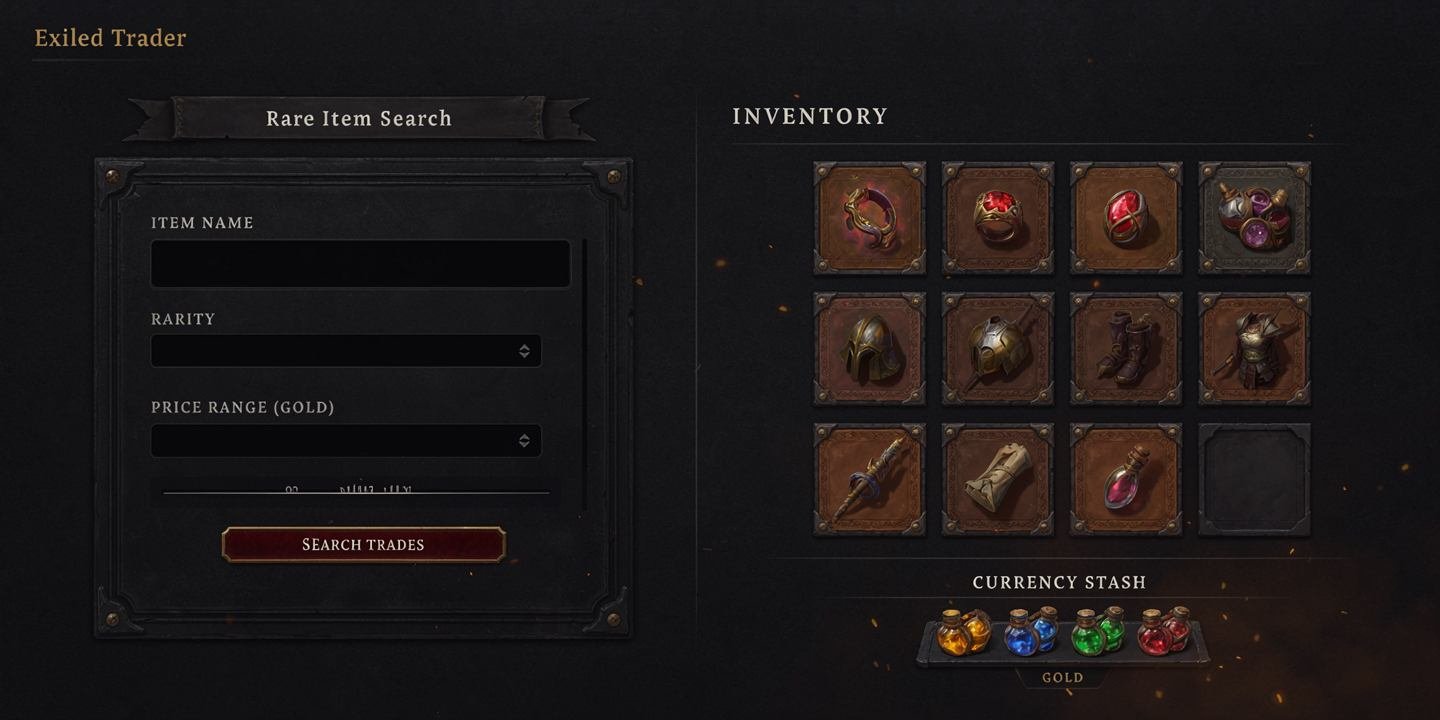
The fastest way to ruin your first Path of Exile trade is to search for one perfect item, message the seller, and wait five minutes for a reply that never comes. Trading is not difficult, but it rewards a system.
If you are searching “poe trade how to trade at path of exile,” start with the official trade site, learn how to narrow listings, understand the whisper process, and accept that not every listing is actually available. The goal is not to make every seller respond. It is to find a good item quickly.
Start With The Official Trade Site
Path of Exile provides an official trade site where you can search for equipment and other tradable items. The interface lets you filter by item type, modifiers, level requirements, sockets, links, price, and other properties.
Do not search only by item name. A rare item is valuable because it combines modifiers, not because the base type looks impressive. Start by identifying the stats your build actually needs.
Search For The Stats That Matter To Your Build
Suppose your character needs 80 life, elemental resistances, and a specific attribute. Search for those requirements instead of trying to copy the most expensive item in a build guide.
This is where PoE trade becomes useful. You can compare several listings and see whether you are paying for a real improvement or a cosmetic luxury. If one ring gives you 75 life and 90 total resistance while another gives 82 life and 93 resistance for much more currency, the expensive option may not change your gameplay enough to justify its price.
Use Price Filters Before You Contact Anyone
Set a realistic maximum price before browsing too deeply. Otherwise, the trade site can tempt you into comparing perfect items you cannot afford.
Price checking also reveals the market shape. If ten similar items cluster around one price and one listing is dramatically cheaper, inspect that listing carefully. It might be a bargain, but it might also have a missing modifier, an undesirable implicit, or another reason the seller priced it low.
Whisper Is The Beginning Of The Trade
Once you find a listing, the trade site provides a message you can use to contact the seller. Copy the whisper rather than typing the item details manually. It reduces errors and tells the seller exactly which listing you mean.
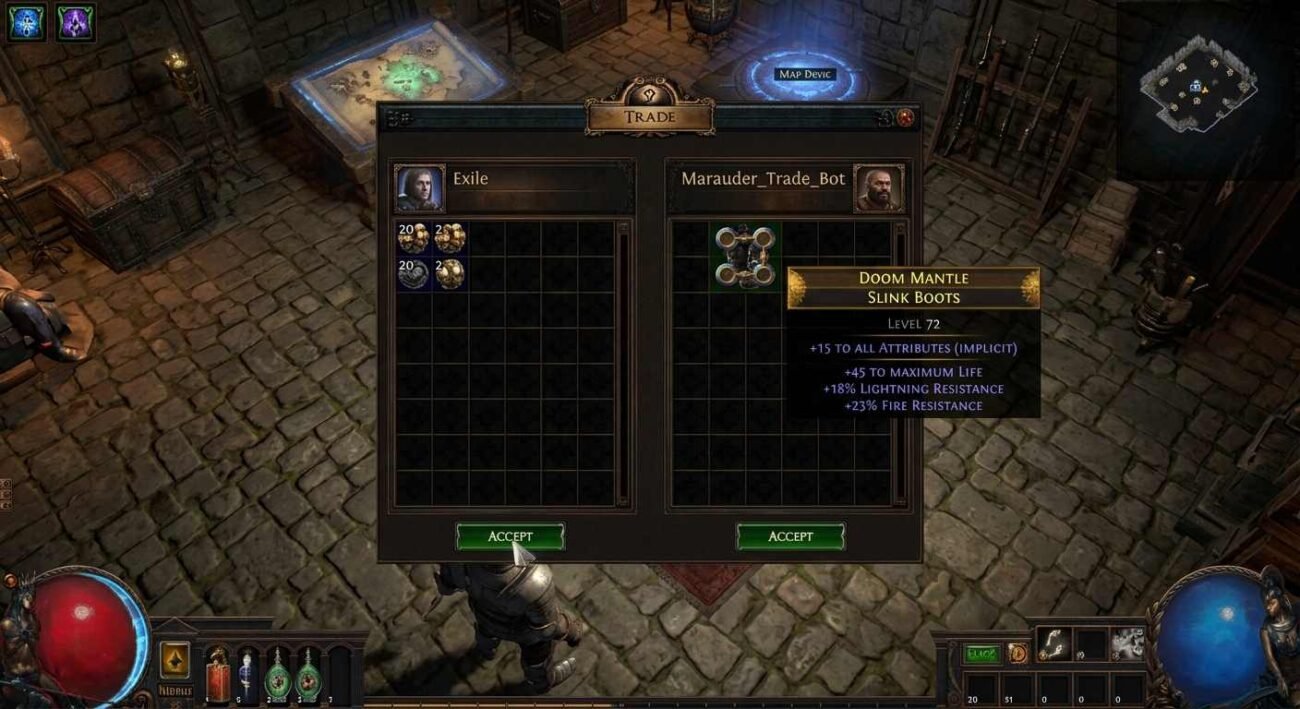
If the seller replies, you will usually join their party and travel to their hideout for the trade. Check the item in the trade window before confirming. Do the same with your currency. Rushing the final confirmation is how simple trades become expensive mistakes.
Why Some Sellers Never Answer
Do not take an unanswered whisper personally. Some listings are old. Some players are mapping. Some are away from the keyboard. Some items are priced too low and have attracted dozens of messages.
Your solution is not to keep messaging the same seller. Contact another listing near the same price—a trade system with many sellers rewards moving on quickly.
Selling Items Requires Better Stash Habits
If you want to sell consistently, organize your stash before you need to sell. Premium Stash Tabs can be made public and used to list items for trade. Path of Exile has also introduced Merchant’s Tabs for asynchronous selling in its newer trade systems, with the exact availability depending on the game and version.
Grinding Gear Games explained in its official Path of Exile 2 trade FAQ that Merchant’s Tabs support asynchronous sales and that existing trading methods remain available. It also explains that Premium Stash Tabs can be converted under the stated rules for that system.
Do Not Price Rare Gear By Guessing
Price checking is a skill. Search for comparable items with the same base, relevant modifiers, item level where applicable, and other characteristics that affect demand.
Then look at multiple listings. One seller asking ten Divine Orbs does not prove an item is worth ten Divine Orbs. A market is a collection of prices, not the highest number you can find.
Currency Trading Is A Different Problem
Currency exchange and item trading are related but not identical. The official trade exchange is designed around bulk exchange for currencies and other supported items, while ordinary item searches are built around specific listings.
If you are trying to exchange a stack of currency, use the relevant exchange interface instead of searching hundreds of individual listings. It is faster and gives you a clearer view of the current rate.
Keep Your Trade Process Fast
A good routine is simple: identify the stat, set the price ceiling, compare several listings, message one seller, and move on quickly if they do not respond. Once you find the item, verify it in the trade window and confirm only after checking everything.
If your computer struggles during hideout transitions or busy maps, optimizing your PC for a smoother gaming experience can make the overall process less annoying.
Quick Checklist
- Use the official Path of Exile trade site.
- Search for build-relevant modifiers, not just item names.
- Set a maximum budget before browsing.
- Compare several similar listings.
- Use the generated whisper message.
- Move to another seller if there is no response.
- Check the item and currency carefully before confirming.
- Use the appropriate exchange tool for supported currency trades.
Closing Thoughts
The answer to “poe trade how to trade at path of exile” is not a secret market trick. It is a repeatable process. Search precisely, compare prices, message sellers efficiently, and verify every trade before you confirm it.
The official trade tools give you enough information to become much faster once you stop treating every listing as equally useful. Your time is part of the trade economy too.
In Path of Exile, the best trade is often the one you finish before the next map.