
Elder Scrolls IV: Oblivion Remastered — What’s New and Is It Worth It?

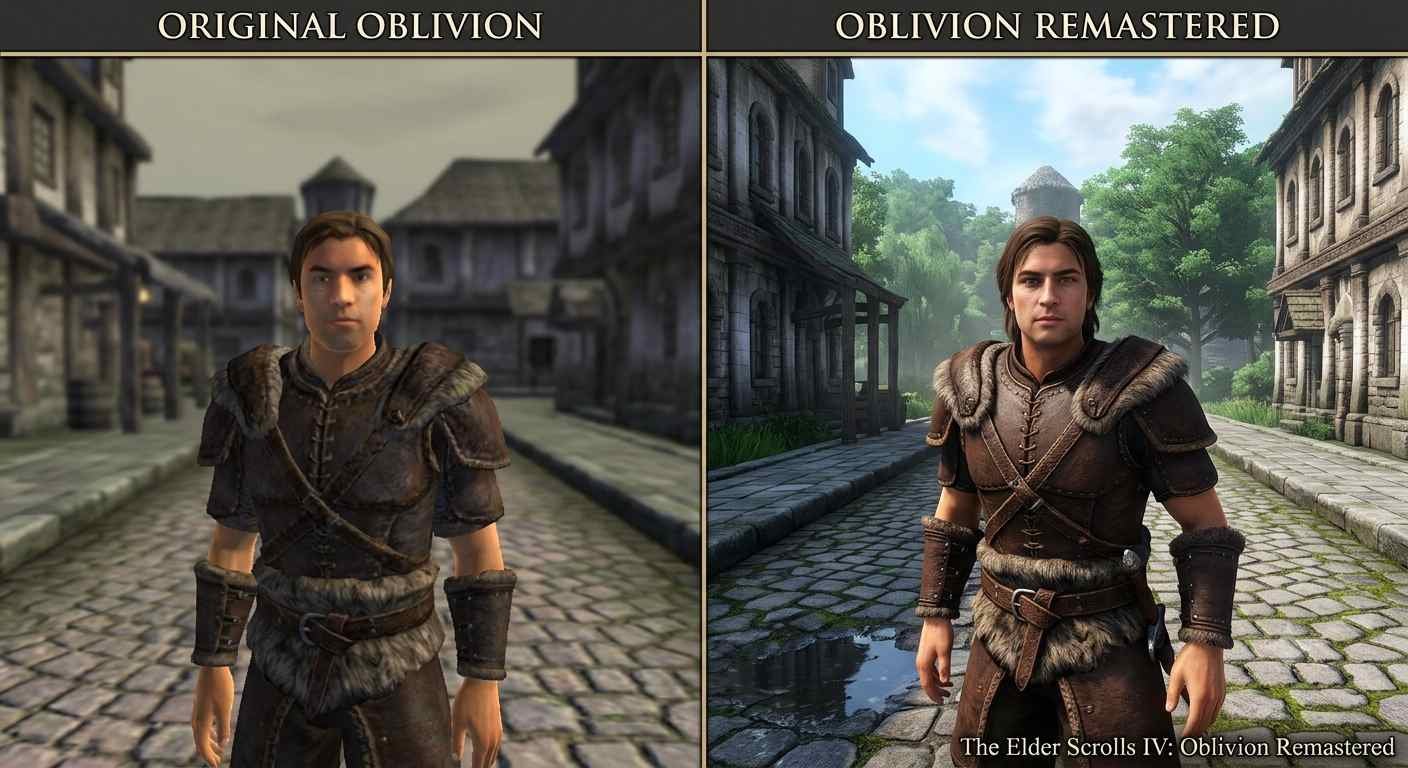
Elder Scrolls IV: Oblivion Remastered brings Bethesda’s 2006 RPG to modern hardware with a full visual overhaul built on Unreal Engine 5, while keeping the classic’s quest design and systems mostly intact. Here is exactly what changed, how it stacks up versus the original, and whether it is worth your time and money.
What Is Oblivion Remastered
Oblivion Remastered is a full visual and technical overhaul of The Elder Scrolls IV: Oblivion, originally released in 2006. Developed in collaboration between Bethesda and Virtuos, the remaster rebuilds the game’s graphics on Unreal Engine 5 while preserving the classic Gamebryo-based game logic, quest design, and systems underneath. This is a deeper undertaking than a simple resolution bump; character models, environments, lighting, and animations have all been rebuilt from the ground up.
The remaster arrives at a moment when Oblivion’s reputation has only grown. Originally somewhat eclipsed by Skyrim’s later success, Oblivion has earned retrospective recognition of its specific tone, its memorable Dark Brotherhood and main questlines, and a sense of world design that many fans consider more distinctive than its more streamlined sequel.
What Changed in Oblivion Remastered
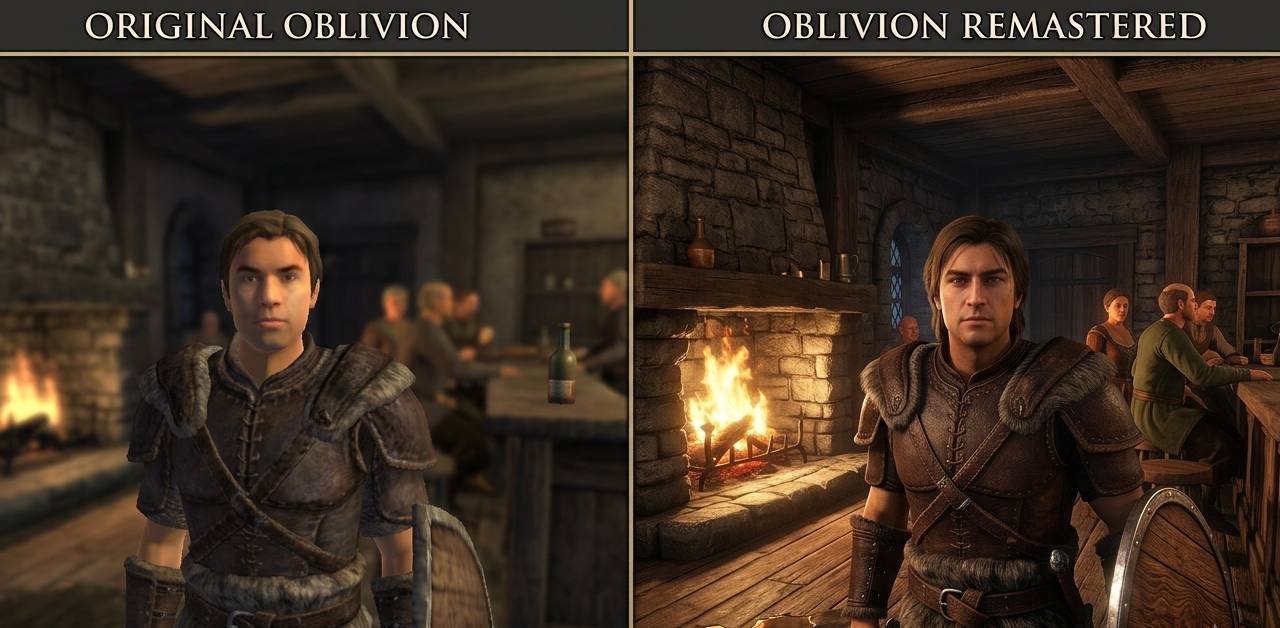
The headline change is the complete graphical rebuild. Character models have been redesigned to avoid the first’s well-documented facial animation issues, environments in Cyrodiil have been rebuilt with significantly higher fidelity foliage, lighting, and texture work, and the overall visual presentation is comparable to contemporary AAA releases rather than a 2006 title with upscaled textures.
| Element | Original (2006) | Remastered |
| Engine | Gamebryo | Unreal Engine 5 (visuals) over original game logic |
| Character models | Notoriously stiff, dated facial animation | Fully rebuilt with modern character models |
| Environments | Period-accurate but visually dated | Rebuilt foliage, lighting, texture detail |
| Combat feel | Original mechanics intact | Mechanics intact, animations and feedback updated |
| Quest design | Original Bethesda quest design | Unchanged — same quests, same content |
| Voice acting | Original 2006 voice cast | Original recordings retained |
Crucially, the remaster does not rewrite or restructure the first quest content. All quests, dialogue options, and narrative beats from the 2006 release remain intact. This is a graphical and technical remaster, not a remake that reimagines the game’s content; this distinction matters greatly to how you should think about the purchase decision.
Gameplay Changes in Oblivion Remastered
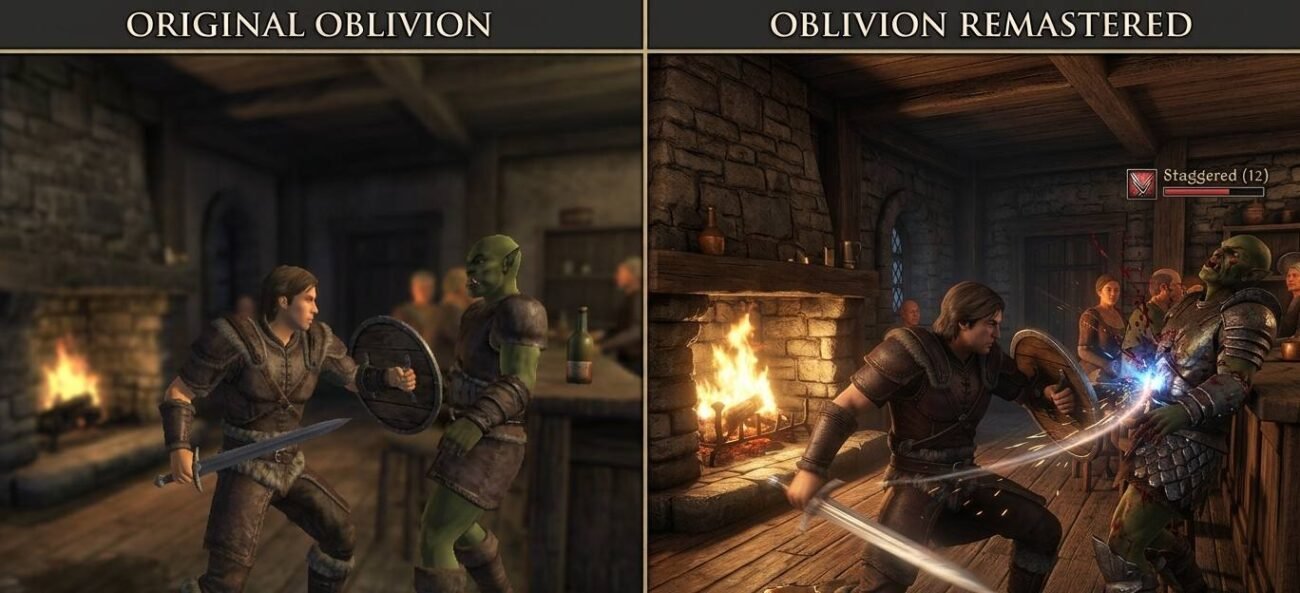
Combat in the first Oblivion proved frequently criticized for feeling stiff and lacking impact. The remaster updates combat animations and visual feedback to feel more responsive without changing the underlying mechanics; your character build, skill progression, and the original game’s RPG systems function identically to 2006.
- Combat animations: updated for more visual impact and responsiveness, mechanics unchanged.
- Leveling system: the classic’s controversial level-scaling system remains intact, for better or worse depending on your view of it.
- UI and menus: modernized for current-generation controllers and displays.
- Performance: built for modern hardware, removing many of the technical limitations the first suffered on period hardware.
Players hoping for mechanical changes to address Oblivion’s more dated systems, the level scaling in particular has been a long-running point of community debate, will not find those changes here. This remaster preserves the first game design philosophy rather than modernizing it to current Bethesda RPG standards.
Platforms and Price
[VERIFY ALL FIGURES BELOW AGAINST CURRENT STORE PAGES BEFORE PUBLISHING]
| Platform | Availability | Price (verify) |
| PC (Steam) | Available | [Verify current price] |
| PlayStation 5 | Available | [Verify current price] |
| Xbox Series X/S | Available | [Verify current price] |
| Xbox Game Pass | [Verify inclusion status] | Included with subscription if applicable |
For current pricing and platform availability, check the official Bethesda site or the relevant platform store page directly.
Oblivion Remastered vs the Original: Is It Worth It
For players who never played the original Oblivion, the remaster is the clear way to experience the game today. It removes the technical and visual barriers that make older titles harder to recommend to new players while preserving everything that made the original quest design and world memorable.
For players who already completed the original extensively, the value proposition depends on what you are looking for. If you want to revisit Cyrodiil with modern visuals and improved combat feel while playing the same content you remember, the remaster delivers exactly that. If you were hoping for new content, restructured systems, or a meaningfully different experience from the 2006 original, this remaster will not provide that; it is a faithful visual rebuild, not a reinterpretation.
- Strongest case for buying: New players, or veterans who specifically want updated visuals on familiar content
- Weakest case for buying: Players hoping for new quests, restructured systems, or mechanical changes to level scaling
- Honest verdict: A genuinely well-executed visual remaster that respects the source material, with the caveat that it changes less under the hood than the marketing might suggest.
For more RPG reviews and Bethesda game coverage, see our PC gaming category.
Frequently Asked Questions
Is Oblivion Remastered a full remake or just updated graphics?
Oblivion Remastered is best described as a graphical and technical remaster rather than a full remake. The visuals are rebuilt on Unreal Engine 5 with significantly upgraded character models, environments, and lighting, but the underlying quest design, dialogue, and core game systems are unchanged from the 2006 original. If you are expecting new content or restructured mechanics, this is not that kind of project.
Does Oblivion Remastered fix the original’s level scaling issues?
No. The original Oblivion’s level-scaling system, where enemies and loot scale alongside your character level, remains intact in the remaster exactly as it was in 2006. This was a frequently debated aspect of the original game’s design, and the remaster does not modify or rebalance it. Players who found this system frustrating in the original will encounter the identical system here.
Do I need to have played the original Oblivion to enjoy the remaster?
No. Oblivion Remastered works perfectly well as a first playthrough for players who never experienced the 2006 original. The updated visuals and combat feedback actually make it more approachable for new players than the original would be today, removing many of the dated technical elements that made recommending the original to newcomers difficult.
Is Oblivion Remastered available on Xbox Game Pass?
Availability on Xbox Game Pass should be verified against the current Game Pass library, as inclusion status can change. Bethesda has historically included several of its major titles in Game Pass at or near launch, but confirm current availability directly through the Xbox Game Pass app or the official Xbox website before assuming inclusion.
Conclusion
Oblivion Remastered succeeds at exactly what it sets out to do: making a treasured 2006 RPG visually and technically approachable for 2026 without losing what made it distinctive in the first place. It is not a reinterpretation, and players expecting new content will be disappointed. For everyone else, it is one of the more respectful remaster projects in recent memory.