

Tennis Open
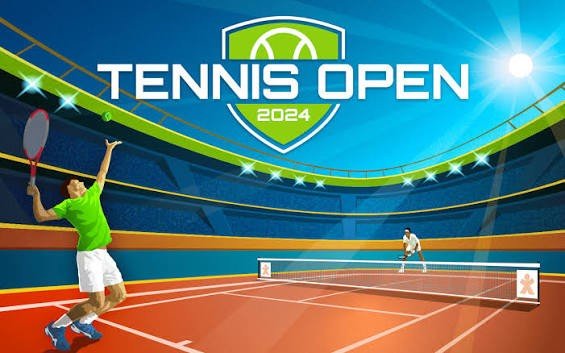
Tennis Open is a browser sports game where you serve, return shots, move around the court, and compete against AI opponents. Control direction and power, build longer rallies, improve your player, and progress through quick matches or tournaments.
Tennis Open
Tennis Open places you on the court for quick singles matches where timing, positioning, and shot direction matter more than pressing the action button as quickly as possible. You serve from behind the baseline, return the opponent’s shots, move into a useful court position, and try to win points without sending the ball into the net or beyond the boundary lines.
The controls are easy to understand, but every rally creates a new choice. A powerful shot may push the opponent backward, while a softer angled return can move them away from the centre. Swing too early and the ball may travel in the wrong direction. Wait too long and it can pass before your player completes the stroke.
Players who enjoy simple sports controls with room for improvement can also try Mini Golf, where shot direction and controlled power shape every attempt.
What Tennis Open Is About
Tennis Open is a browser sports game based on singles tennis matches, serves, rallies, court movement, and tournament progression.
Depending on the edition available on Gam-core, you may compete in quick matches, complete training activities, enter tournaments, improve a player, or face increasingly difficult computer-controlled opponents.
The main gameplay may include:
- Serving to begin each point
- Moving around the court
- Returning forehand and backhand shots
- Choosing shot direction
- Applying different levels of power
- Using topspin, slice, or lob shots in supported editions
- Winning games and sets
- Progressing through tournaments
- Improving player attributes
- Unlocking equipment or visual items
Several browser games use the Tennis Open name. Editions labelled 2020, 2022, or 2024 may contain different menus, controls, graphics, and progression systems.
Use the instructions and mode selection inside the Gam-core version as the correct guide for the game being played.
How Tennis Open Gameplay Feels
A match usually begins with enough time to understand the basic controls.
The ball moves at a manageable speed during early rallies, allowing you to see where the opponent is aiming and how quickly your player reaches the correct position.
Longer rallies become more difficult because each shot changes the court geometry. Returning toward the centre gives the opponent fewer open angles, while remaining near one side can leave a large part of the court exposed.
The best points are not always won through maximum power. A controlled shot into open space can be more effective than a strong return sent directly toward the opponent.
Tennis Open rewards players who prepare before the ball arrives. When your character reaches the correct position early, there is more time to select a useful direction and complete a clean return.
Tennis Open Controls
The exact controls depend on the edition and device.
Mouse Controls
A browser edition may use:
- Move the mouse: Position the player or choose a shot direction
- Click and drag: Prepare the stroke
- Swipe with the mouse: Hit toward the selected part of the court
- Release: Complete a serve or return
- Menu buttons: Select matches, tournaments, upgrades, or equipment
Keyboard Controls
Some versions may use:
- W, A, S, D or Arrow Keys: Move around the court
- Spacebar: Serve or hit
- Different action keys: Select a normal shot, slice, lob, or power stroke
- Esc: Pause the match
Mobile Controls
Mobile editions commonly use swipe-based play:
- Swipe upward to serve
- Swipe left or right to choose direction
- Use a faster swipe for additional power
- Use different swipe shapes for supported shot types
- Tap menus to choose players or tournaments
Check the opening tutorial before starting a serious match. Do not assume the control layout from one Tennis Open edition applies to another.
Start With Court Positioning
Good positioning makes every other action easier.
After hitting the ball, move back toward a balanced position instead of remaining where the previous stroke ended.
From near the centre, you have a better chance of reaching:
- A shot toward the left sideline
- A return toward the right sideline
- A short ball near the net
- A deep shot near the baseline
- A high defensive return
- A sudden change of direction
The centre is not always the final destination. Your position should respond to where you sent the ball and what return the opponent is likely to attempt.
Moving back toward balance is usually safer than standing close to one side without a clear reason.
Watch the Opponent’s Contact
Do not wait until the ball crosses the net before deciding where to move.
Watch the opponent as they prepare the stroke.
Their position can suggest whether the ball may travel:
- Cross-court
- Down the line
- Deep toward the baseline
- Short near the net
- High as a lob
- Toward your weaker side
The game may simplify or partially automate movement, but early reading still gives you more time to prepare.
Move while the ball is travelling rather than after it reaches your side of the court.
Serving the Ball
Every point begins with a serve.
A successful serve must normally enter the diagonally opposite service box. Sending it into the net or outside the correct area may count as a fault.
A browser version may ask you to:
- Choose the serving direction.
- Set the power.
- Swipe or click at the correct time.
- Complete the action before a meter passes the useful area.
Use moderate power while learning.
Maximum strength may produce a faster serve, but it can also reduce accuracy. A reliable serve that begins the rally is more useful than repeated faults.
Once the basic timing feels comfortable, begin aiming away from the opponent’s starting position.
First and Second Serves
Traditional tennis allows a player two attempts to complete a legal serve.
The first serve can be more aggressive because another attempt remains after a fault. The second normally requires greater control because another fault can cost the point.
Some arcade editions simplify this rule or automatically begin another serve.
When two serves are supported:
- Use controlled power on important points
- Aim farther from the lines on the second attempt
- Avoid repeating the exact input that caused the first fault
- Change only the part that was wrong
- Watch whether the ball hit the net or landed outside the box
A small correction is usually enough after a near miss.
Returning the Serve
A strong serve can reach your player quickly, leaving little time for a large swing.
Focus first on making clean contact.
A safe return can:
- Start the rally
- Move the opponent away from the centre
- Reduce their immediate attacking advantage
- Give your player time to recover
- Prevent an easy service winner
Do not attempt maximum power against every serve.
When the ball arrives quickly, use a controlled return toward open court. When the serve is slower or poorly placed, an attacking response becomes more practical.
Forehand and Backhand Shots
A forehand is normally played on the racket-hand side, while a backhand is played across the opposite side of the body.
Tennis Open may select these strokes automatically according to the player’s position.
You still influence the result through timing, direction, and power.
A clean groundstroke should:
- Clear the net
- Land inside the court
- Move the opponent
- Leave time for recovery
- Avoid an easy central return
Do not stand too close to the ball. Reaching the correct distance allows the stroke animation to complete more naturally.
Use Cross-Court Shots
A cross-court shot travels diagonally toward the opposite side.
This route is useful because the court is longer across the diagonal, providing more space for the ball to land.
Cross-court shots can:
- Move the opponent sideways
- Create longer rallies
- Reduce the risk of missing wide
- Open space for the next stroke
- Provide recovery time
Do not repeat the same direction endlessly.
Once the opponent begins moving early toward the cross-court return, a down-the-line shot may catch them travelling the wrong way.
Use Down-the-Line Shots Carefully
A down-the-line shot travels more directly along one side of the court.
It can be effective when the opponent has moved far across the opposite side.
The available landing area is narrower, so timing and direction need to be more accurate.
Use this shot when:
- The sideline route is open
- Your player reaches the ball in a stable position
- The opponent is recovering from a cross-court movement
- The ball is at a manageable height
- You have enough time to aim
Avoid forcing it while running or reaching for a difficult return.
Control Shot Power
Power can push the opponent backward and reduce their reaction time, but it also makes errors more costly.
Use greater power when:
- The ball arrives at a comfortable height
- Your player is balanced
- Open space exists
- The opponent has moved out of position
- The rally offers a clear attacking opportunity
Use less power when:
- Returning a difficult serve
- Reaching a wide ball
- Hitting while off balance
- Protecting an important point
- Trying to change direction accurately
A controlled shot inside the lines is better than a powerful ball that ends the point for the opponent.
Using Topspin
Supported Tennis Open editions may include topspin.
Topspin makes the ball rotate forward, helping it dip toward the court after crossing the net. It can support deeper and more aggressive shots while keeping the ball inside the baseline.
Use topspin to:
- Push the opponent backward
- Clear the net with additional height
- Attack from the baseline
- Create a stronger bounce
- Maintain pressure during rallies
The exact gesture or action key differs by version.
Do not assume a visible curved path always represents detailed spin physics. Some browser editions use simplified animations.
Using Slice
A slice adds backspin and usually produces a lower, slower return.
It can change the rhythm of a rally and make the opponent approach the ball differently.
A slice may be useful when:
- You are stretched away from the centre
- You need more recovery time
- The opponent expects another fast shot
- You want the ball to stay low
- A defensive return is safer than an attack
Avoid using a weak slice directly toward an opponent standing near the net. The slower ball may give them an easy finishing chance.
Using Lobs
A lob sends the ball high over an opponent who has moved close to the net.
It is useful when the opponent advances too far forward and leaves open court behind them.
A successful lob needs enough height to clear the player but enough control to land before the baseline.
Use it when:
- The opponent stands near the net
- The back part of the court is open
- You have time to prepare
- A direct passing shot feels too narrow
- The game supports a distinct lob control
Do not attempt a lob from every defensive position. A short or weak attempt can become an easy overhead shot.
Moving Toward the Net
Approaching the net reduces the distance the ball must travel before you can finish the point.
This position can help with:
- Volleys
- Short returns
- Angled winners
- Pressure against a defensive opponent
- Finishing after a strong approach shot
The risk is the open court behind you.
Move forward after sending a deep or difficult shot that pushes the opponent backward. Approaching behind a weak central ball can give them an easy passing shot or lob.
Do not stand directly against the net. Leave enough room to respond to the ball.
Playing Volleys
A volley is struck before the ball bounces.
Volleys are usually played near the net and require quick timing.
A useful volley should:
- Redirect the opponent’s return
- Land in open court
- Avoid unnecessary power
- Finish the point before they recover
- Remain inside the sidelines
Because the ball reaches you quickly, use shorter and more controlled input.
Trying to produce a full baseline-style swing can make the action late.
Recover After Every Shot
After completing a stroke, immediately prepare for the opponent’s response.
Do not watch your shot until it lands while leaving the player in the same position.
Recovery involves:
- Checking where the ball is travelling.
- Predicting the likely return.
- Moving toward a balanced area.
- Avoiding excessive movement.
- Preparing the next stroke.
A good shot can still create a difficult situation when the player fails to recover.
Understanding Tennis Scoring
Traditional tennis uses a distinctive scoring system within each game:
- Zero points is called love
- The first point is 15
- The second point is 30
- The third point is 40
- Another point normally wins the game
- A 40–40 score is called deuce
- A player usually needs two consecutive points from deuce to win
Games are grouped into sets, and sets determine the match.
Browser editions may simplify this system by using:
- First to a fixed number of points
- One shortened set
- Tiebreak-only matches
- A limited tournament format
- Quick games without deuce
Check the scoreboard to understand the rules used by the Gam-core version.
Winning Games and Sets
In standard tennis, a player generally needs six games to win a set while leading by at least two games. A tiebreak may be used when the score reaches a defined level.
The match can be played as the best of three or best of five sets, depending on the competition.
Tennis Open browser games often shorten these requirements so one match can be completed quickly.
The International Tennis Federation rules explain official tennis scoring and competition standards.
Do not assume a short browser tournament follows every official rule.
Playing Important Points
Some points matter more because they can decide a game or set.
Examples include:
- Game point
- Break point
- Set point
- Match point
- Deuce
- Advantage
On an important point, choose a dependable serve or return instead of attempting the most difficult possible angle.
The opponent may also become more aggressive. Be prepared for a stronger serve, early attack, or movement toward the net.
Good decision-making becomes more valuable when one error can decide the match.
Breaking the Opponent’s Serve
Winning a game while the opponent is serving is called a break of serve.
To create break opportunities:
- Return enough serves to begin rallies
- Avoid unnecessary return errors
- Move the opponent from side to side
- Attack weaker second serves
- Stay patient during long points
- Use open court instead of constant power
You do not need to win every return point.
Creating pressure over several points can make the opponent attempt riskier serves and shots.
Protecting Your Own Serve
Holding serve means winning the game in which you served.
A reliable first shot after the serve can be just as important as the serve itself.
Protect your service games by:
- Reducing double faults
- Changing serve direction
- Recovering after serving
- Preparing for the return
- Avoiding rushed third shots
- Using power only when balanced
Do not assume a strong serve ends the point. Move into a useful position immediately after completing it.
Tournament Mode
Tennis Open editions commonly include tournaments or career-style progression.
A tournament may ask you to win several matches against increasingly difficult AI opponents.
Progress can involve:
- Moving through a bracket
- Unlocking new courts
- Earning coins
- Improving player attributes
- Receiving equipment
- Facing stronger opponents
- Winning trophies
Before entering a long tournament, complete a quick match or training activity.
Learn the controls before a loss affects progression.
Training and Player Improvements
Supported versions may allow you to improve abilities such as:
- Serve power
- Movement speed
- Forehand
- Backhand
- Stamina
- Accuracy
- Reaction
- Volleying
Do not improve only power.
Greater shot strength is difficult to use when movement or accuracy remains weak. Balanced development can make every rally more manageable.
Choose upgrades that solve a repeated problem. Movement speed may help when you regularly fail to reach wide shots, while accuracy can reduce balls landing beyond the lines.
Choosing Equipment
Some Tennis Open editions include rackets, clothing, shoes, or other equipment.
These items may be cosmetic or provide gameplay bonuses.
Before spending rewards, check whether an item changes:
- Power
- Accuracy
- Speed
- Stamina
- Control
- Appearance only
A cosmetic item can still be enjoyable, but it should not be mistaken for a performance upgrade.
Save currency for changes that match your preferred style of play.
Common Tennis Open Mistakes
The most common mistake is hitting with maximum power from every position.
Another mistake is remaining near the side where the previous shot was played. This leaves the opposite court open.
Players also choose a direction before seeing the incoming ball.
Approaching the net after a weak shot creates another problem. The opponent receives time to attempt a passing shot or lob.
Some players attempt difficult winners during every rally. Consistent deep shots may create a much easier opportunity later.
The final common mistake is watching a successful shot instead of recovering for the next return.
How to Improve at Tennis Open
Begin with reliable contact and court movement.
A useful improvement order is:
- Learn the serve control.
- Return the ball consistently.
- Recover toward the centre.
- Direct shots to both sides.
- Control power.
- Read the opponent’s position.
- Use cross-court rallies.
- Attempt down-the-line winners.
- Practise supported spin shots.
- Enter tournaments.
Focus on one repeated error at a time.
When most points are lost through balls landing beyond the baseline, reduce power before attempting more difficult directions.
Browser and Mobile Play
Tennis Open games are commonly built for desktop and mobile browsers.
For smoother play:
- Use an updated browser
- Allow the game to load fully
- Close unnecessary tabs
- Use fullscreen mode when useful
- Test swipe sensitivity before a tournament
- Avoid resizing the browser during a rally
- Lower graphics settings when available
Mouse-based swiping can feel different from touchscreen controls. Use the opening match to learn how far and quickly the pointer needs to move.
Treat the instructions inside the Gam-core edition as the correct guide for supported devices.
Real Tennis Rules and Safe Play
Tennis Open simplifies the sport for browser play. Real tennis requires a suitable court, racket, ball, footwear, space, and safe technique.
The International Tennis Federation oversees the sport internationally and publishes official rules and competition information.
Real players should:
- Warm up before intense activity
- Use suitable footwear
- Keep enough space between players
- Stay aware of loose balls
- Use equipment appropriate for their age
- Learn technique from a qualified adult or coach
- Stop when experiencing pain
A browser game can help players understand scoring and court positions, but it does not replace real instruction.
What Makes Tennis Open Worth Playing
Tennis Open turns tennis into an accessible browser challenge without requiring a large control layout.
Players can begin serving and returning after a short tutorial. Better performance still depends on court position, shot selection, recovery, timing, and understanding when to use power.
Tournament progression gives individual matches a larger purpose. Player improvements and equipment may also provide long-term goals beyond winning one point.
The game may feel simple for players seeking a detailed professional simulation with licensed tours and complete real-world rosters.
Its direct format works well for casual sessions. One match can be completed quickly, while longer tournament play offers a stronger challenge.
Players looking for another timing-based sports game can try Cricket, where each delivery requires a similarly careful response.
Browse the sports games collection for more browser competitions.
Who Will Enjoy Tennis Open?
Tennis Open suits players who enjoy:
- Singles tennis
- Swipe or mouse controls
- Quick sports matches
- Tournament progression
- Court positioning
- Timing challenges
- Player upgrades
- Simple competitive gameplay
Beginners can focus on returning the ball and moving back toward the centre.
More experienced players can vary direction, use different shot types, approach the net, and create openings through longer rallies.
The game works well for short browser sessions because every point has a clear beginning and result.
Players seeking a licensed professional tennis simulation should check the exact edition and available features before playing.
Play Tennis Open Free Online
Play Tennis Open free online on Gam-core.com and compete in fast tennis matches based on serving, rallies, shot direction, court movement, and tournament progress.
Watch the opponent’s contact, move before the ball reaches your side, and return toward a balanced position after every stroke. Strong shots can win points, but accurate placement and early preparation are what keep a complete match under control.





Reviews
There are no reviews yet.