

Table Tennis
Table Tennis is a browser sports game where you control a paddle, return fast shots, aim toward open space, and outscore your opponent. Follow the ball carefully, recover after every hit, vary your placement, and build longer rallies.
Table Tennis
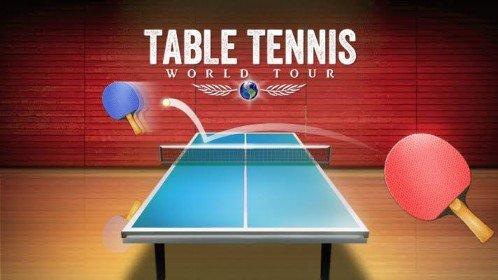
Table Tennis places you at one end of a small indoor table with a paddle, a lightweight ball, and an opponent waiting across the net. Your job is to return each shot, direct the ball into difficult areas, and keep the rally alive until the other player misses.
The first few exchanges may feel simple because the opponent returns the ball at a manageable speed. Longer rallies become harder as the direction changes and you have less time to move the paddle into position. One late movement can send the ball past the edge, while an uncontrolled swing may place an easy return directly in front of your rival.
Players who enjoy simpler reaction-based matches can also try Ping Pong King, where each return is controlled through a left-or-right decision.
What Table Tennis Is About
Table Tennis is a browser sports game based on paddle control, ball timing, shot direction, rallies, and point scoring.
Most versions place you against a computer-controlled opponent. You move the paddle using the mouse, touchscreen, or keyboard and try to return the ball after it bounces on your side of the table.
The main gameplay may include:
- Serving to begin a rally
- Moving the paddle across the table
- Timing contact with the ball
- Directing shots toward open space
- Returning fast or angled balls
- Scoring when the opponent misses
- Defending against powerful returns
- Winning games or short matches
- Facing harder computer opponents
- Improving your best score or rally length
Several different browser releases use the title Table Tennis. Some provide a first-person paddle view, while others show the full table from above or from the side.
The exact controls, scoring system, difficulty levels, and multiplayer options depend on the version available on Gam-core.
How Table Tennis Gameplay Feels
A rally begins when one player serves the ball over the net.
The opponent returns it, and the exchange continues until someone misses, sends the ball outside the table, fails to clear the net, or makes another invalid return.
The ball can move quickly, but speed is only one part of the challenge. Direction and timing are equally important.
A central return may be easy for the opponent to reach. An angled shot toward the edge forces them to move farther and can create open space on the opposite side.
The strongest rallies develop a rhythm. You follow the ball, move the paddle into position, make controlled contact, and immediately prepare for the next return.
Problems begin when you swing without watching the ball or move the paddle too far after contact.
Table Tennis Controls
The exact controls depend on the browser version.
Mouse Controls
A common mouse-based layout uses:
- Move the mouse: Position the paddle
- Move during contact: Change the shot direction
- Left click: Serve or begin the match in supported editions
- Click and drag: Prepare a serve or stronger shot when available
Some games connect the paddle directly to the pointer. Moving the mouse quickly produces a faster swing, while a slower movement creates a softer return.
Keyboard Controls
A keyboard version may use:
- Left Arrow or A: Move left
- Right Arrow or D: Move right
- Up Arrow or W: Move forward or perform an attacking return
- Down Arrow or S: Move backward or use a defensive shot
- Spacebar: Serve or strike
- Esc: Pause the match
Mobile Controls
Touchscreen versions may use:
- Dragging to move the paddle
- Swiping to return the ball
- Tapping to serve
- Visible left-and-right controls
- Gesture speed to influence shot strength
Check the instructions shown inside the game before the first match. A browser title called Table Tennis may use completely different controls from another release with the same name.
Watch the Ball From the Opponent’s Paddle
Do not wait until the ball reaches your side before reacting.
Begin following it as soon as the opponent makes contact.
Watch:
- Which side the ball starts travelling toward
- How quickly it crosses the net
- Where it is likely to bounce
- Whether it is moving toward or away from you
- How high it rises after the bounce
- Whether its direction changes unexpectedly
Early observation gives you time to move the paddle smoothly.
Watching only the bounce on your side makes every return feel rushed. By that point, the ball may already be too close for a controlled movement.
Keep your attention near the opponent’s paddle and the central part of the table.
Move Into Position Before Swinging
Reaching the ball is the first priority.
A powerful swing cannot help when the paddle is not in the correct place.
Move toward the ball’s expected path before attempting a sharp or angled return. Once the paddle is aligned, use a smaller movement to direct the shot.
This order is useful:
- Read the ball’s direction.
- Move the paddle into its path.
- Wait for the correct contact point.
- Return the ball.
- Recover toward the centre.
Trying to move and swing wildly at the same time often sends the ball outside the table.
Return Toward Open Space
Sending the ball directly back to the opponent allows them to remain comfortable.
Look for the side of the table they have left open.
When the opponent moves toward the left, a return toward the right can force them to cross a larger distance. If they stand far behind the table, a shorter ball may bring them forward.
Useful targets include:
- Wide left corner
- Wide right corner
- The opponent’s weaker side
- Short area near the net
- Deep area near the end line
- The space behind a moving rival
Do not aim for the extreme edge on every shot.
A safer angle that still moves the opponent can create the same advantage with less risk of missing the table.
Return to the Centre
After completing a shot, move the paddle back toward a balanced position.
Staying near one edge leaves the opposite side open.
A central position gives you a better chance of reaching:
- A wide return to the left
- A wide return to the right
- A short ball
- A fast central shot
- A high bounce
- A sudden change of direction
Do not move to the centre automatically when the opponent is already striking. Follow the current ball first.
The goal is to avoid becoming trapped at one side without enough time to recover.
Control the Paddle Instead of Chasing the Ball
New players often move the paddle too aggressively.
Large movements make it easier to pass beyond the ball’s path. They also leave the paddle far from the centre after contact.
Use controlled movement:
- Follow the ball smoothly
- Avoid shaking the mouse
- Make one clear correction
- Stop when the paddle is aligned
- Use smaller movements near contact
- Recover after the return
The ball may be fast, but the paddle does not need to move constantly.
Accurate positioning is more useful than frantic movement.
Serving the Ball
A serve begins the rally.
A browser version may ask you to click, drag, swipe, or move the paddle toward the ball.
A useful serve should:
- Clear the net
- Bounce legally on the table
- Avoid travelling outside the boundaries
- Make the return slightly uncomfortable
- Leave you ready for the next shot
Begin with a reliable serve rather than maximum speed.
Once the action feels familiar, try changing the direction or length. Serving to the same position every time makes it easier for the opponent to prepare.
Vary the Serve
Changing the serve prevents the opponent from settling into one return pattern.
You may be able to vary:
- Left or right direction
- Short or deep placement
- Speed
- Paddle movement
- Spin in supported versions
- Contact timing
Do not change every part at once.
First learn a dependable serve. Then adjust one element, such as direction, while keeping the rest familiar.
A difficult serve is not useful when it repeatedly fails to enter play.
Returning Fast Serves
Fast serves provide less preparation time.
Focus on making contact before attempting a perfect attacking shot.
Against a quick serve:
- Watch the release closely
- Keep the paddle near the centre
- Use a smaller return movement
- Aim for a safe part of the table
- Avoid unnecessary power
- Recover immediately
A controlled return starts the rally and removes some of the server’s advantage.
Trying to attack every fast serve can create repeated misses.
Using Angled Shots
An angled return sends the ball away from the opponent’s central position.
These shots are useful because they make the rival move sideways.
To create an angle:
- Reach the ball in a stable position.
- Move the paddle slightly toward the target side.
- Avoid excessive speed.
- Watch whether the ball remains inside the edge.
- Recover toward the centre.
A wider angle normally carries more risk.
Use moderate placement first, then move closer to the sideline once you understand how the paddle affects direction.
Playing Deep Returns
A deep return lands near the far end of the opponent’s side.
This can push them backward and reduce their chance of playing a short attacking shot.
Deep balls are useful when:
- The opponent stands close to the table
- You have time for a controlled swing
- The rally needs more space
- You want to prevent an immediate attack
- The far end of the table is open
Do not use excessive power.
A shot that is too strong can travel beyond the table without bouncing.
Playing Short Returns
A short return lands closer to the net.
It can make an opponent move forward, especially when they have been waiting far behind the table.
Use a short ball when:
- The opponent is deep
- The incoming ball is slow enough to control
- You have time to reduce the swing
- The space near the net is open
- A softer return will interrupt the rally rhythm
A weak short shot can be attacked when the opponent is already close.
Check their position before reducing the pace.
Handling High Balls
A high return may provide an attacking opportunity.
Move into position and wait for the ball to reach a useful height. Swinging too early can send the paddle underneath it, while waiting too long allows it to drop into an awkward area.
When attacking a high ball:
- Keep the paddle aligned
- Aim toward open space
- Avoid uncontrolled maximum movement
- Watch the table boundaries
- Prepare for a possible return
A strong shot does not guarantee the point. Remain ready until the rally is clearly over.
Defending Against Powerful Shots
A fast return may be difficult to attack.
Use a shorter paddle movement and focus on sending the ball back onto the table.
Defensive returns can:
- Reduce the ball’s speed
- Keep the rally alive
- Move the opponent
- Give you time to recover
- Create a better opportunity later
Do not attempt to match every powerful shot with greater power.
Control can turn the opponent’s speed into a manageable return.
Understanding Spin
Some Table Tennis browser games include simplified spin mechanics.
Paddle movement may cause the ball to curve, dip, rise, or bounce differently.
Common real-world spin ideas include:
- Topspin: The ball dips and moves forward after bouncing
- Backspin: The ball stays lower and may slow after bouncing
- Sidespin: The ball curves or moves sideways after contact
A browser game may represent these effects only loosely.
When spin is supported, practise one movement at a time. Watch the result before trying to combine several directions.
Do not assume a game without visible spin indicators uses realistic ball behaviour.
How to Handle Spin
Spin can make the ball move differently after it bounces.
When a return behaves unexpectedly:
- Watch the bounce rather than assuming a straight path
- Move the paddle later when needed
- Use controlled contact
- Avoid a large attacking swing
- Notice which paddle motion the opponent used
- Prepare for the same effect later
Spin becomes easier to manage after you see it several times.
The first priority is keeping the ball in play. A safer return can help you understand its movement before trying an aggressive response.
Building Longer Rallies
Long rallies depend on repeated control.
To maintain one:
- Follow every shot separately
- Return toward a safe area
- Recover toward the centre
- Avoid increasing power without a reason
- Keep the paddle movement smooth
- Stay focused after successful returns
- Do not watch the score during play
Players often miss because they begin thinking about how long the rally has lasted.
Treat every return as a new decision.
The next ball still requires the same process, no matter how many successful shots came before it.
Changing the Rally Rhythm
Repeating the same speed and direction makes the game easier for the opponent.
Change the rhythm through:
- Softer returns
- Faster shots
- Wider angles
- Deeper placement
- Short balls
- Direction changes
- Spin when supported
Do not attempt constant variation without control.
A safe pattern followed by one well-timed change can be more effective than using a different shot on every return.
The goal is to make the opponent move and adjust.
Scoring Points
A player normally wins a point when the opponent:
- Misses the ball
- Sends it into the net
- Hits it outside the table
- Fails to make a legal return
- Allows it to bounce incorrectly
- Cannot reach the shot
Browser games may simplify the rules and award a point whenever the ball passes the opposing paddle.
Check the scoreboard to see the target.
Some versions may play to:
- Five points
- Seven points
- Eleven points
- Twenty-one points
- A fixed time limit
- A best-of-series format
Do not assume every browser game follows official table-tennis scoring.
Managing a Close Score
A close match can make players rush important points.
Keep the same process that worked earlier:
- Watch the opponent’s contact.
- Reach the ball.
- Choose a safe target.
- Return with control.
- Recover for the next shot.
Do not attempt a difficult edge shot only because the score is tied.
A reliable rally can create a mistake from the opponent without requiring unnecessary risk.
Playing Against Computer Opponents
Computer-controlled rivals may become faster or more accurate at higher difficulty levels.
They may also follow recognisable patterns.
Watch whether an opponent:
- Favours one side
- Returns central balls
- Struggles with short shots
- Moves slowly across the table
- Attacks high returns
- Repeats the same serve
- Becomes more aggressive at close scores
Do not rely completely on one weakness. A stronger difficulty level may respond differently.
Use the opening points to understand the current opponent.
Difficulty Levels
Supported versions may offer easy, normal, hard, or expert opponents.
An easier setting can help you learn:
- Paddle movement
- Basic serves
- Ball timing
- Central recovery
- Shot direction
- Match scoring
Harder opponents may return the ball faster, cover more of the table, and make fewer mistakes.
Move up only after you can maintain rallies consistently.
A higher difficulty is not useful when the basic controls still feel uncertain.
Tournament and World Tour Modes
Some table-tennis browser games include a tournament or world-tour structure.
You may compete against opponents representing different countries, win short matches, and progress through a bracket or map.
Progress can involve:
- New opponents
- Harder match conditions
- Different tables
- Trophies
- Ranking points
- Unlockable paddles
- Visual rewards
Not every game titled Table Tennis contains these features.
Check the Gam-core version before claiming that tournaments, countries, upgrades, or unlocks are available.
Local and Online Multiplayer
Some versions support multiplayer, while others are single-player only.
Possible formats include:
- Two players on one keyboard
- Shared touchscreen play
- Local alternating turns
- Online matchmaking
- Private matches
- Computer opponents only
Do not describe online multiplayer unless it is visible and working in the game menu.
When a connected version includes chat or accounts, do not share private information such as your full name, home address, school, passwords, phone number, or personal email.
Common Table Tennis Mistakes
The most common mistake is watching the paddle instead of the ball.
Another mistake is moving too aggressively. The paddle passes beyond the ball and becomes difficult to recover.
Players also return every shot toward the centre, allowing the opponent to remain comfortable.
Trying to use maximum speed on every ball creates further errors.
Some players remain near the side where the previous shot ended. The next return then reaches the open half of the table.
Swinging before reaching the correct position is another common problem.
The final mistake is assuming every ball will bounce the same way when the game includes spin or changing speed.
How to Improve at Table Tennis
Begin with reliable returns rather than powerful attacks.
A useful learning order is:
- Learn how the paddle follows the mouse or keys.
- Watch the ball from the opponent’s contact.
- Move into position before swinging.
- Return toward the centre of the table.
- Recover after every shot.
- Aim toward open space.
- Vary left and right direction.
- Practise short and deep returns.
- Learn spin when supported.
- Move to a harder opponent.
Focus on one repeated mistake during each match.
When most points are lost through oversteering, reduce paddle movement before attempting more difficult shots.
Learning From a Miss
A missed return provides useful information.
Ask:
- Did the paddle move too late?
- Did it move too far?
- Was the ball faster than expected?
- Did it bounce differently?
- Was the shot attempted before alignment?
- Did you remain near the wrong side?
- Did you focus on the score?
Make one correction on the next similar return.
Do not change direction, speed, timing, and position all at once after a near miss. Small adjustments are easier to understand.
Real Table Tennis Rules
Real table tennis is played across a table divided by a net.
A legal serve begins with the ball resting on an open palm. It is thrown upward and struck so that it bounces on the server’s side before crossing the net and bouncing on the receiver’s side.
During a normal singles rally:
- Players alternate hitting the ball
- It must bounce on the opponent’s side
- A legal return must pass over or around the net
- A point is awarded when a player fails to return correctly
- A game is normally played to 11 points
- A two-point lead is required after 10–10
- Service normally changes after every two points
- At 10–10, service changes after each point
Browser versions commonly simplify serving and scoring.
The International Table Tennis Federation provides official information about international competition, regulations, rankings, and events.
Table Tennis and Ping Pong
Table tennis and ping pong are often used as names for the same sport.
In casual conversation, both usually describe the game played with paddles and a lightweight ball across a netted table.
Some organisations or events use “ping pong” for informal or differently regulated competition, while “table tennis” is the standard term used by the international governing body.
Browser game titles may use either name without changing the main paddle-and-ball concept.
Players looking for a faster two-button interpretation can try Ping Pong King.
Browser and Mobile Play
Table Tennis games usually work on desktop browsers and supported mobile devices.
For smoother play:
- Use an updated browser
- Allow the game to load fully
- Close unnecessary tabs
- Use fullscreen mode when it improves ball visibility
- Avoid resizing the window during a rally
- Test mouse sensitivity before a match
- Check touchscreen response on mobile
- Reduce optional graphics when movement feels delayed
A stable frame rate is important because small delays can change the timing of fast returns.
Desktop mouse control often provides accurate paddle movement. Touchscreen dragging can feel natural but may require smaller gestures.
Accessibility and Comfortable Play
Table Tennis depends on following a small, fast-moving ball.
Helpful options may include:
- Fullscreen mode
- Sound controls
- Difficulty selection
- Mouse sensitivity
- Keyboard alternatives
- Touch controls
- High-contrast tables
- Pause and restart options
Available settings depend on the game build.
Keep the screen at a comfortable distance and take breaks during repeated matches. A short pause can improve concentration when fast rallies begin causing rushed movements.
Playing Real Table Tennis Safely
Real table tennis requires physical movement and enough space around the table.
When playing outside the game:
- Keep the area clear
- Wear stable footwear
- Avoid swinging near other people
- Use age-appropriate paddles and balls
- Warm up before long sessions
- Keep loose balls away from walking areas
- Follow instructions from a responsible adult or coach
- Stop when movement causes pain
A browser game can introduce the scoring idea and basic court positions, but it does not replace real coaching or physical technique.
What Makes Table Tennis Worth Playing
Table Tennis creates a clear competitive challenge using a small playing area and simple controls.
New players can understand the main objective immediately: return the ball and make the opponent miss.
Better performance still depends on observation, paddle control, recovery, placement, and changing the rally rhythm.
Short matches work well for browser play. You can complete one game quickly or spend longer improving against a difficult opponent.
The game may feel limited for players seeking team management, a story campaign, or a large open environment. Its main focus remains the direct rally between two players.
That narrow design is also its strength. Every point begins quickly, every mistake is visible, and another rally starts without a long delay.
Players looking for another racket-sport challenge can try Tennis Open, where court movement and longer shot selection play a larger role.
Browse the sports games collection for more browser competitions.
Who Will Enjoy Table Tennis?
Table Tennis suits players who enjoy:
- Paddle sports
- Quick reactions
- Mouse-controlled games
- Short matches
- AI competition
- Rally challenges
- Directional shots
- Simple sports rules
- Score improvement
Beginners can focus on reaching the ball and making safe returns.
More experienced players can vary placement, use wider angles, change the rally pace, and handle faster opponents.
The game works well for short sessions because there is little setup before the first serve.
Players seeking realistic spin, licensed athletes, or detailed professional tournaments should check the exact features included in the Gam-core version.
Play Table Tennis Free Online
Play Table Tennis free online on Gam-core.com and compete in fast paddle-and-ball matches against a computer opponent or any supported multiplayer rival.
Watch the ball from the opponent’s contact, move into position before swinging, and return toward open areas instead of sending every shot through the centre. Speed helps, but controlled movement and smart placement are what turn a short exchange into a winning rally.






Reviews
There are no reviews yet.