
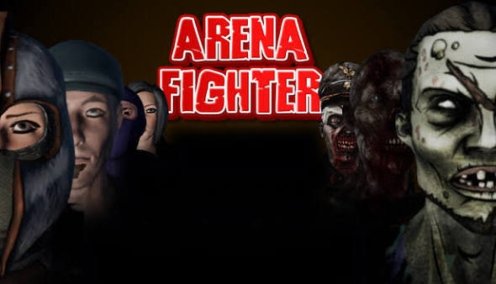

Fighter Arena
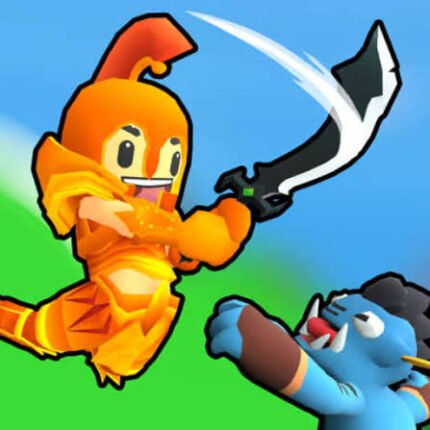
Fighter Arena is an arcade combat game built around quick one-on-one matches. Control the distance, protect the centre, use short combinations, and punish opponents when they miss or leave themselves open.
Fighter Arena
Fighter Arena places two rivals in a compact battleground where every step changes the distance between attack and danger. You move toward the opponent, test their defence with quick strikes, and pull back before their response catches you standing still.
The first match may feel like a race to press the attack controls, but constant aggression quickly becomes predictable. A missed strike gives the other fighter time to counter, while retreating too far can leave you trapped near the edge. Winning comes from controlling the centre and recognising when the opponent has left a real opening.
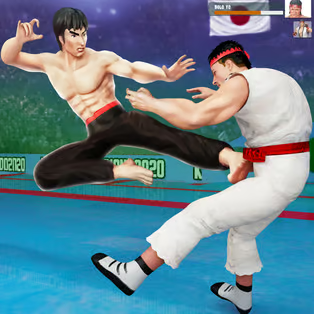
Players who enjoy focused one-on-one combat can also try Fighter Clash, where timing, movement, and short combinations decide each round.
What Fighter Arena Is About
Fighter Arena is an arcade-style combat game built around direct battles between two fighters. Your objective is to defeat the opposing character before your own health, lives, or round score runs out.
Depending on the version available on Gam-core, a match may be decided by:
- Reducing the opponent’s health bar
- Winning a set number of rounds
- Knocking the rival out of the active arena
- Earning more points before the timer ends
- Defeating increasingly difficult computer opponents
- Surviving a sequence of arena battles
The game keeps the objective clear. There are no large maps to search and no long missions separating you from the main action. You enter the arena, study the rival, and try to make better decisions during each exchange.
How Fighter Arena Gameplay Feels
A round normally begins with enough space for both characters to move. This opening gives you time to test the controls and see how the opponent reacts when you approach.
An aggressive rival may attack as soon as you enter range. A defensive fighter may wait for you to act first and punish the recovery after a missed strike. Other opponents may move backward until you follow them into a poor position.
The action becomes more tense once both fighters are close together. Quick attacks may interrupt slower movements, but pressing several buttons without watching the rival can leave your character facing the wrong direction or continuing a combination against empty space.
Fighter Arena feels most controlled when you treat every exchange separately. Move into range, choose one useful action, watch the result, and reset your position before starting again.
For another arena challenge based on reading different opponents, play Battle Arena.
Fighter Arena Controls
The exact controls can vary between browser builds, so check the instructions shown inside the game before beginning your first match.
A typical desktop layout may include:
- Arrow Keys or W, A, S, D: Move the fighter
- Basic attack key: Use a quick strike
- Strong attack key: Perform a slower, heavier action
- Block key: Defend against an incoming attack
- Jump key: Leave the ground when jumping is supported
- Special key: Use a stronger ability when available
- Pause key: Open the game menu
A local two-player edition may give each player a separate section of the keyboard.
Mobile versions may display movement and action controls around the edges of the screen. Test each button individually before trying to build longer combinations.
Control the Centre of the Arena
The middle of the arena usually provides the greatest number of movement options.
When your fighter stands near the edge, moving backward may no longer be possible. The opponent can continue applying pressure while you are forced to block, attack, or attempt an escape.
After avoiding an exchange, try to move back toward open space. Do not remain beside the boundary simply because the rival has stepped away.
Controlling the centre does not mean standing still. Keep making small adjustments so the opponent cannot approach from the same angle every time.
A strong central position allows you to move forward when an opening appears and retreat when a dangerous attack begins.
Understand Attack Range
Every attack has a useful distance.
Quick strikes normally work best when the opponent is close. They begin rapidly but may fail completely when used from too far away.
Stronger attacks may cover more space or cause more damage, but they often require additional time to finish. Missing one can give the opponent a clear counterattacking opportunity.
Use short movements to test the distance. Step closer, watch the rival, and retreat when they begin an action.
After several rounds, you should start recognising where each move can connect. This understanding is more useful than memorising a long sequence of buttons.
How to Win More Fighter Arena Matches
Watch Before Attacking
Do not begin every match by rushing toward the opponent.
Move close enough to encourage a reaction. Their first action may reveal whether they prefer attacking, defending, or retreating.
Begin With Quick Strikes
A fast attack carries less risk than a slow power move.
Use it to test the rival’s defence and learn how they respond after being pressured.
Keep Combinations Short
Two accurate strikes are often safer than a long sequence.
Stop attacking when the opponent moves away or raises a guard. Continuing against empty space gives them time to return with a counter.
Make Strong Attacks Miss
Move just outside the range of a slow action and return while the rival is recovering.
This creates a safer opening than attacking at the same time.
Change Your Timing
Do not always step forward and attack after the same delay.
Mix quick approaches, brief pauses, blocks, and retreats so your rhythm does not become predictable.
Players who prefer martial arts-themed battles can also try Karate King.
Why Defence Matters
Blocking is useful when there is not enough time to move, but holding the defensive control throughout the match rarely creates a winning plan.
A rival may wait until your guard ends, move into grabbing distance, or push you toward the edge while you remain still.
Block when an attack is actually approaching. Watch for a forward step, raised arm, body turn, or another animation showing that the rival has committed to an action.
Movement can provide an even cleaner defence. A short retreat may cause the strike to miss entirely while keeping your fighter close enough to respond.
After defending successfully, check whether the opponent’s sequence has finished. Countering too early can expose you to the second part of a combination.
Common Mistakes New Players Make
The most common mistake is attacking from outside the correct range. The character performs the action, but the opponent is too far away for it to matter.
Another mistake is using the same strong move repeatedly. Even a powerful action becomes easy to read when it appears every few seconds.
Players also chase retreating opponents without checking their own position. The rival may be moving backward deliberately, waiting for you to enter their preferred range.
Standing near the edge creates another danger. A player may focus entirely on attacking and fail to notice that their escape space has disappeared.
Button mashing can occasionally work against an easy opponent, but it removes control over timing. When several actions begin in sequence, you may be unable to block or move when the situation changes.
Reading Computer-Controlled Fighters
Computer opponents often repeat small habits.
One rival may attack whenever you move within close range. Another may block your first strike and respond immediately. A cautious opponent may keep retreating until you become impatient.
Use the first few seconds to identify these patterns.
Move toward the opponent without attacking and watch their response. Step away, approach again, and check whether they repeat the same behaviour.
Once a habit becomes clear, prepare a simple answer. Let an aggressive fighter miss, use quick attacks against a slow opponent, or stop chasing a rival who wants you near the edge.
Later opponents may react faster or change their behaviour more often, so avoid depending on one strategy throughout the entire game.
Local Two-Player Battles
A two-player mode makes Fighter Arena less predictable because human opponents can recognise your habits.
A friend may pretend to retreat before suddenly moving forward. They may also notice that you always attack after blocking or always escape in the same direction.
Check both control layouts before starting. Shared-keyboard matches become confusing when players use overlapping controls or accidental browser shortcuts.
Change your approach between rounds. Begin one match carefully, apply early pressure in another, and avoid relying on the same attack pattern.
Short rounds make rematches easy, allowing both players to adjust immediately.
For another quick competitive game, try Duel Game.
Health, Rounds, and Winning Conditions
Before attacking, understand how the current match is won.
In a health-based battle, protecting your own bar matters as much as damaging the opponent. A player with a lead does not need to take unnecessary risks.
A best-of-three format rewards consistency. One lucky victory may not be enough when the rival can change their approach in the next round.
Timed matches may award victory to the player with more health or points when the clock reaches zero. In that situation, chasing an opponent while already ahead can create avoidable danger.
A ring-out format gives positioning greater importance. A character close to the edge may be vulnerable even when their health remains high.
Knowing the winning condition helps you choose whether to attack, defend, or protect a lead.
Improving Through Rematches
Losing a round can show exactly which habit needs attention.
You may have attacked from too far away, blocked before the real strike began, or continued a combination after the rival had escaped.
Choose one problem and correct it during the rematch. Trying to change every part of your play at once can make the controls feel less natural.
Improvement often appears through small details:
- Fewer attacks miss
- You remain near the centre longer
- Opponent patterns become easier to recognise
- Your combinations become shorter and more accurate
- You stop rushing after losing health
These changes are more useful than simply pressing the controls faster.
Fighter Arena and Age-Appropriate Play
Fighter Arena presents fictional combat for entertainment. Its exact suitability depends on the visual style, intensity, online features, and regional classification of the version being played.
Parents and players can use the ESRB ratings guide to understand common labels for animated, fantasy, and fighting content.
European users can check the PEGI content labels for explanations of age recommendations and content symbols.
When multiplayer or chat features are available, do not share private details such as your full name, school, address, password, or personal contact information.
On-screen fighting actions should remain fictional and should not be copied in real life.
What Makes Fighter Arena Worth Playing
Fighter Arena creates a focused competition without requiring a long tutorial or complicated mission system.
There is only one main rival to watch, which makes every successful movement and mistake easy to understand. You can see when a strike was used from the wrong distance or when giving up the centre created unnecessary pressure.
Short rounds make repeated attempts convenient. You can lose, restart, and immediately test a different approach.
The game may feel limited for players seeking a long story, open-world movement, or detailed character development. Its main focus remains direct arena combat.
That simple structure is also its strength. You enter the match quickly, learn through real exchanges, and improve without waiting through lengthy introductions.
Browse the fighting games collection for more direct combat challenges.
Who Will Enjoy Fighter Arena?
Fighter Arena suits players who enjoy one-on-one battles, short rounds, martial arts themes, simple controls, and opponents whose habits can be learned.
Beginners can start with movement, basic strikes, and blocking. They do not need to understand every action during the first match.
More experienced players can focus on spacing, recovery timing, counterattacks, arena control, and changing their rhythm.
The game works well for short browser sessions because matches begin quickly and failed rounds are easy to replay.
Players looking for a realistic combat simulation may find the mechanics basic. Those who prefer accessible arcade competition are more likely to enjoy its direct design.
Play Fighter Arena Free Online
Play Fighter Arena free online on Gam-core.com and enter compact battles based on movement, accurate attacks, defence, and careful positioning.
Control the centre, avoid wasting powerful actions from the wrong distance, and watch how the rival responds before committing to your next move. The fighter who makes fewer unnecessary attacks often becomes the one left standing.

Reviews
There are no reviews yet.