
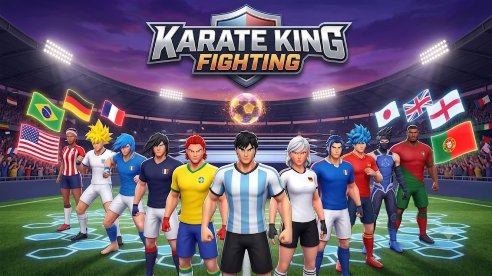


Karate King
Karate King is an arcade martial arts game where you face a series of fighters in one-on-one matches. Control your distance, block incoming strikes, build short combinations, and punish missed attacks to defeat every opponent.
Karate King
Karate King places you in a series of close-range martial arts battles where a small mistake can open the way for several unanswered hits. You control a skilled fighter, move across the arena, and use punches, kicks, defensive actions, and special attacks to defeat each opponent.
The controls are approachable, but winning takes more than pressing the attack buttons quickly. Strong opponents block predictable strikes, punish missed kicks, and force you to think about distance. The safest player is not always the one moving backward. It is the one who knows when to step in, land a short combination, and move away before the counterattack begins.
Players who enjoy one-on-one combat can also play Boxing, where controlled movement and carefully timed strikes matter more than constant aggression.
What Karate King Is About
Karate King is an arcade-style fighting game based on martial arts competition. You enter the arena against a series of opponents and attempt to reduce their health before they do the same to you.
Each match centres on a few important actions:
- Moving toward or away from the opponent
- Using quick punches at close range
- Throwing kicks from a safer distance
- Blocking or avoiding incoming attacks
- Building combinations from successful hits
- Using stronger attacks when a clear opening appears
The exact progression may differ depending on the browser version. Some versions arrange fights as individual levels, while others use a tournament structure where each victory unlocks a tougher opponent.
The game uses karate as its visual theme, but its fighting system is simplified for browser play. Real karate includes several styles, formal training methods, controlled competition rules, and detailed scoring standards. The World Karate Federation provides official information about organised karate competition.
How Karate King Gameplay Feels
The first opponent usually gives you enough time to understand the movement and attack range. Basic punches connect quickly when you are standing close, while kicks can reach farther but may take longer to finish.
As the battles become harder, opponents react more intelligently. They may block repeated attacks, move away from slow kicks, or begin their own combination when you miss.
This makes each fight a contest over small openings. You may block an attack, move forward during the opponent’s recovery, land two quick strikes, and retreat before they regain control.
Karate King feels best when you stop treating every second as an opportunity to attack. Brief pauses help you see what the opponent is doing. A fighter who waits half a second for a missed kick often gains a better opening than one who throws five random punches.
For more games built around timing and direct competition, browse the fighting games collection.
Karate King Controls
The control layout can vary between versions, so check the instructions shown inside the game before beginning your first fight.
A typical desktop setup may include:
- Arrow Keys or W, A, S, D: Move the fighter
- Punch key: Perform a quick hand strike
- Kick key: Use a longer-range leg attack
- Block key: Defend against an incoming strike
- Special key: Perform a stronger move when available
- Pause key: Stop the current match or open the menu
Mobile versions may replace keyboard inputs with touchscreen buttons.
Spend the opening round testing one control at a time. Learn how far your fighter moves from a short button press and how long each attack takes to finish. Understanding those small details is more useful than immediately trying to create a long combination.
Understanding Attack Range
Every attack needs the correct distance.
Punches are normally best at close range. They begin quickly and can interrupt an opponent who is preparing a slower action. Their weakness is limited reach. Throwing a punch from too far away gives the opponent time to respond.
Kicks often cover more space and can stop an approaching fighter. They may also cause more damage, but a missed kick can leave your character exposed for longer.
Try to stand near the edge of your useful range. From there, you can step forward to attack or step backward to make the opponent miss.
Do not judge distance only by the fighters’ feet. Look at how far their arms and legs travel during an attack. After a few rounds, you will begin to recognise which positions are safe and which are close enough for a strike to connect.
How to Win More Karate King Matches
Begin With Simple Attacks
Quick attacks help you understand the opponent without taking a large risk. Use a punch or short kick, then watch how the other fighter responds.
They may block, retreat, attack immediately, or remain still. That reaction tells you what to try next.
Use Short Combinations
Two or three controlled hits are often safer than holding the attack button. Long combinations can continue after the opponent has moved away, leaving your fighter attacking empty space.
Stop when the opening closes. Returning to defence is better than forcing one extra hit.
Make the Opponent Miss
Moving backward at the right moment can be more useful than blocking. The opponent’s attack misses completely, and you remain ready to respond during their recovery.
Do not retreat too early. You want the attack to begin before moving out of range.
Save Strong Moves for Clear Openings
Powerful attacks may cause more damage, but they are usually slower and easier to punish.
Use them after blocking a heavy strike, avoiding a kick, or stunning the opponent with a quicker attack.
Watch the Health Bars
When you have more health, there is no need to take unnecessary risks. Let the opponent approach and respond carefully.
When you are behind, remain patient. Rushing forward without reading the next attack often makes the situation worse.
Players who prefer a wider set of punches, kicks, blocks, and dodges can also try MMA Fighter.
Why Defence Matters
Defence in Karate King is not limited to holding the block button. Good movement can prevent an attack from reaching you in the first place.
Blocking is useful when you are close and do not have enough time to move. However, holding the guard continuously may allow the opponent to push you backward or wait for your defence to end.
Movement gives you more options. A short retreat can avoid a strike while keeping you close enough to counter. Moving too far away keeps you safe but may remove your own attacking opportunity.
Pay attention to the opponent’s animation. Many attacks have a visible beginning. Recognising the first part of a kick or punch gives you time to choose between blocking, moving, or preparing a counterattack.
The Olympic overview of karate explains how real competitive karate values controlled technique, timing, accuracy, and sporting rules. Karate King turns those broad ideas into a much simpler arcade challenge.
Common Mistakes New Players Make
The most common mistake is attacking before reaching the correct distance. The fighter performs the full animation, but the strike cannot touch the opponent.
Another mistake is repeating the same move. A kick that works once may be blocked the next time. Using it again and again makes your approach easy to predict.
Players also forget to move after completing a combination. Standing directly beside the opponent gives them a simple opportunity to answer.
Holding block for too long creates another problem. You may prevent some damage, but you give up control of the match and allow the opponent to choose when the next exchange begins.
New players sometimes use special attacks as soon as they become available. A strong move still needs proper distance and timing. Saving it for a clear opening is usually more effective.
Reading the Opponent
Computer-controlled opponents often have recognisable habits.
One fighter may begin with a kick every time you enter range. Another may block the first attack but respond slowly to the second. A more aggressive opponent may keep moving forward until you interrupt them.
Use the opening seconds to collect this information. Move slightly closer, then step back without attacking. Watch what the opponent does.
Once you identify a habit, prepare a response. If they always kick while approaching, move out of range and counter after the miss. If they remain defensive, use quick attacks and movement rather than one slow strike.
Stronger opponents may change their behaviour more often, but they still need to complete attack animations. Watching those movements gives you a better chance than guessing.
Progressing Through Tougher Fights
Early matches usually allow more mistakes. Later opponents may have more health, faster reactions, stronger attacks, or better defence.
A strategy based entirely on aggressive button pressing becomes less reliable as the difficulty rises. You need to control the space between both fighters and choose safer moments to attack.
Do not assume a lost match means the opponent is too strong. Think about where the damage occurred.
You may have attacked from too far away, remained close after a combination, or wasted a special move against a block. Correcting one repeated mistake can change the entire rematch.
When you defeat an opponent, pay attention to what worked. The same basic lesson may help in the next fight, even when the new character uses different attack patterns.
Karate King and Real Martial Arts
Karate King is designed as entertainment. Its simplified controls do not represent the discipline, coaching, supervision, and safety standards involved in real martial arts training.
Real karate is practised through structured instruction, controlled technique, protective rules, and respect between participants. Britannica’s overview of karate provides useful background on the martial art and its development.
Do not copy attacks from a game or practise contact techniques without qualified adult supervision and a properly managed training environment.
Inside Karate King, the goal is to learn game animations, manage distance, and respond to virtual opponents. Real training should always follow the direction of a responsible instructor.
What Makes Karate King Worth Playing
Karate King creates a focused fighting challenge without requiring players to memorise a huge move list. The objective is clear from the first match, but the timing becomes more demanding as the opponents improve.
The difference between punches, kicks, blocks, and stronger attacks gives each action a practical role. Quick attacks help test the opponent. Longer attacks control distance. Defence creates counterattacking opportunities.
The short matches also make improvement easy to notice. You can lose, restart, and immediately test a different approach.
The game may feel repetitive for players seeking a large story, detailed character customisation, or a complex career mode. Most of the experience remains centred on one-on-one fights.
Its strongest quality is directness. You enter the arena, read the opponent, and try to make better decisions before your health runs out.
Players who enjoy throws and heavier close-range movement may prefer Wrestling.
Who Will Enjoy Karate King?
Karate King suits players who enjoy martial arts themes, one-on-one fighting, short browser matches, and simple controls that still reward practice.
New players can begin with movement, quick punches, and blocking. They do not need to understand every attack before enjoying the game.
More experienced players can focus on range control, counterattacks, combination timing, and recognising opponent habits.
The game also works well for short sessions. A match can begin quickly, and losing does not require replaying a long level.
Players looking for a realistic karate simulation may find the system basic. Those who want an accessible arcade fighting game are more likely to enjoy its direct approach.
You can find more quick combat challenges in the action games section.
Play Karate King Free Online
Play Karate King free online on Gam-core.com and fight through martial arts matches using controlled movement, punches, kicks, blocks, and carefully timed special attacks.
Keep enough distance to see the opponent’s next action, avoid repeating the same attack, and stop a combination when the opening has closed. The best way to become the Karate King is not to attack more often, but to make each attack count.



Reviews
There are no reviews yet.