

Jigsaw Puzzle
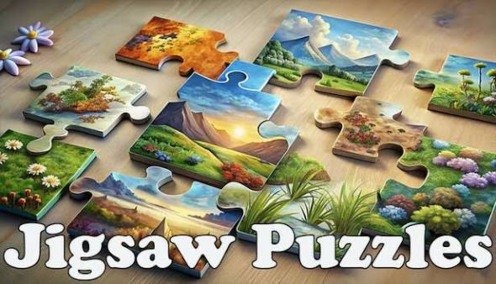
Jigsaw Puzzle is a relaxing visual game where you drag scattered pieces into place to rebuild a complete image. Sort colours, complete the border, form smaller sections, and choose a difficulty that matches your skill.
Jigsaw Puzzle
Jigsaw Puzzle turns a complete picture into scattered pieces and asks you to rebuild it one careful match at a time. There are no enemies chasing you and no complicated controls to memorise. The challenge comes from noticing small clues in colour, shape, texture, and position before placing each piece where it belongs.
The first few pieces usually feel easy. Corners and straight edges stand out quickly, but progress slows once the obvious matches are gone. That is when the game becomes less about guessing and more about reading the image properly. A tiny patch of sky, part of a window frame, or one repeated colour can be enough to guide the next move.
Players who enjoy calm thinking games can also try Mahjong, where careful visual matching matters more than speed.
What Jigsaw Puzzle Is About
Jigsaw Puzzle follows the familiar idea of a physical picture puzzle without requiring a large table or a box full of pieces. A finished image is divided into smaller connected shapes, mixed around the playing area, and left for you to assemble.
Your goal is to move every piece into its correct position until the original picture is complete. Some pieces are easy to identify because they contain a clear object or strong colour. Others may show only grass, clouds, water, walls, or another repeated background pattern.
A traditional jigsaw is defined by the way one image is divided into differently shaped pieces that fit together to restore the full picture. The Cambridge Dictionary explanation of a jigsaw gives a simple description of the same idea used in digital versions.
The basic objective never changes, but the difficulty can feel very different depending on the picture and the number of pieces. A colourful image with clear objects is usually easier than a landscape filled with similar shades. More pieces also mean more possible positions, so patience becomes increasingly important.
How Jigsaw Puzzle Gameplay Feels
Jigsaw Puzzle begins quietly. You scan the available pieces, identify the corners, and look for straight edges. Those early matches create a useful frame and provide a sense of progress.
The middle stage is usually the hardest part. You may have several groups of pieces completed, but no obvious way to connect them. A section of blue sky might look correct in several positions, while pieces showing leaves or brickwork may seem almost identical.
This is where the game becomes satisfying. One small match often reveals another. A piece with half a flower connects to a matching colour, which then joins a border section, and suddenly an empty part of the board begins to make sense.
There is usually no need to rush. You can study the shapes, move pieces aside, build small sections separately, and return to difficult areas later. That makes the game suitable for players who prefer steady progress over fast reactions.
For another slower challenge based on recognising patterns and letters, try Word Search.
Jigsaw Puzzle Controls
The controls are designed around moving pieces rather than controlling a character.
Desktop Controls
- Use the mouse to select a puzzle piece.
- Hold the left mouse button while moving the piece.
- Release the button to drop it into position.
- Use any available zoom or fullscreen controls when the picture becomes difficult to see.
Mobile Controls
- Tap and hold a piece.
- Drag it across the screen.
- Release it over the position where you think it belongs.
Some versions automatically lock a piece when it reaches the correct location. Others allow pieces to remain anywhere on the board until the whole section is properly aligned.
The version available on Gam-core may include its own buttons for restarting, viewing the complete image, changing difficulty, or rearranging loose pieces. Check the on-screen icons before beginning.
A Better Way to Start the Puzzle
The strongest opening is usually to separate the edge pieces from the middle pieces. Corners are especially useful because they have two straight sides and can only belong in four possible positions.
Once the corners are placed, look for pieces with one straight edge. These form the outside frame and reduce the amount of empty space you need to understand.
Building the border first is not always required, but it gives the puzzle a clear structure. It also helps you estimate where objects from the original image should appear.
If the image contains a strong feature, such as a bright red car, a face, a large sign, or a colourful building, you can build that section before completing the entire frame. Clear objects are easier to organise than large areas of similar background colour.
Useful Jigsaw Puzzle Strategies
Sort Pieces by Colour
Move pieces with similar colours into rough groups. Keep sky pieces together, place darker objects in another area, and separate any bright or unusual details.
This does not solve the puzzle immediately, but it reduces the number of pieces you need to compare at one time.
Study the Piece Shape
Colour alone can be misleading. Two pieces may show the same shade but have completely different connectors.
Check which sides point outward and which sides curve inward. A piece must match both the image and the surrounding shapes.
Build Small Sections Separately
You do not need to place every piece directly into the final frame. It can be easier to assemble a small object first and move the completed group later.
A roof, animal, tree, or piece of furniture may be easier to recognise as a separate section than as part of the full image.
Use the Original Picture Carefully
Many digital jigsaw games allow you to view the complete image. Use it to confirm where major objects belong rather than checking it after every move.
Constantly opening the reference image can interrupt your focus. A quick look before starting each difficult section is usually more helpful.
Move Difficult Pieces Aside
A piece that does not make sense now may become obvious later. Place it in a clear area instead of repeatedly testing it in random positions.
Guessing can waste time and create clutter. Leaving space around unfinished sections makes real matches easier to notice.
Players who prefer solving through written clues can move next to Crosswords.
Common Mistakes That Slow Progress
One common mistake is trying every loose piece in every open space. This may eventually create a match, but it turns the game into repeated guessing rather than visual problem-solving.
Another mistake is focusing only on colour. Large areas such as oceans, skies, fields, and walls may contain dozens of pieces with almost the same shade. Shape, line direction, and small texture changes matter just as much.
Cluttering the board can also make the puzzle harder than necessary. When loose pieces cover completed sections or overlap one another, useful details become hidden. Keeping unused pieces around the outside creates a cleaner working area.
Some players also spend too long forcing one difficult section. Moving to another part of the picture often creates new clues. Once more of the puzzle is complete, the troublesome pieces have fewer possible positions.
Choosing the Right Difficulty
A small puzzle is the best place to learn the controls and understand how pieces connect. It can be completed quickly without making the board feel crowded.
Medium-sized puzzles provide a better balance between relaxation and challenge. They include enough pieces to require sorting, but the picture usually remains easy to read.
Large puzzles are better for players who enjoy longer sessions. They require more screen space, more careful organisation, and greater attention to repeated colours.
The picture itself matters as much as the piece count. An image with people, buildings, animals, and strong colour changes may be easier than a smaller puzzle showing only water or clouds.
Digital jigsaw games appear on many platforms, including the officially listed Microsoft Jigsaw game, which shows how features such as zooming and piece organisation can support larger puzzles.
What Makes Jigsaw Puzzle Worth Playing
Jigsaw Puzzle offers a form of challenge that does not depend on reflexes. You can stop, reconsider a piece, rearrange your workspace, and continue without losing progress because of one slow reaction.
The game also creates frequent small rewards. Every correct connection makes the remaining puzzle slightly easier. Even before the picture is complete, finished corners and connected sections show that your approach is working.
Digital play removes some of the inconvenience of a physical puzzle. Pieces do not fall onto the floor, the board does not take over a table, and a puzzle can often be restarted in seconds. At the same time, the core satisfaction of recognising a match remains intact.
The limitation is that some images contain large repetitive sections that may feel slow rather than challenging. Players who want action, competition, or a story may find the pace too quiet. Jigsaw Puzzle works best when approached as a focused visual task rather than a fast game.
More straightforward thinking challenges are available in Simple Puzzles.
Who Will Enjoy Jigsaw Puzzle?
Jigsaw Puzzle is suited to casual players, puzzle fans, younger learners, adults seeking a quiet break, and anyone who enjoys organising visual information.
Beginners can start with a low piece count and use clear images. Experienced players can choose larger puzzles or pictures with repeated patterns for a tougher challenge.
It is also useful for short play sessions because there is no long tutorial or complicated progression system. You can begin solving immediately and stop after completing one section.
Players who dislike timers or competitive pressure may find the slower format especially comfortable. The game allows you to work at your own pace and choose whether the goal is a quick completion or a more demanding puzzle.
Play Jigsaw Puzzle Free Online
Play Jigsaw Puzzle free online on Gam-core.com and rebuild each image by matching colours, shapes, edges, and small visual details. Begin with the corners, organise similar pieces, and let the picture become clearer one section at a time.
A difficult puzzle rarely gives up its answer immediately. Keep the board tidy, move away from sections that are not working, and use every completed group as a clue for the next placement.


Reviews
There are no reviews yet.