

Brain Training
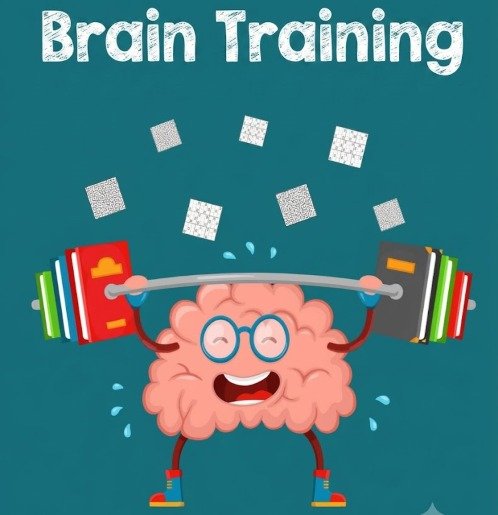
Brain Training is a varied puzzle collection featuring memory tests, logic questions, Sudoku, word activities, block challenges, and speed exercises. Choose a task, follow its rules, improve your accuracy, track your progress, and switch categories whenever you want a different mental challenge.
Brain Training Memory Logic and Speed Puzzle Game
Brain Training is a collection of short mental challenges that test how carefully you remember details, spot patterns, solve number problems, and react to changing information. Instead of building one long campaign around a single mechanic, the game lets you move between different puzzle styles whenever you want a fresh challenge.
A session may begin with a memory exercise, continue with Sudoku, and finish with a faster Tetris-style activity. The controls remain simple, but accurate answers become harder when the board grows, the timer starts moving, or the game asks you to hold several details in mind at once.
What Is Brain Training?
Brain Training is a browser puzzle game developed by Darah Studio. It was released in August 2024 and uses the Construct game engine. The verified version supports PC, Android, and iOS play through a compatible browser.
The game brings several familiar puzzle formats into one place. Its listed activities include memory exercises, Sudoku, fillword puzzles, Tetris-style tasks, logic questions, attention challenges, and speed-based games.
You do not control a character or travel through a story. Progress comes from completing exercises, improving accuracy, and handling increasingly demanding tasks.
Players who enjoy number grids can also try Sudoku Classic Brain Puzzle, which focuses more deeply on placing numbers without repetition.
How Brain Training Gameplay Works
Brain Training begins by letting you choose an exercise or challenge group. Each activity presents its own rules, goal, and way of answering.
Some tasks ask you to remember objects or positions that disappear after a few seconds. Others present numbers, letters, blocks, words, or patterns that must be completed correctly.
A normal session may follow this pattern:
- Choose a puzzle category.
- Read the short instruction shown on screen.
- Study the numbers, words, pictures, or shapes.
- Select an answer with the mouse or touchscreen.
- Review whether the response was correct.
- Continue to a more difficult round.
- Check progress and try to improve the result.
The exercises are short enough to play separately. You do not need to complete every activity during one visit.
Memory Challenges
Memory activities briefly show information and then hide part or all of it. You may need to remember where an object appeared, which tile contained a symbol, or what order several items followed.
The first round may present only a few pieces of information. Later attempts can add more tiles or reduce the amount of time available for studying them.
A good approach is to look for structure rather than trying to remember every item separately. Grouping nearby objects or creating a simple visual pattern can make the board easier to recall.
For example, three highlighted tiles may form a corner or diagonal line. Remembering that shape is usually easier than holding three unrelated positions in mind.
Avoid clicking immediately after the display changes. Take a moment to reconstruct the original arrangement before confirming the answer.
Attention and Observation Exercises
Attention challenges test how quickly you can notice a small change or identify the item that does not match the others.
A board may contain many similar symbols with one slightly different shape, direction, color, or number. The difference is often visible, but crowded information can make it easy to overlook.
Do not scan the board randomly. Start in one corner and move across each row in a fixed direction.
This method reduces the chance of checking one section several times while missing another area completely.
Players who like visual comparison challenges may enjoy Find Easy Hidden Differences, where each level asks you to notice changes between two similar pictures.
Logic Puzzles
Logic exercises provide a set of rules and ask you to identify the only answer that satisfies them.
The challenge may involve number relationships, shapes, sequences, missing pieces, or objects placed according to a hidden pattern.
When several answers seem possible, compare them one rule at a time. Remove any choice that clearly breaks the sequence before deciding between the remaining options.
Guessing may move the round forward, but it does not help you understand the pattern. Look for a repeated change, such as:
- A number increasing by the same amount
- A shape rotating in one direction
- Colors following a repeating order
- One item being added during every step
- Two rules alternating across the sequence
The intended answer usually becomes clearer after the unnecessary choices have been removed.
Sudoku Challenges
Sudoku uses a square number grid divided into smaller sections. The goal is to fill empty cells without repeating a number in the same row, column, or section.
Begin with rows or columns that already contain many numbers. Fewer empty spaces mean fewer possible answers.
Do not treat every blank cell as a separate problem. A number excluded from one row may create a forced answer inside a crossing section.
When two values remain possible, leave the cell temporarily and inspect another area. A later placement may remove the uncertainty without requiring a guess.
Sudoku rewards patience more than speed. One incorrect number can create problems across several parts of the board.
Fill word and Word Challenges
Fill word puzzles ask you to locate or arrange words inside a group of letters. The exact format may vary, but the central challenge is recognizing valid words without losing track of the available letters.
Start with longer or more unusual words when a list is provided. They often have fewer possible positions than short common words.
Check horizontal, vertical, diagonal, and reversed arrangements when the game allows them.
When letters must be connected, avoid using a useful letter too early if it may belong to a longer word.
Word puzzles create a different pace from number and memory exercises. Switching between them can keep a longer Brain Training session from feeling repetitive.
Tetris-Style Exercises
Tetris-style activities use falling or placed blocks that must be arranged into complete lines or useful shapes.
Unlike a pure logic question, these exercises add movement and timing. You need to recognize the current piece while also preparing space for the next one.
Keep the playing area as flat as possible. Tall uneven columns create narrow gaps that are difficult to fill later.
Avoid placing pieces only to clear one immediate line. A move that keeps the board organized may be more valuable than a quick score increase.
These activities are useful when you want a faster challenge after spending time on slower number or word puzzles.
Speed and Reaction Challenges
Some Brain Training activities measure how quickly you respond to visual information.
You may need to click a matching item, choose a correct number, or react when a symbol appears. Accuracy still matters because hurried mistakes can remove the advantage gained from answering quickly.
Begin at a controlled pace. Once you understand the task, increase your speed gradually.
Trying to set a fast time during the first attempt often leads to mis clicks and confusion.
Gam-core’s guide on improving reaction times for competitive gaming also explains why focused practice and regular breaks are more useful than repeating an exercise while tired.
Adaptive Difficulty and Progress Tracking
The listed version of Brain Training includes progress tracking and adjusts challenge difficulty according to performance. This means exercises can become more demanding as your results improve.
A progress system gives you a reason to repeat activities instead of completing each one only once.
However, do not judge a session only by the highest score. Accuracy, consistency, and understanding the mistake are also useful measures.
When one puzzle type repeatedly produces poor results, slow down and identify the reason. You may be misunderstanding a rule rather than reacting too slowly.
Main Brain Training Features
- Several puzzle styles: Memory, logic, attention, speed, word, number, Sudoku, and block-based activities provide different challenges.
- Short individual exercises: Tasks can be completed during a brief break without beginning a long mission.
- Adaptive difficulty: Supported exercises become harder according to player performance.
- Progress tracking: Results can be reviewed to see which activities have improved and which remain difficult.
- Simple interaction: Most challenges use clicking or tapping rather than complicated keyboard combinations.
- Single-player play: The focus remains on personal scores and puzzle completion rather than direct competition.
- Browser support: The verified version works online without a traditional download.
- Multiple device support: Brain Training is listed for PC, Android, and iOS browsers.
- English interface: The current verified listing identifies English as the supported language.
- No required purchase: The listed browser version is free and does not include in-game purchases.
Brain Training Controls
The game mainly uses a mouse or touchscreen.
| Action | Desktop Control | Mobile Control |
|---|---|---|
| Select an exercise | Left-click | Tap |
| Choose an answer | Left-click | Tap |
| Place a number or letter | Click the cell and option | Tap the cell and option |
| Move a block | Mouse or displayed keys | Swipe or on-screen buttons |
| Open the menu | Click the menu icon | Tap the menu icon |
| Restart an exercise | Click restart | Tap restart |
| Continue to the next round | Click continue | Tap continue |
Different exercises may present slightly different controls. Read the instruction shown before each task rather than assuming every activity works in the same way.
Starting With Easier Exercises
Beginning with the hardest available challenge may feel ambitious, but it can make the rules harder to learn.
Use easier rounds to understand what the exercise expects. Once the input method and scoring become familiar, move toward larger boards or faster timers.
This is especially important when switching to a new puzzle type. Being good at Sudoku does not automatically make a memory sequence easy.
Each activity uses a different kind of information, so give yourself one or two practice rounds before concentrating on scores.
Building a Balanced Session
Repeating one exercise for a long period can make attention drop. A mixed session is often more enjoyable.
You might begin with a slow logic puzzle, continue with a memory task, and finish with a faster block or reaction game.
This gives each activity a clear purpose and prevents one difficult level from controlling the whole session.
Keep the session short enough that you are still reading instructions carefully. When you begin clicking without thinking, a break is usually more useful than another round.
Learning From Wrong Answers
A wrong answer gives useful information when you stop and check why it happened.
In a memory task, you may have confused two nearby positions. In a number puzzle, you may have ignored a rule that applied to both a row and a section.
Speed challenges can reveal another problem: you may recognize the correct answer but click before confirming its location.
After a mistake, change one part of your approach. Scan more systematically, group information differently, or wait one extra moment before selecting.
Repeating the same rushed method rarely changes the result.
Avoiding Mental Fatigue
Brain Training is designed around short exercises, and that format works best when you take breaks.
A tired player may read numbers incorrectly, forget simple positions, or make several quick errors that did not happen earlier.
Stop when your performance begins falling across several activities. Continuing only to recover a score can make the session feel frustrating.
The game should be treated as a puzzle collection and a source of entertainment, not as a medical test.
Although players can become better at the specific exercises they practise, broad claims that brain-training games automatically create major improvements in everyday thinking are not firmly established.
Common Brain Training Mistakes
Ignoring the Instructions
Similar-looking exercises may use different rules. Read the opening message before selecting anything.
Rushing the First Round
Use the first attempt to understand the controls. Speed becomes useful only after the task is clear.
Guessing After One Quick Look
Memory and observation challenges reward careful study. Use the full viewing time when it is available.
Playing One Category Repeatedly
Switching activities can prevent boredom and give you a clearer picture of which puzzle styles you enjoy.
Focusing Only on Scores
A slightly slower correct answer is better than several rushed mistakes.
Continuing While Tired
Mental fatigue reduces attention. A short break may improve the next attempt more than repeated play.
Comparing Unrelated Exercises
A low score in a fast reaction task cannot be directly compared with a longer Sudoku result. Each game measures progress differently.
Tips for Better Brain Training Sessions
Remove Distractions
Turn down unnecessary notifications and keep the game area easy to see.
Read Before Clicking
One sentence of instructions can completely change how the puzzle should be solved.
Use Patterns in Memory Games
Remember shapes, groups, and positions rather than treating every item as separate.
Scan Visual Boards Systematically
Move from left to right or top to bottom so no section is missed.
Eliminate Wrong Answers
In logic puzzles, removing impossible options is often easier than identifying the correct one immediately.
Prioritize Accuracy
Build a reliable method before trying to improve your speed.
Change Puzzle Categories
Move to words, numbers, memory, or blocks when one style begins feeling repetitive.
Take Short Breaks
Rest your eyes and attention after several rounds, especially when mistakes begin increasing.
Graphics and Interface
Brain Training uses a simple interface designed to keep numbers, letters, shapes, and puzzle boards easy to read.
The landscape layout provides enough horizontal room for grids, choice buttons, and information panels. The verified game listing identifies landscape as its main orientation.
The presentation changes slightly between activities, but the controls remain centered around selecting visible answers.
A clean layout is important in this type of game because decoration should not hide the information being tested.
The game does not depend on realistic graphics or character animation. Its visual design exists mainly to make each exercise understandable.
Difficulty and Learning Curve
Brain Training is beginner-friendly because most tasks use familiar actions such as matching, remembering, counting, arranging, and selecting.
The difficulty comes from adding more information or reducing the time available.
Memory grids become harder as more positions must be recalled. Sudoku boards require longer chains of deduction, while speed exercises demand quicker but still accurate responses.
Players may also find different categories difficult for different reasons. Someone comfortable with numbers may struggle with word searches, while another player may prefer observation tasks over block placement.
This variety allows you to find activities that feel natural and others that provide a stronger challenge.
Who Should Play Brain Training?
Brain Training is a good choice for players who enjoy short puzzles, memory games, Sudoku, word tasks, pattern recognition, and personal score improvement.
It works well when you do not want to commit to a long story or multiplayer match. You can complete one exercise and leave without losing a large amount of progress.
Younger players may enjoy the simple controls, while older players may appreciate having several familiar puzzle types in one place.
Players looking for action, character progression, exploration, or direct competition may find the experience too quiet.
For a deeper strategy challenge based on planning against an opponent, try Master Chess. Players who prefer number merging can visit Chain Cube 2048 3D Merge.
Honest Strengths and Limitations
| Strengths | Possible Limitations |
|---|---|
| Several puzzle types reduce repetition | Some activities may feel familiar to experienced puzzle players |
| Controls are simple to understand | Limited story or character development |
| Short exercises suit quick sessions | Progress is mainly based on personal results |
| Difficulty can adapt to performance | Faster stages may frustrate players who prefer relaxed puzzles |
| Supports memory, logic, word, and number play | Not every player will enjoy every category |
| Progress tracking adds replay value | Internet access may be required for the browser version |
| Works across several device types | Controls can differ slightly between exercises |
| Free browser access | It should not be treated as a medical assessment |
Brain Training Game Information
| Detail | Information |
|---|---|
| Game title | Brain Training |
| Developer | Darah Studio |
| Genre | Puzzle, memory, logic, learning, and speed |
| Original release | August 2024 |
| Latest verified update | January 2026 |
| Game engine | Construct |
| Platforms | PC, Android, and iOS browser |
| Orientation | Landscape |
| Game mode | Single-player |
| Controls | Mouse or touchscreen |
| Supported language | English |
| Download required | No for the browser version |
| In-game purchases | None listed |
The current game listing confirms Darah Studio as the developer and identifies the platforms, release period, update date, engine, language, and single-player browser format.
More puzzle, casual, board, and strategy titles are available in the Gam-core games collection.
Frequently Asked Questions
What type of game is Brain Training?
Brain Training is a collection of short puzzle exercises involving memory, logic, attention, numbers, words, speed, Sudoku, and block placement.
Who developed Brain Training?
The verified browser version was developed by Darah Studio.
Can I play Brain Training on a phone?
Yes. The listed version supports Android and iOS devices as well as PC browsers.
Does Brain Training require a download?
No. The browser version can be played online without installing a traditional game.
Is Brain Training multiplayer?
No. This version is designed as a single-player experience based on individual exercises and progress.
Does Brain Training include Sudoku?
Yes. Sudoku is listed alongside memory, logic, fillword, Tetris-style, attention, and speed activities.
How do I control Brain Training?
Most exercises use mouse clicks on desktop and taps on a touchscreen device.
Does the game save progress?
The listed version includes progress tracking. Saving behavior may depend on the browser and hosting platform.
Is Brain Training suitable for beginners?
Yes. New players can begin with simpler exercises before moving toward faster or more complicated challenges.
Does Brain Training make players smarter?
The game provides practice with its own memory, logic, attention, and speed exercises. That does not guarantee broad improvements in intelligence or everyday cognitive ability.
Does Brain Training include in-game purchases?
The verified listing states that the game does not contain in-game purchases.
What should I do when my score starts dropping?
Slow down, switch to another exercise, or take a short break. Repeated mistakes often increase when attention becomes tired.
Reviews
There are no reviews yet.