

Puzzle Quest
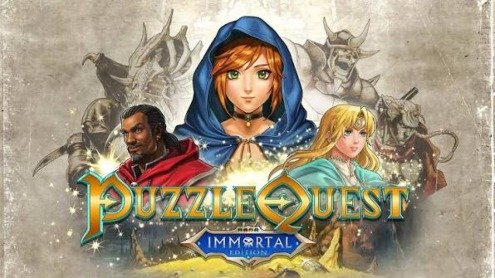
Puzzle Quest combines match-three battles with a full fantasy role-playing adventure. Create a hero, collect mana, cast spells, complete quests, improve equipment, build a Citadel, capture creatures, and outthink enemies on a shared puzzle board.
Puzzle Quest Match Three Fantasy RPG Adventure
Puzzle Quest combines a colorful match-three board with the progression of a fantasy role-playing game. Instead of matching gems only to clear a level, every move can generate mana, damage an enemy, earn gold, or prepare a spell.
You create a hero, travel across a kingdom, complete story quests, learn new abilities, collect equipment, and fight enemies through turn-based puzzle boards. The rules are easy to recognize, but every match also gives your opponent a chance to use the board, making careless moves surprisingly costly.
What Is Puzzle Quest?
Puzzle Quest commonly refers to Puzzle Quest: Challenge of the Warlords, the game that introduced many players to the match-three RPG format. It was developed by Infinite Interactive and originally released in 2007.
The game takes the familiar idea of matching three or more identical gems and places it inside a fantasy adventure. Battles, character growth, spells, equipment, quests, companions, and castle improvements are all connected to the puzzle system.
A modern remastered version called Puzzle Quest: Immortal Edition was released in September 2025. It combines the original adventure with additional content, updated presentation, more character options, and support for modern platforms.
Players who prefer traditional board strategy without character upgrades can also try Master Chess. Puzzle Quest has a more adventurous structure because every battle helps develop a persistent hero.
How Puzzle Quest Gameplay Works
You begin by creating a hero and choosing a character class. The available class affects starting statistics, spells, equipment choices, and the way you approach puzzle battles.
Your hero then travels across a map containing cities, castles, enemy locations, side quests, shops, companions, and story objectives.
When combat begins, you and the enemy share one match-three board. Players take turns swapping neighboring tiles to create groups of at least three matching symbols.
Different tiles provide different results:
| Tile | General Purpose |
|---|---|
| Colored mana gems | Generate mana for spells |
| Skulls | Deal direct damage |
| Gold coins | Add gold rewards |
| Experience stars | Provide experience |
| Special tiles | Create effects based on the battle or game version |
A normal turn involves finding a legal swap, considering what it gives you, and checking what it may leave for the enemy.
Matching four or more gems can provide an extra turn or another useful bonus. This makes longer combinations especially valuable because they allow you to act again before the opponent can respond.
The Shared Puzzle Board
The shared board is the most important part of Puzzle Quest. You are not solving a private puzzle while the enemy waits in the background.
Every tile you move changes the board for both sides. A harmless mana match may cause new tiles to fall into place and create a large skull match for your opponent.
Before confirming a move, inspect the spaces directly above it. Try to estimate what will fall after the matched gems disappear.
You cannot always predict every new tile entering the board, so a small amount of luck remains part of combat. Good planning still reduces how often the opponent receives an obvious advantage.
The strongest move is not always the match that gives the most immediate resources. A smaller match can be better when it prevents the enemy from collecting the mana needed for a dangerous spell.
Matching Mana Gems
Colored gems generate the mana used to cast spells. Different spells require different combinations of colored mana.
A warrior may depend heavily on one or two colors, while a magic-focused class may need several colors to use its strongest abilities.
Check the spell costs before making a mana match. Collecting a color that none of your equipped spells uses may provide little immediate value.
It is also important to watch the enemy’s mana. When an opponent is one match away from casting a powerful spell, taking those gems yourself can be a useful defensive move.
This creates a constant choice between building your own resources and denying resources to the enemy.
Players who enjoy planning the placement of matching objects may also like Chain Cube 2048 3D Merge, although its number-merging system does not include turn-based combat.
Using Skulls to Deal Damage
Matching skulls deals direct damage to the opposing character. The exact amount can be affected by the number of skulls, special skull types, equipment, statistics, and active effects.
A basic skull match is useful because it does not require mana. However, taking every available skull without thinking can still be a mistake.
A small attack may leave a stronger match open for the enemy. It may also delay a spell combination that would create much more damage during the next turn.
Look for skulls that can become part of a four-gem match or a chain reaction. These moves can deal damage while also providing another turn.
Some spells create, remove, or transform skulls. Combining those abilities with the board’s current layout can produce much stronger attacks than waiting for skulls to appear naturally.
Choosing a Hero Class
Your class shapes the way your hero develops. Classes have different attributes, spell lists, and preferred approaches to combat.
A durable class may survive long battles and use steady physical damage. A spell-focused class may collect several mana colors before creating a large combination.
Other classes can concentrate on speed, board manipulation, status effects, defense, or direct attacks.
There is no single class that is best for every player. A useful choice is one whose spell costs and abilities make sense to you.
Beginners may prefer a class with simple damage or healing abilities. More complicated classes often depend on creating specific board conditions before their spells become effective.
The Immortal Edition expands the available character choices while retaining the original game’s hero development and spell-based combat.
Learning and Equipping Spells
Spells are special abilities powered by collected mana. They can damage enemies, restore health, change tiles, protect the hero, steal resources, or create another tactical effect.
Your hero can learn many spells, but only a limited selection is normally prepared for battle.
A balanced spell setup should include abilities with different purposes. Depending on the class, this may include:
- A dependable damage spell
- A defensive or healing ability
- A spell that changes the board
- A low-cost option for early turns
- A stronger ability for longer battles
Avoid equipping several expensive spells that need the same mana colors. You may spend too many turns collecting resources without having anything useful to cast.
Board-changing spells are particularly valuable because they can create matches, remove dangerous tiles, or stop the enemy from completing a planned move.
Quests and the Fantasy Map
Puzzle Quest is structured around a fantasy world map rather than a simple list of puzzle stages.
You travel between settlements, accept missions, meet characters, battle enemies, and open new parts of the story.
Main quests move the central adventure forward. Side quests provide additional battles, rewards, companions, items, and world details.
The map gives each puzzle battle a reason to happen. You may be defending a town, following a suspicious character, collecting information, or confronting a dangerous creature.
This structure helps Puzzle Quest feel like a complete role-playing game rather than a collection of disconnected match-three levels.
Players who enjoy following clues and opening new areas may also like Escape Game Basic, where progression comes from solving environmental puzzles instead of matching gems.
Hero Levels and Experience
Winning battles and collecting experience tiles helps your hero gain levels.
Each level can improve attributes connected with mana gain, combat, spell effectiveness, resistance, and other parts of the character build.
The best attribute choice depends on your class and current spells. Increasing every statistic equally may produce a hero with no clear strength.
Look at which mana colors your main abilities use. Improving the related mastery can help you collect those resources more efficiently.
Leveling also makes it possible to handle stronger enemies and more difficult quest areas. However, character level alone does not guarantee victory.
A lower-level hero with well-chosen spells and equipment can perform better than a poorly prepared hero with higher basic statistics.
Equipment and Magical Items
Puzzle Quest includes equipment that changes your hero’s abilities and battle performance.
Items may affect health, mana, damage, resistance, gold rewards, or other statistics. Some work best with particular classes or spell combinations.
Do not equip an item only because it has a higher number. Check whether its effect supports the way you actually play.
An item that improves a rarely used mana color may be less helpful than one that supports your main spell.
As the adventure continues, you can find, purchase, or create stronger equipment. Inventory choices add another layer of preparation before entering difficult battles.
The current Immortal Edition includes collected items, hidden runes, magical equipment creation, and a Citadel Forge.
Building the Citadel
Your Citadel acts as a personal base that can be improved over time.
Different buildings open useful services and bonuses. These may support equipment creation, creature training, spell research, mounts, or other parts of progression.
Building improvements require resources, so it is useful to decide which service will help your current hero most.
A Forge may be valuable when equipment is limiting your progress. Another building may be more useful when you want to research spells or improve captured creatures.
The Citadel gives gold and other rewards a purpose beyond buying temporary supplies. It also creates long-term goals outside the main story.
Capturing and Researching Creatures
Some enemies can be captured after certain conditions are met. Captured creatures can provide new opportunities rather than disappearing after one battle.
Research activities can allow your hero to learn abilities associated with a captured monster. This often involves completing a separate puzzle with its own rules.
These research puzzles provide a change from normal combat. Instead of reducing an enemy’s health, you may need to clear the board or complete a specific condition.
Not every monster ability fits every hero build. Learn spells that support your main strategy rather than collecting them only because they are available.
Captured creatures may also become mounts, depending on the creature and game version.
Mounts and Travel Benefits
Mounts are captured creatures that can be trained and used by the hero.
A mount may provide movement benefits, combat bonuses, or another useful effect. Training can improve its level and value.
Choosing a mount is similar to choosing equipment. The most unusual creature is not automatically the most useful one.
Check how its bonus works with your class and spells. A small improvement that activates in every battle may be more useful than a powerful effect that rarely applies.
Mount training also gives players another progression system to work on between quests.
Companions
Companions are characters who join your journey and provide support.
They may offer bonuses, open dialogue, affect quests, or assist with particular parts of the adventure.
Some companions become available through story progress, while others may require side quests or specific decisions.
Companions help the world feel more connected because characters remain important after their first appearance.
Read what each companion provides before choosing one. A bonus that supports your current goal may be more useful than keeping the same character for every situation.
Extra Turns and Larger Matches
Matching four or five tiles is one of the most useful actions in Puzzle Quest.
A four-tile match commonly provides an extra turn, allowing you to make another move before the enemy can act.
A five-tile match may provide an even stronger reward, depending on the version and board situation.
Extra turns allow you to collect mana, deal damage, and prepare spells without giving the enemy access to the board.
Always scan for longer matches before making a basic group of three. They can appear horizontally or vertically and may also be created through falling tiles.
Spells that transform gems are particularly effective when they create a guaranteed four-tile or five-tile combination.
Creating Chain Reactions
A chain reaction happens when the first match causes new tiles to fall and create another automatic match.
These combinations can produce mana, damage, gold, experience, and additional turns during one move.
You cannot fully control every falling tile, but you can look for likely chains.
Check whether matching one row will cause two identical gems above it to land beside a third. Also look for skulls positioned close to a gap that will appear after your move.
Chain reactions are satisfying, but they also create risk. When the board settles without giving you another turn, the opponent receives the new layout.
A long combination can leave valuable tiles exposed, so consider what the final board may look like.
Managing Enemy Mana
The enemy uses mana and spells under rules similar to yours.
Their available abilities are usually visible, allowing you to see which colors they need and how close they are to casting.
This information should influence your moves. When an enemy needs only a few red gems for a major attack, leaving an easy red match can be dangerous.
You can take the matching gems, remove them with a spell, or change the board so the opponent cannot reach them.
Mana denial is especially useful against enemies with one powerful spell. Slowing that ability may give you enough time to win through normal skull damage.
Gold and Experience Tiles
Not every match needs to damage the enemy or produce mana.
Gold tiles provide money that can support equipment, Citadel improvements, and other purchases.
Experience tiles help your hero grow. They can be worth taking during easier battles when the enemy is not creating immediate pressure.
During a difficult fight, survival should come first. A gold match is not valuable when it leaves a large skull attack available to the enemy.
Try to collect these rewards when they fit naturally into the battle rather than building the entire strategy around them.
Main Puzzle Quest Features
- Match-three combat: Puzzle matches generate mana, damage enemies, or provide rewards.
- Shared battle board: Every move changes the options available to both players.
- Fantasy role-playing story: Travel through a kingdom, meet characters, and complete main and side quests.
- Hero classes: Different classes provide unique attributes, spells, and battle styles.
- Character progression: Gain levels, improve statistics, and prepare stronger abilities.
- Equipment system: Find and use items that support different hero builds.
- Spell collection: Learn abilities that damage, protect, heal, or change the board.
- Citadel building: Construct useful buildings that open services and bonuses.
- Creature capture: Capture monsters, research their abilities, and use some as mounts.
- Companions: Recruit helpful characters while progressing through the story.
- Puzzle mini-games: Additional puzzle formats support crafting, research, and other systems.
- Single-player and multiplayer options: Available modes depend on the edition and platform.
Puzzle Quest Controls
The exact controls depend on the platform.
| Action | Common Control |
|---|---|
| Select a gem | Click, tap, or choose it with a controller |
| Swap gems | Drag toward a neighboring tile or select both tiles |
| Cast a spell | Select the spell from the battle menu |
| View enemy abilities | Open or highlight the enemy information |
| Travel on the map | Select a connected destination |
| Open inventory | Choose the equipment menu |
| Review quests | Open the quest journal |
| Manage the Citadel | Select the Citadel and its buildings |
| Save progress | Use the supported save system |
The modern Immortal Edition is available on Windows, Nintendo Switch, PlayStation 4, PlayStation 5, Xbox One, and Xbox Series consoles. The original game was also released across several older handheld, mobile, computer, and console platforms.
Tips for Winning Puzzle Battles
Check for Four-Gem Matches First
An extra turn lets you make progress without immediately giving the board to your opponent.
Read the Enemy Spells
Know which colors the enemy needs. Remove or collect those gems when an important ability is nearly ready.
Build Mana With a Purpose
Collect colors connected to equipped spells rather than matching every available mana gem.
Consider the Next Board
Look above the tiles you plan to remove. Falling gems may create a useful chain or an easy enemy attack.
Keep a Low-Cost Spell Ready
An affordable ability gives you something useful to do before your larger spells are prepared.
Use Board-Changing Spells Carefully
Transforming tiles can create a powerful match, but it may also give the opponent a better board when your turn ends.
Take Rewards During Safe Moments
Gold and experience are useful, but they should not replace defense during a dangerous battle.
Update Equipment Regularly
A difficult enemy may become manageable after changing one item or spell.
Complete Side Quests
Additional quests can provide experience, companions, equipment, and resources before a major story battle.
Common Puzzle Quest Mistakes
Matching the First Available Tiles
A legal move is not always a good move. Search for larger matches, skull damage, and enemy opportunities first.
Ignoring Enemy Mana
Allowing the opponent to collect one important color repeatedly can lead to powerful spell attacks.
Equipping Too Many Expensive Spells
A hero needs useful actions during the early part of combat, not only abilities that take many turns to prepare.
Spreading Attribute Points Randomly
Improve statistics that support your class and preferred mana colors.
Choosing Equipment by Price
An expensive item may not fit your build. Read the actual bonus before equipping it.
Forgetting Side Content
Creature research, Citadel buildings, mounts, and side quests can make the hero stronger.
Depending Only on Skull Matches
Direct damage is useful, but spells and mana control become increasingly important against stronger enemies.
Assuming Every Loss Was Bad Luck
Random tiles affect battles, but repeated losses often point to weak spells, poor equipment, or risky board choices.
Graphics and Presentation
Puzzle Quest uses a fantasy presentation built around maps, character portraits, illustrated creatures, menus, and colorful gem boards.
The battle interface keeps the board central while still displaying health, mana, spells, and enemy information.
The original versions use an older two-dimensional style. Immortal Edition updates the presentation for modern displays while retaining the identity of the classic adventure.
Visual effects make skull damage, mana collection, spells, and longer matches easy to recognize.
The music and sound support the fantasy setting without changing how the puzzle system works. The game remains understandable when played with lower audio because essential information is shown on screen.
Difficulty and Learning Curve
Puzzle Quest is approachable for players who already understand basic match-three games.
The RPG systems add complexity gradually. Early battles teach mana, skulls, spells, and turns before character builds become more important.
Later enemies use stronger abilities and may require a more focused strategy. Random matching becomes less dependable as battles become longer.
New players may initially concentrate only on their own matches. Improvement begins when they also watch the enemy’s mana and possible moves.
The game offers a useful balance between accessible controls and deeper planning. You can understand how to play quickly while continuing to improve for many hours.
Who Should Play Puzzle Quest?
Puzzle Quest is a good choice for players who enjoy match-three puzzles but want stronger progression and a meaningful fantasy adventure.
It suits players who like character classes, spells, equipment, quests, companions, crafting, and gradual hero development.
Traditional RPG fans may enjoy how familiar systems are connected to a puzzle board. Puzzle fans may appreciate that every match has a tactical purpose beyond earning a simple score.
Players looking for fast action or direct character movement may find the turn-based combat slow. People who dislike random tile drops may also find a few battles unpredictable.
More puzzle, casual, board, and strategy titles can be found in the Gam-core games collection.
Honest Strengths and Limitations
| Strengths | Possible Limitations |
|---|---|
| Match-three moves have clear combat purposes | Falling tiles add an element of luck |
| Hero classes support different play styles | Character systems may feel complex at first |
| Long fantasy adventure provides direction | Story progress can require many battles |
| Spells create tactical board choices | Some battles may last longer than expected |
| Equipment and levels provide steady progression | Poor builds may need adjustment |
| Side quests add useful rewards | Repeated match-three combat may feel familiar |
| Citadel and creature systems add variety | Some systems take time to unlock |
| Shared board rewards careful planning | A lucky enemy chain can change a battle quickly |
Puzzle Quest Game Information
| Detail | Information |
|---|---|
| Full original title | Puzzle Quest: Challenge of the Warlords |
| Common title | Puzzle Quest |
| Original developer | Infinite Interactive |
| Original publisher | D3 Publisher |
| Original release | 2007 |
| Modern edition | Puzzle Quest: Immortal Edition |
| Modern edition release | September 18, 2025 |
| Genre | Match-three puzzle and role-playing |
| Main mode | Single-player fantasy campaign |
| Multiplayer | Available in supported editions |
| Core objective | Complete quests and defeat enemies through puzzle battles |
| Main systems | Classes, spells, equipment, companions, mounts, and Citadel upgrades |
Frequently Asked Questions
What type of game is Puzzle Quest?
Puzzle Quest is a match-three puzzle game combined with a fantasy role-playing adventure. Matching gems generates mana, deals damage, and provides rewards.
What is the full name of the original game?
The original game is called Puzzle Quest: Challenge of the Warlords.
How do battles work?
You and the enemy take turns swapping neighboring gems on the same board. Mana gems power spells, while skull matches deal direct damage.
What happens when I match four gems?
Matching four gems commonly provides an extra turn, allowing you to move again before the opponent.
Can I choose a character class?
Yes. Hero classes have different attributes, spells, and preferred battle strategies.
Does Puzzle Quest have a story?
Yes. The game includes a fantasy campaign with main quests, side quests, settlements, companions, enemies, and new areas to visit.
Can I learn new spells?
Yes. Your hero learns class abilities and can research additional spells from captured creatures.
What is the Citadel?
The Citadel is your base. Its buildings provide services and bonuses connected with crafting, equipment, creatures, mounts, and other progression systems.
Can creatures be captured?
Yes. Certain monsters can be captured through special challenges. Some can provide spells or become trainable mounts.
Is Puzzle Quest multiplayer?
Some editions include multiplayer battles. Available features depend on the platform and version.
What is Puzzle Quest Immortal Edition?
Immortal Edition is a modern version of the original Puzzle Quest adventure. It combines classic content with additional quests, updated presentation, modern platform support, and expanded character options.
Is Puzzle Quest suitable for beginners?
Yes. Anyone familiar with basic match-three games can understand the main controls. The spell, equipment, and character-building systems become more important gradually.


Reviews
There are no reviews yet.