
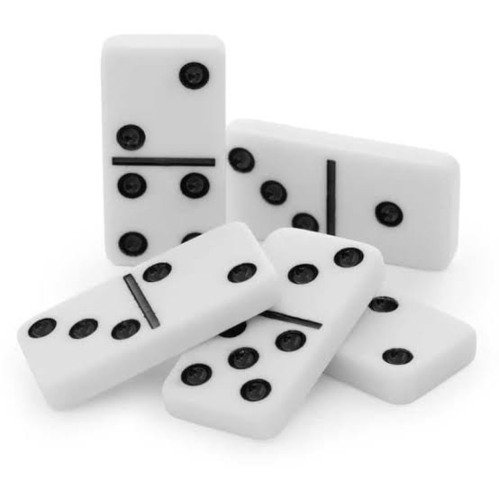


Dominoes Game
Dominoes Game is a turn-based tile strategy game where players connect matching numbers and try to clear their hand first. Watch the open ends, reduce high-value tiles, notice when opponents pass, and use careful placements to control each round.
Dominoes Game Classic Tile Strategy Made Simple
Dominoes Game turns a familiar tabletop game into a clear browser experience built around matching numbers, reading the board, and managing the tiles in your hand. Each move looks simple, but a careless placement can give your opponent the exact number they need. Winning often depends on noticing which values have already appeared and keeping more than one playable option available.
Players who enjoy traditional games based on careful decisions may also like Backgammon Gold, where planning and blocking an opponent are also important parts of each match.
What Is Dominoes Game?
Dominoes Game is a digital version of the classic tile-matching board game. Players take turns placing rectangular tiles so that equal numbers meet at the open ends of the layout.
A standard double-six domino set contains 28 tiles. Each half of a tile displays a value from zero to six, and every possible pair appears once in the complete set.
The main goal is usually to play every tile in your hand before the other player. When the board becomes blocked and nobody can make another move, the player holding the lowest total number of pips normally wins the round.
How Dominoes Game Works
At the beginning of a round, the tiles are mixed and distributed among the players. Any unused tiles remain in a face-down group commonly called the boneyard.
The first tile creates one or two open ends. Every new tile must connect to an open end with the same number of pips. A tile containing three and five, for example, can connect to an open three or an open five.
Connecting games normally place matching values together, although the shape of the layout can change as more tiles are added.
For a formal comparison of common rules, the World Domino Federation provides a useful Dominoes Game reference covering tile sets, blocked rounds, starting play, and winning conditions.
The Main Goal of Each Round
Your first goal is to remove every tile from your hand. This means choosing moves that leave useful numbers open while avoiding situations where your remaining tiles become difficult to place.
A round can end in two ways:
- A player places their final tile.
- The layout becomes blocked because nobody holds a playable tile.
When the game is blocked, players count the pips left in their hands. The lower total usually decides the winner.
This scoring method makes heavy tiles risky near the end of a round. A double-six may give you useful control early, but it can become expensive if you are unable to play it before the board closes.
Common Dominoes Game Variations
The exact modes available may depend on the version placed on Gam-core. Most digital domino games use one or more of the following rule sets.
Draw Dominoes
In Draw Dominoes, a player who cannot match either open end takes another tile from the boneyard. Drawing continues until a playable tile is found or the remaining supply is empty.
This version is welcoming for beginners because a weak starting hand does not always force an immediate pass. The extra tiles can also make the round longer.
Block Dominoes
Block Dominoes does not allow players to keep drawing until they find a match. When no move is available, the turn passes to the next player.
Blocking therefore becomes more important. Closing access to a number can remove an opponent from several turns and may end the round before anyone clears their hand.
All Fives
All Fives uses normal matching rules but adds another scoring layer. Players earn points when the values displayed on the open ends create a multiple of five.
This mode asks you to consider two things before every move. You need to reduce your hand while also controlling the total shown at the ends.
A detailed collection of traditional domino variations explains how connecting, shedding, scoring, train, and other rule families differ.
Why Dominoes Game Requires More Than Luck
The tiles you receive are random, but your decisions still shape the round. A strong player does not simply place the first matching tile they see.
Each move changes the numbers available on the board. Leaving a six open may help you remove another tile later, but it may also give your opponent an easy move.
Good play involves three connected skills:
- Tracking which numbers have appeared
- Protecting useful options in your hand
- Estimating which values an opponent may not hold
You rarely know every tile in the other hand. However, repeated passes and board patterns provide useful clues.
If an opponent cannot play when the open ends are two and five, they may have no twos, no fives, or no remaining tile containing either value. Changing the board back to those numbers later may block them again.
Main Dominoes Game Features
- Classic number matching: Connect tiles by placing equal values together at an open end.
- Turn-based play: Each player has time to inspect the board and choose a suitable move.
- Clear tile designs: Large pips make each value easy to recognise without reading small text.
- Mouse and touch input: Browser versions normally allow players to select and place tiles with a mouse, trackpad, or touchscreen.
- Short individual rounds: A complete match can be played without learning complicated commands.
- Strategic blocking: Players can restrict available numbers and make it harder for an opponent to use their remaining tiles.
- Different rule possibilities: Draw, Block, and point-scoring variations may be offered depending on the game version.
- Computer-controlled opposition: Many browser editions allow solo play against automated players.
Controls and Interface
Dominoes Game normally uses simple point-and-select controls.
| Action | Typical Control |
|---|---|
| Select a tile | Click or tap the tile |
| Choose an open end | Click or tap the valid position |
| Rotate or change placement | Select the other highlighted end |
| Draw a tile | Select the boneyard |
| Pass a turn | Use the pass button when available |
| Start another round | Select next round or restart |
Valid placements may be highlighted automatically. This reduces confusion when a tile can connect to both sides of the layout.
The computer may place the selected tile automatically after you choose it. Other versions ask you to select both the tile and the intended end.
Understanding Doubles
A double has the same number on both halves, such as four-four or six-six. It is often displayed across the line instead of following the direction of the other tiles.
Doubles are useful because they preserve the current open number. Playing a five-five on an open five still leaves a five available.
That can help when several of your remaining tiles also contain fives. It can also be dangerous because an opponent may benefit from the same open number.
Do not save every double until the end. A high double left in your hand can create a large penalty if the round becomes blocked.
Reading the Open Ends
The open ends are the most important information on the table. Every legal move depends on at least one of those values.
Before placing a tile, check what the new ends will become. A legal move is not automatically a useful move.
Suppose the board ends are two and six, and you can play either two-four or six-one. The first move creates an open four, while the second creates an open one.
Your decision should consider:
- Which number appears most often in your hand
- Which values have already been played
- Whether an opponent recently passed
- Which tile would be hardest to remove later
Players who enjoy number-based planning can also try Chain Cube 2048 3D Merge, which uses a different format but still rewards careful placement and forward thinking.
Practical Dominoes Game Tips
Count the Number Values in Your Hand
Look for the value that appears most often among your tiles. Try to keep that number open because it gives you more possible moves.
If four of your tiles contain a three, controlling an open three may help you remove several tiles without becoming stuck.
Play Difficult Tiles Early
Some tiles have values that appear only once in your hand. These can become difficult to use later if their matching number disappears from the board.
Place awkward tiles when a safe opportunity appears rather than assuming the same opening will return.
Notice Every Pass
A pass gives information about the other player’s hand. Remember which numbers were open at that moment.
Returning the board to those values can restrict the same opponent again.
Reduce Heavy Tiles
Tiles with many pips increase your remaining total during a blocked round. Playing six-six, six-five, and other heavy tiles early can limit the damage of an unexpected ending.
Do not force a poor move only to remove a high tile, but avoid holding several heavy pieces without a plan.
Keep More Than One Number Available
A hand built entirely around one number is powerful while that value remains open. It becomes weak when an opponent changes both ends.
Try to maintain tiles that can connect through different values.
Think About the Tile You Leave Behind
Every move removes one tile but changes the board for the next turn. Look beyond the current placement.
Ask which new number you are giving the opponent and whether you can respond after their likely move.
Do Not Rush an Obvious Match
Digital games make playable tiles easy to notice, but the first valid move may not be the best move. Compare every available option before placing a tile.
Graphics and Sound
Dominoes Game uses a simple tabletop presentation that keeps the tiles, open ends, and current hand visible. Clear contrast between the pips and tile surface helps players read the board quickly.
Animations usually show tiles moving into position and the layout adjusting as the chain becomes longer. This prevents the board from becoming difficult to follow on smaller screens.
Sound effects are normally limited to tile placement, turn changes, and round results. The restrained presentation suits a game based more on observation than fast reactions.
Learning Curve
The basic matching rule can be understood within one round. New players only need to recognise the open ends and find a tile containing one of those values.
The strategy develops more slowly. Remembering played numbers, interpreting passes, and controlling the layout require practice.
Players who prefer a quiet solo card challenge may also enjoy Solitaire Classic Card, which replaces direct opposition with careful card ordering and tableau management.
Who Should Play Dominoes Game?
Dominoes Game suits players who enjoy traditional board games, number matching, turn-based decisions, and short tactical rounds.
It is approachable for beginners because the legal placement rule is clear. It also gives experienced players room to improve through tile tracking and controlled blocking.
People who prefer fast movement, combat, racing, or reaction-based challenges may find the pace slow. The main appeal comes from reading the board and making efficient choices.
Players interested in another hand-management game can try Rummy Offline Board, where cards must be organised into useful sets and runs.
Honest Strengths and Limitations
| Strengths | Possible Limitations |
|---|---|
| Rules are easy to understand | Strategy may take several matches to recognise |
| Short rounds suit brief play sessions | Turn-based pacing may feel slow to action players |
| Matching system works well with touch controls | Random starting hands can affect each round |
| Blocking creates meaningful decisions | Some rounds may end before a player clears their hand |
| Clear tiles make the board easy to read | Available modes can differ between browser versions |
| Suitable for new and experienced players | Repeated solo matches may feel similar over time |
Dominoes Game Information
| Detail | Information |
|---|---|
| Game title | Dominoes Game |
| Genre | Board game and tile strategy |
| Main objective | Play every tile or finish with the lowest pip total |
| Standard set | Double-six set with 28 tiles |
| Main mechanic | Match equal numbers at open ends |
| Typical modes | Draw, Block, and scoring variations |
| Input | Mouse, trackpad, or touchscreen |
| Platform | Web browser |
| Pace | Turn-based |
| Difficulty | Easy rules with developing strategy |
Frequently Asked Questions
What is Dominoes Game?
Dominoes Game is a digital tile-matching board game. Players connect tiles with equal values and try to remove every tile from their hand before their opponent.
How many tiles are in a standard domino set?
A standard double-six set contains 28 tiles. The set includes every possible number pairing from zero-zero through six-six.
How do I place a domino?
Select a tile containing the same number as one of the open ends. Then choose the highlighted side of the layout where you want to place it.
What happens when I cannot make a move?
The result depends on the selected rules. Draw Dominoes may require you to take another tile, while Block Dominoes normally makes you pass.
How do I win a blocked round?
When nobody can play, the remaining pips are counted. The player with the lowest total usually wins the blocked round.
Is Dominoes Game based only on luck?
The starting tiles are random, but planning matters. Players can track numbers, remember passes, reduce heavy tiles, and control which values stay open.
Can I play Dominoes Game on mobile?
Browser versions commonly support touchscreen input, allowing players to select and place tiles by tapping the screen.
What is the difference between Draw and Block Dominoes?
Draw rules allow a player without a legal move to take another tile from the boneyard. Block rules normally require that player to pass.
Are doubles more valuable than other tiles?
Doubles are not automatically better, but they can help control an open number. High doubles also carry many pips, making them risky if a blocked round ends while they remain in your hand.






Reviews
There are no reviews yet.