
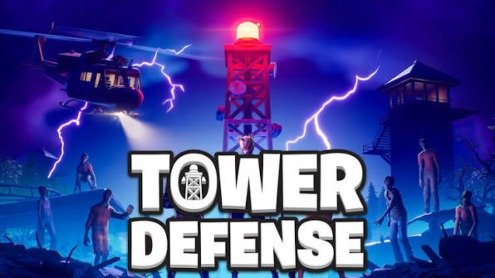


Tower Defense
Tower Defense is a browser strategy game where you place defensive towers beside an enemy route, earn money from defeated attackers, and upgrade important positions. Plan each purchase carefully and protect your territory as every new wave becomes more difficult.
Tower Defense Strategic Base Protection Game
Tower Defense is a browser strategy game where every coin and placement decision matters. Waves of enemies follow a visible route toward your territory, and your job is to stop them by building defensive towers beside the path.
The towers attack automatically, but winning is not passive. You must decide where to build, which defenses to upgrade, and when to save money for the stronger enemies coming later. A weak opening may survive the first wave and then collapse when faster or tougher attackers arrive. (Y8.Com)
What Is Tower Defense?
Tower Defense is an HTML5 strategy game based on protecting a kingdom from repeated enemy attacks. Players purchase defensive structures from the in-game shop and place them along the route used by incoming enemies.
Each tower covers a limited area. An enemy must enter that attack range before the tower can target it, which makes placement just as important as tower strength.
Defeated enemies provide money that can be spent on additional defenses or upgrades. As the level continues, enemy groups become more difficult, forcing you to improve the original setup rather than relying on the same basic towers throughout the match. (Y8.Com)
Players who enjoy defending towers while controlling troops and cards can also try Clash Royale, which turns tower protection into short real-time battles against other players.
How Tower Defense Gameplay Works
A level begins with a route leading toward the territory you need to protect. Enemies enter from one side and move along that route until they are destroyed or reach the protected area.
You start with a limited amount of money. This prevents you from filling every available space immediately and makes the first purchase important.
After choosing a tower, you place it on a valid location beside the enemy path. The tower then attacks automatically whenever a target enters its range.
Destroying enemies adds money to your available balance. You can use those earnings to build another tower, strengthen an existing one, or save for a more expensive defense.
The basic loop remains simple:
- Examine the enemy route.
- Place an affordable tower.
- Begin or survive the next wave.
- Earn money from defeated enemies.
- Upgrade weak areas in the defense.
- Prepare for stronger attackers.
The challenge comes from making these choices before the enemy pressure becomes too great.
Why Tower Placement Matters
A powerful tower can still perform poorly when placed in the wrong location. Building near a short section of road may allow the tower to fire only a few times before enemies leave its range.
Corners and bends are often more useful because enemies remain close to the same tower for longer. A defense positioned near two connected sections may attack the same group before and after it turns.
Look for areas where the route folds back toward itself. A tower placed between two nearby path sections may cover both, providing more value from one purchase.
The beginning of the route is useful for dealing damage early, while the final section acts as protection against enemies that survive everything else. A balanced setup usually covers both areas.
Do not place every tower in one small cluster. Concentrated damage can be strong, but an enemy that survives the cluster may face no resistance during the rest of its journey.
Managing Money Between Waves
Money is the main limit on your strategy. Stronger defenses and tower upgrades cost more, so spending every coin as soon as it appears can leave you unprepared.
A cheap tower may solve an immediate problem, but repeatedly buying weak defenses can become more expensive than upgrading one well-positioned tower.
Before purchasing, look at the current battlefield. Ask whether the problem is poor coverage, weak damage, slow attack speed, or too few towers near the exit.
Saving is also a valid decision. When the current setup can handle the next group, keeping your money may allow you to buy a stronger improvement afterward.
However, saving too aggressively can be risky. Coins have no value if enemies pass through the entire defense and end the level.
The best spending point is usually between these two extremes. Invest enough to survive comfortably, but avoid filling every space without a clear reason.
Building a Balanced Defense
A dependable setup needs coverage across the route rather than one impressive tower doing all the work.
Begin with one or two defenses placed where they can attack for a long time. Watch how much health enemies have when they leave those areas.
When several enemies escape with only a little health, add support near the end of the route. When they leave the first tower with most of their health remaining, improve the opening section instead.
Upgrades are most valuable on towers that already have good placement. Strengthening a badly positioned defense rarely fixes its limited attack time.
Try to create overlapping ranges. When two towers can attack the same enemy at once, difficult targets spend less time moving freely through the map.
The goal is not to make every tower equally strong. It is to create a connected line of defense where each placement contributes to stopping the wave.
Main Tower Defense Features
- Wave-based enemy attacks: Each stage sends groups of enemies along a visible route toward the protected territory.
- Strategic tower placement: Defensive structures must be positioned beside the path where their attack range can cover useful sections.
- Automatic tower attacks: Towers target enemies on their own, leaving the player to concentrate on planning, spending, and upgrades.
- In-game shop: New defenses can be purchased when enough money is available.
- Tower upgrades: Existing defenses can be improved to handle enemies that become stronger later in the level.
- Resource management: Money earned during play must be divided between immediate protection and long-term improvements.
- Increasing pressure: Early waves introduce the route, while later attacks test whether the full defensive setup is balanced.
- Single-player strategy: The challenge comes from solving each battlefield rather than competing directly against another person.
- Browser gameplay: The HTML5 version runs through a supported desktop browser without a traditional installation. (Y8.Com)
Tower Defense Controls
Tower Defense mainly uses a mouse.
| Action | Control |
|---|---|
| Choose a tower | Left-click the tower or shop icon |
| Place a defense | Left-click a valid building area |
| Select an existing tower | Left-click the tower |
| Purchase an upgrade | Select the tower and choose its upgrade |
| Begin a wave | Click the wave or start button |
| Use menu options | Left-click the required button |
The browser listing describes the game as desktop-focused and best suited to a computer with mouse or keyboard input. (Y8.Com)
Reading the Enemy Route
Before placing anything, follow the route from its entrance to the protected territory. Look for long straight sections, tight corners, overlapping paths, and spaces near the final exit.
Long roads give fast towers time to fire repeatedly. Corners can keep enemies within range while they change direction.
Overlapping sections are especially useful because one tower may cover more than one part of the route. These positions often provide better value than empty spaces that touch only a short section.
Also notice the distance between building positions. A map with large gaps may require stronger individual defenses, while a compact map may allow several towers to support one another.
Do not begin the first wave until you understand where enemies will travel. One careful look can prevent a poor opening purchase.
Upgrading Towers at the Right Time
Upgrades strengthen defenses that are already on the battlefield. They can improve damage, speed, range, or another useful quality depending on the tower.
It is tempting to upgrade the first tower several times because it receives plenty of action. This can work, but it may leave the rest of the route unprotected.
A better approach is to watch where enemies begin surviving. Upgrade the tower responsible for that weak area or add another defense nearby.
Consider the cost carefully. When one upgrade costs nearly as much as another tower, compare the benefits before deciding.
The extra tower may create wider coverage, while the upgrade may provide greater damage in a smaller area. The correct choice depends on the route and the current enemy wave.
Players who enjoy thinking several moves ahead may also like Master Chess, where planning and anticipating future problems are more important than reacting at the final moment.
Dealing With Stronger Enemy Waves
Later enemies may have more health, greater speed, or enough numbers to overwhelm a setup that handled the opening comfortably.
Do not wait until several waves have already passed your defenses before changing the plan. Warning signs often appear earlier.
Watch for enemies that travel farther than the previous group. Even when they are eventually defeated, their progress shows that your damage is falling behind.
Large groups can also reveal problems with attack speed. One tower may defeat individual enemies easily but struggle when many targets enter its range together.
Strengthen the defense before the route becomes crowded. Improving one key position between waves is safer than trying to repair several weak areas during an attack.
Common Mistakes That End a Level
Building Only Near the Entrance
A strong opening is useful, but some enemies may still survive it. Without another tower near the exit, one damaged target can reach the protected area without facing a final attack.
Buying Too Many Cheap Towers
Several basic defenses may cover the route, yet lack the strength needed for later waves. Upgrade useful towers instead of continuing to add weak ones.
Ignoring Attack Range
A tower placed far from the path may attack for only a moment. Check the visible coverage area before confirming the position.
Spending Every Coin Immediately
A purchase should solve a real problem. Buying something simply because money is available may delay a more important upgrade.
Upgrading Poor Placements
A stronger tower is not automatically a useful tower. Avoid investing heavily in a position with limited route coverage.
Starting Waves Without Checking
Use the pause between attacks to inspect the full defense. A small weakness is easier to fix before the next group arrives.
Graphics and Visual Design
Tower Defense uses a clear top-down battlefield that keeps the enemy route, building spaces, towers, and attackers visible at the same time.
The visual style supports planning rather than hiding information. Players can follow enemy movement and see where their defenses are attacking.
Tower ranges and shop options are presented through a simple interface. This allows new players to understand the main systems without reading a long tutorial.
The design is practical rather than highly realistic. Its purpose is to make the route and defensive positions easy to read while several enemies are moving.
Difficulty and Learning Curve
The basic rules are easy to understand. Place defenses, defeat enemies, earn money, and improve the setup before stronger waves arrive.
The deeper challenge comes from efficiency. Two players can spend the same amount of money and receive very different results because one used better positions.
Early mistakes may not cause an immediate loss. A poor tower can survive several waves before its weak coverage becomes a serious problem.
This delayed effect encourages players to think beyond the current attack. A decision should help both the wave on screen and the stronger groups expected later.
The game suits beginners because the towers fire automatically. It still offers a useful challenge for experienced strategy players who want to complete levels with cleaner placements and less wasted money.
Tips for Playing Tower Defense
Study the Route Before Building
Do not choose the first open space you see. Find corners, bends, and overlapping road sections that keep enemies within range longer.
Cover the Final Stretch
Place at least one dependable defense near the protected territory. It can stop damaged enemies that survive the main tower group.
Upgrade Useful Positions
Spend upgrades on towers that already cover a large part of the route. Better placement increases the value of every improvement.
Watch Enemy Health
Notice how much health enemies have after passing each section. This shows where your setup needs more damage.
Avoid Unnecessary Purchases
Keep money available when the current defense is working. A later upgrade may be more useful than another basic tower.
Create Overlapping Attack Areas
Position towers so more than one can target difficult enemies. Combined damage reduces the chance of a strong target escaping.
Prepare Before the Next Wave
Check available money, weak areas, and tower upgrades during every break. Do not wait for enemies to appear before making an important decision.
Change the Plan After a Loss
When a level fails, identify where enemies began escaping. Move the opening tower or change the upgrade order instead of repeating the same setup.
Who Should Play Tower Defense?
Tower Defense is a good choice for players who enjoy planning, resource management, gradual upgrades, and games where careful decisions matter more than quick reflexes.
It works well for short browser sessions because the objective is immediately clear. You can begin building without learning a detailed story or a large collection of keyboard controls.
Puzzle players may also appreciate the way each map asks for an efficient solution. Finding the strongest combination of placement and upgrades can feel like solving a moving puzzle.
For a different planning challenge based on combining numbers and controlling space, try Chain Cube 2048.
Players looking for direct character control, exploration, multiplayer competition, or fast combat may find Tower Defense too passive. Most interaction involves building and improving defenses rather than controlling each attack manually.
Honest Strengths and Limitations
| Strengths | Possible Limitations |
|---|---|
| Clear rules are easy for beginners | Towers attack automatically |
| Placement choices have a noticeable effect | Limited story or character development |
| Upgrades provide steady progress | Early waves may feel slow |
| Short levels suit quick sessions | Similar wave patterns can become repetitive |
| Resource management adds strategy | A poor early setup may be difficult to repair |
| Runs through a browser | The version is mainly intended for desktop play |
| Encourages experimentation | Players wanting action controls may prefer another genre |
Tower Defense Game Information
| Detail | Information |
|---|---|
| Game title | Tower Defense |
| Genre | Strategy and tower defense |
| Game mode | Single-player |
| Technology | HTML5 |
| Main objective | Stop enemy waves from reaching the territory |
| Main systems | Tower placement, upgrades, money, and enemy waves |
| Controls | Mouse |
| Platform | Desktop web browser |
| Download required | No for the browser version |
The game is listed as an HTML5 strategy title where defenses are purchased, positioned along the enemy route, and upgraded as attackers become stronger. (Y8.Com)
More tactical, puzzle, action, and casual titles are available in the Gam-core games collection.
Frequently Asked Questions
What type of game is Tower Defense?
Tower Defense is a single-player strategy game where players build and upgrade defensive towers to stop waves of enemies.
What is the main objective?
The objective is to prevent enemies from traveling along the route and reaching the territory you are protecting.
How do towers attack?
Towers automatically attack enemies that enter their range. The player chooses their positions and purchases upgrades.
How do I earn more money?
Money is earned by defeating enemies. It can be used to buy new towers or improve defenses already placed on the map.
Should I build more towers or upgrade existing ones?
Build another tower when an important part of the route has no coverage. Upgrade when a well-positioned tower needs more strength against tougher waves.
Where should I place my first tower?
Corners, bends, and positions covering multiple road sections are usually useful because enemies remain within attack range longer.
Is Tower Defense multiplayer?
This version is designed as a single-player strategy game.
Can I play Tower Defense on mobile?
The browser listing describes this version as a desktop game that works best with mouse or keyboard input. (Y8.Com)
Does Tower Defense require a download?
No. The HTML5 version runs directly through a compatible browser.
Why do enemies keep passing my towers?
Your defenses may have limited range, poor placement, insufficient upgrades, or too little coverage near the end of the route.







Reviews
There are no reviews yet.