
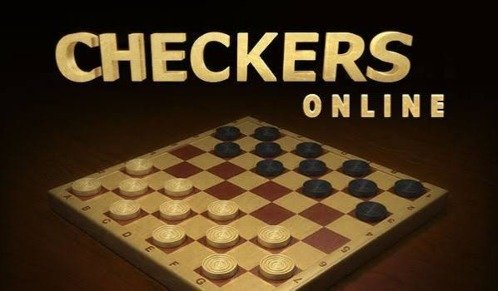

Checkers
Checkers is a classic strategy game where you move pieces diagonally, jump over opponents, create powerful kings, and control the board. Play against the computer or challenge another person while planning captures, protecting key squares, and avoiding clever traps.
Classic Board Strategy Game
Checkers is a classic board game where simple movement rules lead to surprisingly thoughtful matches. You control one set of pieces and try to remove every opposing piece or leave your opponent without a legal move.
Each turn asks you to look beyond the nearest square. A move that appears safe may open a capture, while giving up one piece can sometimes create a stronger position several turns later. Checkers is easy to learn, but winning regularly requires patience, planning, and control of the board.
What Is Checkers?
Checkers is a two-player strategy game played on a square board with dark and light spaces. Each player begins with pieces placed on the dark squares near their side of the board.
Regular pieces move diagonally toward the opposite end. When an opposing piece sits beside yours with an empty square behind it, you can jump over that piece and remove it from the board.
The main objective is to capture all opposing pieces. You can also win by blocking your opponent so none of their remaining pieces can move.
Players who enjoy thoughtful board games can also try Master Chess, which uses different movement rules but rewards the same ability to plan ahead.
How Checkers Gameplay Works
A match begins with both players positioned on opposite sides of the board. Players take turns moving one piece at a time.
A regular piece normally moves one diagonal square forward onto an empty dark space. It cannot move horizontally or vertically.
Captures happen through jumps. When an opposing piece is diagonally adjacent and the square directly beyond it is empty, your piece can jump over the opponent and remove it.
Some turns allow more than one capture. After completing the first jump, the same piece may continue jumping when another legal capture is available.
This creates the basic rhythm of a Checkers match:
- Move pieces toward useful central squares.
- Protect them with nearby teammates.
- Watch for forced captures.
- Remove exposed opposing pieces.
- Reach the far side and create kings.
- Use kings to control more of the board.
- Trap or eliminate the remaining enemy pieces.
The rules stay consistent, but the position changes after every move.
Moving Regular Pieces
Regular Checkers pieces move diagonally forward. This makes direction important because they cannot simply return to a previous square whenever danger appears.
Before moving, check which pieces will protect the new position. A piece standing alone can become an easy target.
Moving several pieces together usually creates a safer formation. When one piece is captured, another may be able to respond on the next turn.
The center of the board gives pieces more movement choices. Pieces placed close to an edge are harder to surround, but they also have fewer possible routes.
A strong position often combines both ideas. Use the center to create pressure while keeping some pieces near the sides for protection.
Capturing Opposing Pieces
Capturing is the central action in Checkers. You jump diagonally over an opposing piece and land on the empty square behind it.
A capture may look helpful because it immediately removes an enemy piece. However, the landing square matters just as much as the capture itself.
A careless jump can place your piece directly in front of another enemy. You may win one piece and lose two during the reply.
Check the full sequence before starting a capture. Look at where your piece will land and whether another jump will be required.
In many Checkers versions, a legal capture must be taken. This means players can place pieces where they encourage or force an opponent into an unwanted jump.
Multiple Jumps
A multiple jump allows one piece to capture several opposing pieces during the same turn.
After the first jump, inspect the new position. When another enemy piece can be captured from that square, continue moving the same piece.
Long capture chains can completely change a match. A player who appeared to be losing may remove several pieces and take control in one turn.
Multiple jumps also make planning more important. Do not examine only the first available capture. Follow the full path to see where the piece will finish.
Sometimes a long capture ends in a dangerous position. In other situations, it reaches the final row and becomes a king.
Creating a King
A regular piece becomes a king when it reaches the far side of the board.
Kings are more flexible because they can move diagonally forward and backward. This gives them more routes for attacking, escaping, and protecting other pieces.
Reaching the final row should be an important part of your strategy, but do not rush one piece forward without support. An isolated piece may be captured before it completes the journey.
Try to create a safe path by removing threats and controlling nearby squares.
Once you have a king, use its backward movement carefully. A king can return to defend your side of the board or approach an opponent from an unexpected direction.
Main Checkers Features
- Classic board strategy: Matches are based on movement, captures, positioning, and planning rather than fast reactions.
- Simple diagonal controls: Regular pieces move forward across dark squares, making the basic rules easy to understand.
- Jump captures: Opposing pieces are removed by jumping over them onto an empty square.
- Multiple-capture turns: One piece may remove several opponents when a connected jump path is available.
- King promotion: Pieces that reach the opposite side gain backward movement and become more useful.
- Solo play: Many browser versions allow players to compete against a computer-controlled opponent.
- Two-player matches: Some versions support two people taking turns on the same device.
- Different difficulty settings: Computer opponents may provide easier or more demanding challenges.
- Short or long matches: A game can end quickly after a major mistake or continue through a careful endgame.
- Browser access: Checkers can be played without learning complicated keyboard commands.
Checkers Controls
Checkers usually uses a mouse or touchscreen.
| Action | Control |
|---|---|
| Select a piece | Click or tap it |
| Move a piece | Click or tap a highlighted square |
| Capture an opponent | Select the piece, then choose the landing square |
| Continue a multiple jump | Select the next legal landing square |
| Start a new match | Choose the restart or new game button |
| Change difficulty | Open the game settings when available |
| Undo a move | Select undo when supported |
Legal movement squares may be highlighted after you select a piece. This makes it easier to understand which moves are currently available.
Why the Center of the Board Matters
Pieces near the center usually have more possible moves than pieces near an edge.
A central piece may move toward either side, support several teammates, and threaten more than one area. This makes the center valuable during the opening and middle part of the match.
However, placing every piece in the middle can create a crowded formation. Leave enough open space so your pieces do not block one another.
The side of the board can also provide protection because a piece cannot be attacked from outside the playing area.
Use the edges when they improve safety, but avoid leaving too many pieces trapped with only one legal direction.
Keeping Pieces Connected
Connected pieces protect one another and make captures more difficult for your opponent.
A single piece placed several squares ahead may appear aggressive, but it often becomes an easy target. Supporting pieces create possible counterattacks when the front piece is taken.
Try to build small diagonal formations instead of moving one piece repeatedly.
This does not mean every piece must remain tightly grouped. You still need space to move and attack.
The goal is to keep enough support nearby that your opponent cannot capture freely without risking a response.
Planning Forced Captures
One of the most useful Checkers ideas is placing a piece where your opponent must capture it.
Giving away a piece may seem like a mistake, but the forced landing position can create a larger opportunity. After the opponent jumps, you may capture that piece and continue into a multiple-jump sequence.
This is often called a sacrifice. It works only when the follow-up position has been calculated correctly.
Before offering a piece, check every legal response. Make sure the opponent cannot choose a safer capture route or escape the planned trap.
Good sacrifices feel less like losing a piece and more like exchanging it for a better position.
Protecting the Back Row
At the beginning of a match, pieces on your back row help prevent opponents from becoming kings.
Moving every back-row piece too early can open a direct path to promotion. An enemy may then reach the final square before you can stop it.
Keeping one or two pieces behind provides extra protection. They can block promotion squares and capture attackers approaching the end of the board.
Do not keep the entire back row untouched forever. Those pieces may eventually be needed in the center or during the endgame.
Move them when the position requires it, not simply because another square is available.
Playing Against the Computer
Computer opponents are useful for learning rules and testing new ideas. They make moves quickly and do not require another person to be available.
Easy difficulty can help beginners understand legal movement, captures, and king promotion. Higher difficulty may punish exposed pieces and poor trades more consistently.
Do not restart immediately after losing one piece. Continue the match and try to recover.
Playing from a weaker position teaches defensive movement, king control, and how to avoid further losses.
When a match ends, think about the move that created the biggest problem. The decisive mistake often happened several turns before the final capture.
Playing Against Another Person
Two-player Checkers feels different because people develop habits and preferences.
One player may attack quickly, while another waits for mistakes. Watch how your opponent moves during the opening.
Local matches are also useful for discussing moves and learning together. Players can pause after an interesting position and consider what each side could do.
Avoid touching or selecting a piece until you have decided where it should go. Some physical and digital versions treat a selected move as final.
For another easy-to-learn game that works well with friends, try Uno, where card timing and reading other players replace board movement.
Common Checkers Mistakes
Moving One Piece Too Far Ahead
An unsupported piece can become trapped or captured. Move several pieces together so they can protect one another.
Taking Every Capture Without Thinking
A capture may be required, but you should still examine the complete landing sequence. The first jump can lead into a trap.
Ignoring Multiple Jumps
Always check whether the same piece can continue after a capture. Missing a legal jump can waste a valuable turn.
Opening the Back Row Too Soon
Moving all rear pieces creates promotion routes for the opponent. Keep some protection until the board position is safer.
Focusing Only on Piece Count
Having more pieces does not always mean you are winning. Position, mobility, and king control can be more important.
Blocking Your Own Pieces
A crowded formation may leave several pieces with no useful move. Keep open diagonal routes whenever possible.
Chasing One Enemy King
A king can move backward and escape repeatedly. Use several pieces to reduce its available squares instead of following it with one piece.
Checkers Opening Tips
The first few moves shape the rest of the match. Avoid making random forward movements simply to begin quickly.
Move pieces that help control the center while maintaining support from behind.
Do not create an exposed gap unless you understand how the opponent can use it.
Watch for early forced captures. A player may offer a piece to pull your checker into a poor position.
The opening is not usually the time for risky attacks. Build a useful formation and wait for a genuine opportunity.
Checkers Endgame Strategy
The endgame begins when fewer pieces remain and open spaces become more important.
Kings are especially powerful because they can move in both directions. Protect your kings and use them to restrict enemy movement.
When you have more pieces, avoid unnecessary trades that allow the opponent to create a strong king position.
When you have fewer pieces, exchanges may help create space for a promotion or draw.
Try to control key diagonal routes rather than chasing every opponent directly. A trapped piece is often easier to capture than one being followed across the board.
Graphics and Presentation
Checkers usually uses a clean top-down board so every square and piece remains easy to see.
Pieces are commonly shown in two contrasting colors. Kings may receive a crown, symbol, stacked piece, or another visual marker after promotion.
The simple presentation supports the strategy. Players can understand the full position without camera movement or distracting effects.
Sound effects may confirm moves, captures, promotions, and match results. The game remains playable without audio because all important information appears on the board.
Difficulty and Learning Curve
Checkers is beginner-friendly because regular pieces have only a few legal movement options.
A new player can understand the main rules after one or two matches. The deeper strategy becomes clearer through repeated play.
Beginners often focus only on the current move. More experienced players look at possible captures, forced replies, and the position several turns later.
Improvement does not depend on memorizing hundreds of patterns. It comes from recognizing danger, supporting pieces, and checking the result of each move before confirming it.
Players who enjoy number-based strategy puzzles can also try Chain Cube 2048 3D Merge.
Tips for Winning More Checkers Matches
Check for Captures First
Before making a normal move, inspect the board for available jumps. A capture may be required, and a multiple jump may be possible.
Look at the Landing Square
Do not focus only on the piece you will remove. Check whether the final square is safe.
Keep Pieces Together
Supported pieces are harder to capture without consequences. Avoid sending one checker across the board alone.
Control Central Squares
The center provides more movement options and makes it easier to switch between attack and defense.
Protect Promotion Routes
Watch for opposing pieces moving toward your back row. Block them before they reach the final square.
Create Kings Carefully
Promotion is valuable, but a reckless run toward the last row can lose the piece before it arrives.
Think One Reply Ahead
After choosing a move, ask what your opponent is most likely to do next. Change the move when the reply creates an obvious loss.
Use Sacrifices With a Clear Purpose
Give up a piece only when it creates a stronger capture, promotion, or trapping opportunity.
Limit Enemy Kings
Do not chase a king randomly. Control the squares it needs and reduce its escape routes.
Who Should Play Checkers?
Checkers is a good choice for players who enjoy board games, logical decisions, short competitive matches, and rules that are easy to understand.
It is suitable for beginners because the controls and movement system are straightforward. More experienced players can still find depth in sacrifices, forced captures, king positioning, and endgame traps.
The game also works well for players who prefer thoughtful competition without long tutorials or complicated equipment systems.
Players looking for fast action, character progression, exploration, or detailed stories may find Checkers too quiet. Its appeal comes from studying the board and finding the strongest move.
More puzzle, board, strategy, and casual games are available in the Gam-core games collection.
Honest Strengths and Limitations
| Strengths | Possible Limitations |
|---|---|
| Rules are easy to learn | Matches can feel slow for action fans |
| Every move affects the board position | Limited visual variety |
| Supports thoughtful two-player competition | One mistake can create a large disadvantage |
| Kings add deeper endgame strategy | Beginners may overlook forced captures |
| Suitable for short gaming sessions | Some matches may end in blocked positions |
| Simple mouse or touch controls | No story or character progression |
| Computer opponents support solo play | Available modes depend on the game version |
Checkers Game Information
| Detail | Information |
|---|---|
| Game title | Checkers |
| Genre | Board and strategy |
| Players | One or two |
| Main objective | Capture or block every opposing piece |
| Board | Eight by eight squares |
| Movement | Diagonal |
| Main mechanic | Jump captures |
| Special piece | King |
| Controls | Mouse or touchscreen |
| Platform | Web browser |
Frequently Asked Questions
What type of game is Checkers?
Checkers is a classic board strategy game where players move pieces diagonally and capture opponents by jumping over them.
How do you win a Checkers match?
You win by capturing every opposing piece or leaving your opponent without a legal move.
How does a regular piece move?
A regular piece normally moves one diagonal square forward onto an empty dark square.
How do you capture a piece?
Jump diagonally over an adjacent opposing piece and land on the empty square directly behind it.
What is a multiple jump?
A multiple jump happens when the same piece can capture another opponent immediately after completing its first jump.
How does a piece become a king?
A regular piece becomes a king when it reaches the far side of the board.
What can a king do?
A king can move and capture diagonally in both forward and backward directions.
Are captures required?
In many standard Checkers versions, players must make a capture when one is available.
Can I play Checkers alone?
Yes. Many digital versions allow you to play against a computer-controlled opponent.
Is Checkers suitable for beginners?
Yes. The movement rules are simple, although planning captures and building strong positions takes practice.





Reviews
There are no reviews yet.