
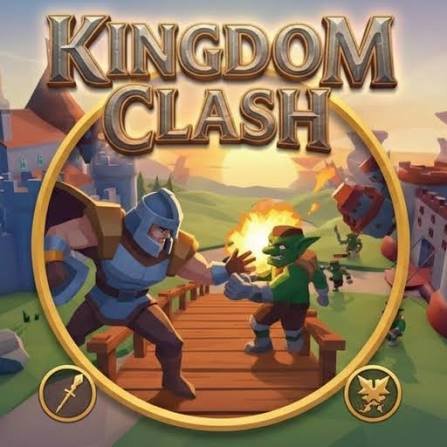

Kingdom Clash
Kingdom Clash is a medieval strategy game where you collect, merge, and upgrade soldiers before sending them into automatic battles. Position defenders, archers, bombers, heroes, and other troops carefully to defeat enemy formations, overcome powerful bosses, and strengthen your growing army.
Kingdom Clash Medieval Army Strategy Game
Kingdom Clash is a medieval strategy game where victory begins before the fighting starts. You collect soldiers, merge matching units, improve heroes, and arrange an army that can survive increasingly difficult enemy formations.
Once a battle begins, your troops fight automatically. Your main responsibility is preparation: deciding which warriors deserve upgrades, where each unit should stand, and whether your formation has enough protection, range, and damage. A stronger army helps, but poor placement can still turn an easy-looking battle into a loss.
What Is Kingdom Clash?
Kingdom Clash is a tactical battle simulator and army-building game published by CASUAL AZUR GAMES, with AI Games FZ listed as the developer on Apple platforms. It is available on Android, iPhone, and iPad, with the current store versions offered free with advertising and optional purchases.
The game places you in command of a growing medieval army. Your forces can include lancers, archers, paladins, bombers, heroes, and other specialized units.
You do not control every sword swing or projectile during combat. Instead, you build the formation before the battle begins and watch how your tactical choices perform against the opposing army.
Players who enjoy short battles built around troop placement may also like Clash Royale, although Clash Royale uses cards and real-time deployment instead of a prepared battlefield formation.
How Kingdom Clash Gameplay Works
A normal Kingdom Clash battle begins with both armies positioned on opposite sides of a compact arena.
Before combat starts, you can arrange available soldiers across your side of the battlefield. Front-line fighters should normally stand where they can meet the first attack, while ranged units need enough protection to continue firing from behind.
After the formation is ready, the battle begins automatically. Soldiers move, attack, use their abilities, and respond to nearby enemies without direct movement commands.
Winning provides resources and progression that can be used to improve the army. You then prepare for another enemy group with greater strength, different unit types, or a more dangerous formation.
The main gameplay loop is easy to follow:
- Collect new soldiers and heroes.
- Merge matching units when possible.
- Upgrade the warriors used most often.
- Study the opposing formation.
- Arrange your front, middle, and back lines.
- Start the automatic battle.
- Review which part of the formation failed.
- Adjust the army before the next attempt.
This structure makes Kingdom Clash easy to play in short sessions. The battles are quick, but army development continues over a much longer period.
Building a Balanced Army
A powerful army needs more than one type of soldier.
Front-line units absorb pressure and stop enemies from reaching weaker troops. Ranged attackers deal damage from a safer position, while specialized units may target groups, armored opponents, or other important threats.
Placing every strong warrior in the front row can leave the army without support. The first enemy wave may hold them in place while opposing archers continue attacking from a distance.
A formation made only from ranged troops has the opposite problem. It may produce strong damage briefly, but collapse when enemies reach the back line.
Try to include units that perform different jobs. A dependable formation usually has protection at the front, steady damage behind it, and one or two special units that solve difficult battlefield problems.
Merging Matching Units
Merging is one of the main progression systems in Kingdom Clash. Matching warriors can be combined to create stronger versions with improved battle performance.
It can be tempting to merge every available pair immediately. However, the highest-level unit is not always the only thing that matters.
Two separate warriors may cover more space than one upgraded soldier. Merging them can create a stronger individual unit while leaving an empty position in the formation.
Before combining troops, check whether the current army has enough bodies to protect every important lane.
Merging is most useful when the improved unit fills a clear role. Upgrade a front-line soldier when the defense is breaking too quickly, or improve a ranged attacker when enemies survive with very little health.
Choosing Which Troops to Upgrade
Resources become more valuable as troop costs increase. Improving every warrior equally can leave the full army weaker than a more focused formation.
Begin with units that appear in most of your battles. A dependable front-line soldier and one reliable ranged attacker usually provide more value than several rarely used units receiving small upgrades.
Look at why the army is losing.
When enemies reach the back line too quickly, improve defensive troops or change their positions. When the front line survives but the battle lasts too long, increase damage instead.
Avoid spending resources only because an upgrade button is available. A clear improvement to the main formation is usually better than spreading upgrades across units that remain unused.
Understanding Unit Roles
Kingdom Clash includes several medieval and fantasy troop types, each designed to support a different part of the army. Official listings mention units such as lancers, paladins, archers, and bombers.
Front-Line Fighters
These troops stand closest to the enemy and receive the first attacks. They need enough durability to protect the rest of the formation.
Ranged Units
Archers and similar troops attack from behind the front line. They can be highly effective when another unit prevents enemies from reaching them.
Area-Damage Units
Bombers and other group-focused attackers become useful when several enemies stand close together.
Heavy Defenders
Paladins and similar armored warriors can help hold important positions for longer than lighter troops.
Mobile or Charging Units
Lancers and fast attackers may close distance quickly or put pressure on a specific part of the enemy formation.
Heroes
Heroes provide stronger statistics, special skills, or battlefield effects. Their placement can affect whether they survive long enough to use those strengths.
Exact abilities can change between characters and updates. Read each unit’s information before deciding where it belongs.
Placing the Front Line
The front line determines how long your damage dealers remain safe.
Place tougher soldiers where the enemy’s strongest group is likely to attack. A weak defender positioned directly across from several dangerous opponents may disappear before the rest of the army can respond.
Do not automatically create one perfectly straight row. Moving a defender slightly forward or backward can change which enemy reaches it first.
Spacing also matters against area attacks. When several soldiers stand too close together, one enemy ability may affect all of them.
A wider formation can reduce that risk, but spreading troops too far apart may allow enemies to isolate them. The best layout depends on the opposing army.
Protecting Archers and Other Ranged Troops
Ranged troops often produce much of the army’s consistent damage, but they are usually less comfortable in close combat.
Keep them behind soldiers who can delay approaching enemies. Avoid leaving an open path directly toward the back row.
Corners can be useful when they reduce the number of directions from which a ranged unit can be approached. They can also become traps when the front line collapses and the unit has nowhere to move.
Watch what happens during a failed battle. When an archer is defeated without attacking for long, move it farther back or give it stronger protection.
When it survives until the end but the army still lacks damage, an upgrade may be more useful than another position change.
Using Heroes Wisely
Legendary heroes bring special abilities that can change a difficult battle. They may strengthen nearby troops, deal damage, provide protection, or create another useful effect.
A hero should not always stand in the first available position. Some need protection, while others are designed to remain close to the main fight.
Check the hero’s attack range and ability description. A support hero may be wasted when placed far from the troops receiving its bonus.
Heroes also require investment. Improving one that supports your main formation is generally more efficient than dividing resources among every unlocked character.
A hero can improve a good army, but it cannot always repair a formation with no front-line protection or poor unit balance.
Reading the Enemy Formation
Kingdom Clash gives you a chance to study the opposing army before the automatic fighting begins.
Use that time carefully. Look for the strongest group, exposed ranged units, heavy front-line defenders, and any side that appears less protected.
When most enemies stand on one side, matching them with your strongest defense may prevent them from breaking through quickly.
When an enemy damage dealer stands behind a weak protector, placing strong pressure opposite that position may remove both before they become a major problem.
Do not judge the enemy only by total numbers. Formation shape, unit types, and upgrade levels can matter just as much.
Adapting to Different Battlefields
Battles take place across stylized 3D locations such as forests, deserts, and frozen lands. The developer also describes map conditions as part of tactical planning.
Some arenas provide clear open space, while others may influence how quickly units meet or which positions feel safest.
Do not assume a successful arrangement will perform identically everywhere. A wide formation may work on one battlefield and become less useful when the fighting area is tighter.
Keep a dependable core army, but remain willing to move individual troops when the battlefield or enemy setup changes.
Boss Battles
Boss encounters place the army against larger and more dangerous opponents. These enemies may survive much longer than ordinary soldiers and punish weak formations more heavily.
A formation designed to remove many small enemies may not deal enough focused damage against one boss.
During these battles, durable protection becomes especially important. Ranged attackers need time to continue dealing damage while the front line holds the boss in place.
Save major upgrades for units that contribute throughout the full encounter. A fragile troop defeated during the opening seconds provides little value, even when its potential damage is high.
When a boss battle repeatedly fails, notice whether the problem is survival or damage. That tells you whether to improve protection, reposition the army, or strengthen the attackers.
Main Kingdom Clash Features
- Automatic medieval battles: Players prepare the formation while soldiers handle movement and attacks during combat.
- Troop collection: The army can include several types of knights, ranged units, heavy fighters, and specialized warriors.
- Unit merging: Matching troops can be combined to create stronger versions.
- Army upgrades: Resources can improve frequently used soldiers and increase overall combat strength.
- Legendary heroes: Special characters bring unique abilities and additional tactical choices.
- Formation planning: Unit position affects protection, targeting, and how quickly enemies reach the back line.
- Boss encounters: Larger enemies require stronger formations and more focused upgrades.
- Changing locations: Battles take place in deserts, forests, frozen areas, and other 3D arenas.
- Long-term progression: New soldiers, improvements, heroes, and increasingly difficult battles provide continuing goals.
- Optional social features: Current versions may include clans, arenas, events, and leaderboard activities alongside the main progression.
Kingdom Clash Controls
Kingdom Clash is designed around touchscreen interaction, although Android support may also be available on compatible Windows systems.
| Action | Common Control |
|---|---|
| Select a troop | Tap it |
| Move a unit | Drag it to another valid position |
| Merge matching units | Drag or select compatible troops |
| Upgrade a warrior | Select the unit and choose upgrade |
| Start a battle | Tap the battle button |
| Claim a reward | Tap the displayed reward |
| Open hero information | Select the hero |
| Change formation | Drag units before combat |
| Open menus | Tap the required menu icon |
The exact interface can change after updates. Follow the controls and prompts shown in the current version.
Improving a Formation After a Loss
A failed battle is most useful when you watch how it happened.
Do not look only at the final surviving enemy. Notice the first part of your formation that disappeared.
When the central defender falls first, strengthen that position or move another durable unit nearby. When one side collapses while the other remains healthy, redistribute the front line.
A ranged unit may also be attacking the wrong target because of its position. Moving it one space can sometimes improve the full battle without requiring another upgrade.
Change one or two things before retrying. Rebuilding the entire formation makes it harder to understand which adjustment actually helped.
Managing Gold and Other Resources
Progress depends on spending resources carefully.
Upgrades often become more expensive as units grow stronger, so early spending decisions affect how quickly the main army develops.
Keep most resources focused on troops that regularly enter battle. A new unit may look interesting, but it does not need immediate investment when it does not fit the current formation.
Events and optional rewards may provide additional gold, gems, or upgrade materials. Current store versions also contain advertising and optional purchases, so progression speed can vary depending on how players use those systems.
Free players can still progress through regular battles and available challenges, but later improvements may require more repetition.
Common Kingdom Clash Mistakes
Upgrading Every Unit
Resources spread across many unused warriors do not strengthen the formation currently losing battles.
Placing Archers in Front
Ranged troops need time and protection. Front positions can expose them too early.
Merging Without Checking Army Size
One stronger soldier may not replace the battlefield coverage provided by two separate units.
Using the Same Formation Everywhere
Enemy positions, troop types, and battlefield conditions can require a different arrangement.
Ignoring Enemy Ranged Units
A protected enemy archer can continue attacking throughout the battle. Look for a way to pressure that side.
Focusing Only on Total Power
Higher power helps, but unit roles and positions still affect how the battle develops.
Spending Resources Immediately
Save when the next meaningful hero or troop upgrade provides more value than several small purchases.
Skipping the Battle Review
Watching which unit falls first is one of the easiest ways to find a weak position.
Tips for Playing Kingdom Clash
Build Around a Reliable Core
Choose a small group of dependable front-line and ranged troops, then improve those units consistently.
Keep Fragile Units Behind Protection
Archers, bombers, and support characters should not receive the first enemy attacks.
Match Your Strongest Defense to Their Main Attack
Study where the opposing army is concentrated and strengthen the corresponding part of your formation.
Merge With a Purpose
Combine units when the stronger version solves a clear problem, not simply because the merge is available.
Spread Against Group Damage
Leave some distance between important troops when the enemy can attack several targets together.
Focus Damage During Boss Battles
Use a formation that keeps attackers alive long enough to damage the boss throughout the encounter.
Complete Available Challenges
Daily tasks, events, and other activities can provide resources that reduce the need for repeated campaign battles.
Retry With Small Changes
Move one defender, protect one ranged unit, or replace one troop. Small adjustments make battle results easier to understand.
Graphics and Sound
Kingdom Clash uses stylized 3D graphics with compact medieval soldiers, fantasy heroes, battlefield effects, and changing environments.
Unit types are visually different enough to identify during preparation. Heavy warriors, ranged troops, and special characters have recognizable equipment and animations.
The battles can become crowded when both armies meet, but the automatic format allows you to watch the overall formation rather than control each soldier individually.
Sound effects support weapon strikes, abilities, victories, and reward screens. The game remains understandable without sound because health, unit movement, and battle results are shown visually.
Difficulty and Progression
The opening battles are easy enough to teach formation placement and merging.
Difficulty increases as enemies gain more power, better unit combinations, stronger bosses, and formations that punish unprotected troops.
Some stages may create a progress wall where another upgrade or formation adjustment becomes necessary. This is common in long-running mobile progression games.
Repeated play can provide the resources needed to move forward, but stronger planning may reduce how much additional power is required.
Players who enjoy merging as part of their strategy may also like Chain Cube 2048 3D Merge, where matching identical cubes creates higher values instead of stronger soldiers.
Who Should Play Kingdom Clash?
Kingdom Clash is a good choice for players who enjoy medieval armies, automatic battles, troop merging, hero collection, and gradual progression.
It suits people who prefer preparing a strategy without managing every movement during combat. Battles begin quickly, making the game practical for shorter mobile sessions.
Players who enjoy changing formations and watching how units respond may find more depth than the simple controls first suggest.
People looking for direct action controls, detailed kingdom construction, or fully manual real-time strategy may find the game limited. Much of the experience centers on upgrades, unit collection, and pre-battle placement.
For more tactical, casual, and strategy titles, browse the Gam-core games collection.
Honest Strengths and Limitations
| Strengths | Possible Limitations |
|---|---|
| Formation planning is easy to understand | Battles are mostly automatic |
| Many troop roles support different setups | Progress can slow at harder stages |
| Merging provides clear unit improvement | Frequent merging may reduce army size |
| Heroes add special abilities | Strong heroes may require significant investment |
| Short battles work well on mobile | The gameplay loop can feel repetitive over long sessions |
| Different environments add visual variety | Battlefield interaction is limited after combat starts |
| Events and challenges provide extra goals | Advertising and optional purchases affect progression speed |
| Small formation changes can alter results | Higher-level battles may depend heavily on troop power |
Kingdom Clash Game Information
| Detail | Information |
|---|---|
| Game title | Kingdom Clash |
| Extended titles | Kingdom Clash War Army Games and Kingdom Clash Medieval Defense |
| Developer | AI Games FZ |
| Publisher | CASUAL AZUR GAMES |
| Genre | Strategy, tactics, defense, and battle simulator |
| Platforms | Android, iPhone, and iPad |
| Game mode | Single-player progression with optional online features |
| Main objective | Build, position, and improve an army to defeat enemy forces |
| Main systems | Troop collection, merging, heroes, upgrades, and formations |
| Price model | Free with advertising and optional in-app purchases |
| Content rating | 12+ on Google Play and 13+ on Apple platforms |
The current mobile listings describe Kingdom Clash as a strategy and defense game centered on deploying, merging, upgrading, and positioning warriors against enemy armies and bosses.
Frequently Asked Questions
What type of game is Kingdom Clash?
Kingdom Clash is a medieval strategy and battle simulator where players collect troops, merge matching units, improve heroes, and arrange formations before automatic battles.
Who developed Kingdom Clash?
AI Games FZ is listed as the developer, while the Android version is published under CASUAL AZUR GAMES.
How do battles work?
You position soldiers before combat begins. The troops then move and attack automatically according to their roles and battlefield placement.
Can I control individual soldiers during battle?
The main tactical control happens before the battle. Individual soldiers generally fight automatically once combat starts.
What units are available?
The official listings mention lancers, paladins, archers, bombers, heroes, and many other warriors.
How does merging work?
Matching units can be combined to create a stronger version. Consider formation size before merging two soldiers into one.
Does Kingdom Clash have heroes?
Yes. Legendary heroes have different skills and can support the army during difficult battles.
Are there boss battles?
Yes. The game includes larger boss enemies that require stronger formations and well-developed troops.
Is Kingdom Clash multiplayer?
The central progression is largely based on prepared battles and automatic combat. Current versions may also offer arenas, clans, events, and leaderboard features.
Is Kingdom Clash free?
Yes. It is free to install, with advertising and optional in-app purchases.
Can Kingdom Clash be played offline?
Some basic content may load after installation, but online access can be required for account systems, events, advertising, rewards, clans, and other current features.
Is Kingdom Clash suitable for beginners?
Yes. The main controls are simple, and early battles explain placement and merging gradually. Later stages require more careful formations and resource choices.

Reviews
There are no reviews yet.