
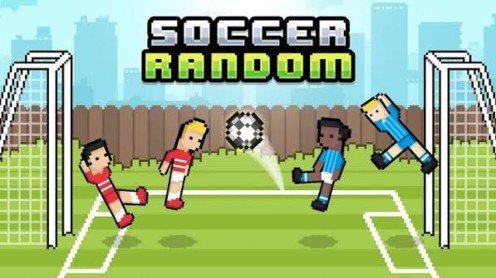


Soccer Random
Soccer Random is a pixel-art physics football game with one-button controls. Control two players at once, compete against the CPU or a friend, adapt to changing balls and pitches, and become the first team to score five goals.
Soccer Random
Soccer Random reduces football to one button and then lets unpredictable physics create the rest of the match. Each side controls two pixel characters who jump, kick, fall, and defend at the same time. You cannot move each player separately, so every button press can produce a useful shot, an accidental save, or a complete miss.
The goal is simple: score five times before the other team. Reaching that total is harder than it sounds because the pitch, ball, player appearance, weather, and goal position can change after every point. A tactic that worked in the previous round may become unreliable as soon as the next setup appears.
Players who enjoy unpredictable sports physics can also try Basketball Random, where one-button movement creates similarly unusual shots, blocks, and last-second scores.
What Soccer Random Is About
Soccer Random is a two-player physics game developed by RHM Interactive. It uses simple controls, pixel graphics, and short football rounds rather than the detailed passing and movement systems found in traditional sports simulations.
Each team has two characters:
- One player normally starts closer to the ball
- The second player stays nearer the goal
- Both characters respond to the same control
- Each press makes them jump and attempt a kick
- Their movement depends on their current position and balance
You can play alone against a computer-controlled team or share the keyboard with another person in local two-player mode.
The first team to score five goals wins the complete match.
How Soccer Random Gameplay Works
A round begins with both teams placed on opposite sides of a small pitch. The ball appears near the centre, and each player uses one control to make both team members move.
There are no separate buttons for running, passing, tackling, or shooting. Jumping and kicking are combined into the same action.
This limited control system creates the main challenge. Pressing the button may help the forward reach the ball, but the same input also moves the goalkeeper. A useful attacking attempt can therefore pull the defender away from the goal.
After someone scores, the game resets with a different arrangement. The next round may introduce:
- A standard football
- A beach ball
- An American football
- A tennis-style ball
- A snowy pitch
- A beach setting
- A night environment
- Different goal sizes
- New player clothing
- Altered character positions
These changes prevent the match from following one fixed rhythm.
Soccer Random Controls
Soccer Random uses one button for each team.
Player One
- W: Jump and kick
Player Two
- Up Arrow: Jump and kick
On supported touchscreen devices, each player uses the visible on-screen button.
Pressing the control moves both characters on your team. Holding the button can sometimes keep their legs extended for longer, which may help block or redirect the ball.
The controls are simple enough to learn immediately, but their results are intentionally difficult to predict.
One-Player Mode
One-player mode lets you compete against the computer.
You control your two characters with the W key, while the game controls the opposing team.
This mode is useful for learning:
- How high the characters jump
- How long their kicking movement lasts
- How different balls bounce
- When the goalkeeper should remain still
- How quickly the CPU reacts
- What happens after a mistimed jump
The computer may appear easy during one round and unexpectedly effective during another. Random positions and ball movement can create chances for either side.
Do not press repeatedly simply because the CPU has reached the ball first. Waiting can sometimes place your players in a better defensive position.
Local Two-Player Mode
Local multiplayer allows two people to play on the same keyboard or supported touchscreen.
Player one uses W, while player two uses the Up Arrow.
This mode works well because both sides have the same limited control. Neither player can rely on complicated button combinations or a large move list.
A round may be decided by:
- Better timing
- A lucky bounce
- A delayed jump
- An accidental own goal
- A goalkeeper falling into the correct position
- One player refusing to press at the wrong moment
Matches are short, so another game can begin quickly after someone reaches five goals.
Soccer Random does not require online matchmaking for its two-player mode. Both players compete locally using the same device.
Why Doing Nothing Can Be Useful
Soccer Random encourages button pressing, but constant movement is not always helpful.
When your goalkeeper is already standing between the ball and the goal, another jump may move them out of position. The ball might then roll underneath or bounce over them.
Waiting can be useful when:
- The opponent is about to kick toward your goalkeeper
- Your forward is lying in front of the ball
- The ball is moving away from your goal
- Both opponents are off balance
- A bounce may bring the ball toward your team
- Your characters are already positioned well
The game often rewards the player who understands when not to act.
Do not treat every moment as an emergency. Watch the direction of the ball before pressing again.
Watch Both Characters
One button controls the complete team, so you need to watch both characters at the same time.
The forward may be ready for a shot while the goalkeeper is leaning away from the goal. Pressing could create an attacking chance but weaken the defence.
Before acting, quickly check:
- Where the ball is moving
- Which character is closest to it
- Whether the goalkeeper is upright
- Whether the opponent is preparing to jump
- Which goal is currently exposed
- Whether your forward can make contact
Sometimes the goalkeeper’s position matters more than the attacker’s opportunity.
Protecting the goal can be the better decision when the ball is moving unpredictably near the centre.
Learn the Ball’s Behaviour
Different balls can respond differently to the same contact.
A light beach ball may rise high and remain in the air longer. A smaller ball can pass beneath jumping players. An oval ball may bounce in a less predictable direction.
When a new round begins, watch the first contact before assuming the ball will behave like the previous one.
Consider:
- How high it bounces
- How quickly it moves
- Whether it rolls smoothly
- How strongly kicks affect it
- Whether it changes direction after landing
- Whether it can pass under a jumping player
Adapting to the current ball is more useful than repeating the same timing in every round.
Playing on Snow and Slippery Fields
Snowy or slippery-looking stages can make character movement feel less stable.
Players may slide, fall, or take longer to return to an upright position. The ball may also travel differently across the surface.
On these fields:
- Avoid unnecessary jumps
- Let the ball approach before acting
- Expect players to remain off balance
- Watch for long rolls toward the goal
- Use shorter, better-timed presses
- Do not assume the goalkeeper will stop immediately
A small movement can create a large positional change when the surface offers less control.
Using the Front Player
The front character normally has the best opportunity to attack.
A well-timed jump can make the player’s feet connect with the ball and send it toward the opposing goal.
Try to press when:
- The ball reaches kicking height
- The player faces the opponent’s side
- The opposing goalkeeper is off balance
- The ball is falling toward your forward
- There is open space above the defender
Avoid pressing too early. The character may complete the main kicking movement before the ball arrives.
Pressing too late can allow the ball to pass underneath or move behind your player.
Using the Goalkeeper
The rear character acts as the goalkeeper, although the game does not give them separate controls.
Your goalkeeper can stop the ball by:
- Standing in its path
- Jumping into a high shot
- Blocking with their body
- Deflecting the ball with their feet
- Falling across the goal area
A goalkeeper does not always need to be upright to make a save. A fallen character can still block a low ball.
Be careful when the goalkeeper faces the wrong direction. A jump or kick may send the ball into your own net.
When the ball is already moving away from the goal, let the goalkeeper settle instead of pressing without a clear reason.
Avoiding Own Goals
Own goals are common because movement is unpredictable and both team members react together.
An own goal may happen when:
- The goalkeeper kicks backward
- A defensive jump redirects the ball
- The forward sends the ball over the goalkeeper
- A bouncing ball strikes a fallen player
- Repeated pressing moves the goalkeeper away
- The ball becomes trapped between both teammates
When the ball is near your goal, use fewer inputs.
A desperate press can make the situation worse. Watch whether the ball is already going wide or losing speed before attempting another block.
Scoring From a High Ball
A high ball can be difficult for both attackers and defenders.
When the ball rises above the players, wait for it to begin falling. Jumping too early may leave your characters on the ground when the ball reaches them.
A falling ball can create:
- A header-like contact
- A high kick toward the goal
- A bounce over the goalkeeper
- A sudden change of direction
- A chance for the defender to clear it
Focus on timing rather than pressing several times.
One useful jump is normally better than multiple movements that leave both characters lying down.
Scoring With Low Shots
Low balls can pass under jumping defenders.
When the ball is rolling toward the opposing goal, another kick is not always necessary. The goalkeeper may jump over it or fail to return to the ground in time.
Let the ball continue when:
- It is already moving toward the goal
- The defender is airborne
- No player blocks its route
- Another touch could change its direction
- The ball has enough speed to reach the line
Players often prevent their own goal by pressing too aggressively and kicking the ball away from a clear route.
Adapting After Every Goal
A new score changes more than the number at the top of the screen.
The next round may introduce a different:
- Pitch
- Ball
- Goal height
- Character size
- Player outfit
- Starting position
- Movement pattern
- Surface condition
Take a brief moment to read the new setup.
Check whether the goal is raised, whether the ball is unusually large, and whether your goalkeeper begins in a secure position.
The first press of a new round should respond to the current setup rather than the previous one.
Managing a Lead
When you are ahead, you still need to reach five goals to win.
Do not become overly defensive because Soccer Random does not allow precise possession or controlled passing. Trying to block every movement may produce an accidental own goal.
Continue watching for useful attacking chances while protecting the goalkeeper.
A lead is easier to keep when you:
- Avoid repeated random pressing
- Let safe balls move away
- Watch the current score
- Protect low shots
- Adapt to new round conditions
- Stay calm after conceding
A single goal changes only one round. It does not decide the match unless the opponent reaches five.
Recovering After Conceding
Goals can happen quickly and sometimes feel completely accidental.
Do not carry frustration into the next round. The field and ball may change, creating a completely different situation.
After conceding:
- Check the score.
- Read the new pitch.
- Identify the ball type.
- Check both player positions.
- Wait for a useful opening.
- Avoid pressing before the round becomes readable.
Soccer Random is designed around sudden changes. A strange goal against you can be followed by an equally surprising scoring chance.
Common Soccer Random Mistakes
The most common mistake is pressing continuously.
Repeated actions leave both characters jumping, falling, and kicking without regard for the ball’s position.
Another mistake is watching only the forward. This allows the goalkeeper to move away from the net unnoticed.
Players also use the same timing for every ball and field. Different round conditions require different reactions.
Jumping too early creates another problem. The character finishes the useful part of the movement before the ball arrives.
Some players attempt to clear every ball near their goal. A ball already moving wide may become dangerous only after unnecessary contact.
The final mistake is giving up after an unlucky goal. A complete match continues until one side reaches five.
How to Improve at Soccer Random
Soccer Random contains randomness, but better observation still improves your chances.
Use this learning order:
- Learn what one press does.
- Watch both team members.
- Stop pressing constantly.
- Study each ball’s bounce.
- Protect the goalkeeper.
- Time falling balls.
- Recognise safe moments to wait.
- Adapt after every goal.
- Practise against the CPU.
- Test your timing against another player.
You cannot control every bounce, but you can avoid creating unnecessary problems for your own team.
Is Soccer Random a Realistic Football Game?
Soccer Random is not intended to recreate professional football accurately.
It does not include:
- Full team formations
- Passing controls
- Player switching
- Detailed dribbling
- Substitutions
- Fouls
- Offside rules
- Tournament management
- Real clubs or licensed players
Its version of football is built around short rounds, unusual physics, and one-button competition.
Players looking for a serious football simulation may find the controls too limited. Those who enjoy quick local matches and unexpected results are more likely to appreciate its design.
For another casual sports challenge based on simple controls, play Mini Golf.
Pixel Graphics and Changing Environments
Soccer Random uses a simple pixel-art style that keeps the characters, ball, and goals easy to identify.
The limited visual detail suits the fast rounds. Players can quickly understand where the ball is moving without needing to follow a large stadium or complicated interface.
Changing environments provide variety without changing the basic objective.
You may play:
- On a green pitch
- In snow
- Near a beach
- During the day
- At night
- In unusual clothing
- With different goal structures
The visual changes also help each goal feel like the beginning of a new challenge.
Browser and Mobile Play
Soccer Random was built with HTML5 and supports browser play on desktop and compatible mobile devices.
Desktop players can share one keyboard in local two-player mode. Mobile versions may display separate touch controls for both sides.
For smoother play:
- Use an updated browser
- Let the game load fully
- Close unnecessary tabs
- Use fullscreen mode when helpful
- Keep both control areas visible on mobile
- Avoid resizing the browser during a match
The game does not require a complicated controller setup, making it suitable for quick sessions on one shared device.
Playing Comfortably and Safely
Soccer Random contains cartoon football action and exaggerated falls rather than realistic sports contact.
Take regular breaks during repeated matches, particularly when playing on a small screen.
When using local multiplayer:
- Keep drinks away from the keyboard
- Give both players enough space
- Avoid striking keys too forcefully
- Keep competition friendly
- Stop when frustration replaces enjoyment
The ESRB ratings guide explains common game-content labels for parents and players.
European families can use the PEGI labels guide to understand regional age and content symbols.
What Makes Soccer Random Worth Playing
Soccer Random creates competitive matches from one of the smallest control systems possible.
Both players can understand the rules within seconds. There is no need to learn passing combinations, skill moves, or team formations before the first match.
The changing pitches and balls prevent every round from feeling identical. Even when players repeat the same control, the physics can create a different outcome.
Its randomness may frustrate players who want complete control over every movement. A carefully timed action can still produce an unexpected bounce.
That unpredictability is also the game’s main attraction. Soccer Random works best as a light local competition where strange goals are part of the experience.
Browse the sports games collection for more browser-based competitions.
Who Will Enjoy Soccer Random?
Soccer Random suits players who enjoy:
- One-button games
- Local two-player matches
- Pixel graphics
- Physics-based movement
- Short football rounds
- Funny accidental goals
- Quick rematches
- Simple browser controls
Beginners can start playing immediately because each team uses only one key.
More experienced players can improve their timing, watch both characters, and learn when waiting is better than jumping.
The game is suitable for short sessions, shared-device competition, and casual matches against the computer.
Players looking for detailed football tactics or realistic control may prefer another sports title.
Play Soccer Random Free Online
Play Soccer Random free online on Gam-core.com and control two unpredictable football players using only one button.
Compete against the computer or share the keyboard with another player. Watch both characters, adapt to changing balls and pitches, and avoid pressing when your goalkeeper is already in a useful position. The first team to score five goals wins, but no two rounds reach that result in quite the same way.



Reviews
There are no reviews yet.