
Brick Breaker
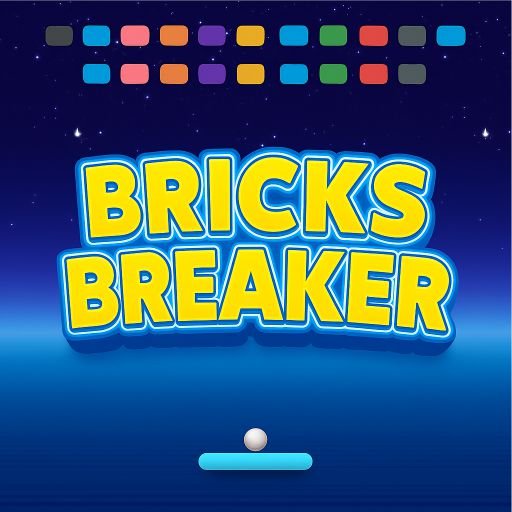
Brick Breaker is a classic arcade game where you move a paddle to keep a ball in play and destroy rows of bricks. Read rebound angles, open side channels, collect safe power-ups, manage multiball carefully, and clear each board before losing all your lives.
Brick Breaker
Brick Breaker is a classic paddle-and-ball arcade game where you keep a bouncing ball in play while clearing rows of bricks. Move the paddle beneath the ball, judge its return angle, and prevent it from falling below the screen. The rules take only a moment to understand, but faster ball speeds, narrow spaces, durable bricks, and unpredictable rebounds make later stages much harder.
Players who like short arcade challenges can also try Fun Mini Online, which brings together several quick games with changing objectives and controls. (Gamcore)
What Is Brick Breaker?
Brick Breaker is a general name used for games based on the brick-breaking format established by Atari’s Breakout. The player controls a paddle near the bottom of the screen and uses it to bounce a ball into a wall of bricks.
Each collision removes a brick or damages it. The level is completed when all required bricks have been cleared.
Atari describes the original Breakout concept as an extension of Pong’s paddle-and-ball mechanics. The arcade game appeared in 1976, while Atari later released a home version in 1978. (Atari®)
The exact developer, level count, power-ups, and control layout of a game simply titled Brick Breaker can vary because several browser developers use the same name. Some versions follow the basic formula closely, while others add durable blocks, multiple balls, weapons, bosses, endless modes, or special challenges. (FunClicker.com)
Players interested in the history behind this format can read Atari’s account of Breakout’s origins.
How Brick Breaker Gameplay Works
A standard level places the paddle at the bottom of the play area and a group of bricks near the top.
The ball moves automatically after being launched. Your main control is the paddle, which moves horizontally.
A normal level follows this pattern:
- Launch the ball.
- Move the paddle beneath its falling path.
- Bounce the ball back toward the bricks.
- Break bricks with repeated collisions.
- Collect useful power-ups when available.
- Prevent the ball from falling below the paddle.
- Clear all required bricks to finish the level.
The ball also rebounds from the side walls and upper boundary. These wall bounces allow it to reach bricks from different directions.
The original Breakout manual describes the central objective as hitting a ball toward a wall of bricks to build the highest possible score. (Museum of the Game)
The Main Goal
The immediate goal is usually to remove every breakable brick.
Some versions add other objectives, including:
- Reach a target score
- Clear the board within a time limit
- Survive with a limited number of lives
- Break a certain type of brick
- Defeat a large boss block
- Complete several waves
- Prevent descending bricks from reaching the paddle
- Continue for as long as possible in endless mode
Check the objective at the beginning of each round. A level may contain metal or permanent blocks that do not need to be removed.
Controlling the Paddle
The paddle moves left and right near the bottom of the board.
Depending on the browser edition, you may control it with:
- Mouse movement
- Click-and-drag movement
- Left and right arrow keys
- A and D keys
- Touchscreen dragging
- On-screen directional buttons
Move smoothly rather than making repeated sharp changes. A fast correction can send the paddle past the ball’s landing point.
Some browser editions move the paddle directly beneath the pointer. Others require you to hold the mouse button while dragging. GamePix’s Brick Breaker Retro, for example, uses left-mouse dragging, while its Atari Breakout edition supports mouse movement, arrow keys, and A or D. (Gamepix – Free Online Games | Play Now!)
Understanding the Ball’s Angle
The ball does not always leave the paddle at the same angle.
In many versions, the contact position affects the rebound:
- Hitting the paddle near the centre sends the ball upward at a straighter angle.
- Hitting near the left edge sends it toward the left.
- Hitting near the right edge sends it toward the right.
This gives you limited control over the ball without controlling it directly.
A centre hit is safer when you are struggling to keep the ball in play. An edge hit is useful when you need to reach a corner or send the ball behind a brick formation.
The exact physics differ between versions, so test several paddle positions during early levels.
Track the Ball, Not the Paddle
A common beginner mistake is watching the paddle too closely.
The ball determines where the paddle needs to go. Keep your eyes on its downward path and move early.
A practical method is:
- Watch the ball after it leaves the bricks.
- Estimate which side of the board it is approaching.
- Move the paddle beneath that area.
- Make a small final correction near the bottom.
- Prepare for the new rebound direction.
Do not wait until the ball is directly above the paddle. Fast balls leave very little time for a late response.
Predicting Wall Bounces
The side walls redirect the ball at an opposite angle.
A ball moving down and right will normally move down and left after hitting the right wall. A ball moving up and left will normally move up and right after touching the left wall.
You can use this to estimate where the ball will cross the paddle line.
Imagine the ball’s path as a straight line continuing toward the wall and reflecting away from it. This makes wide rebounds easier to judge.
Wall bounces become especially important when the ball travels behind the main brick wall and begins hitting blocks from above.
Getting the Ball Above the Bricks
One of the most useful situations occurs when the ball passes through a gap and reaches the space above or behind the brick formation.
The ball can then bounce repeatedly between the upper wall and the bricks. This may clear several blocks before returning to the paddle.
To create this situation:
- Open a narrow channel near one side.
- Aim the ball toward that opening.
- Use the paddle edge to change its angle.
- Keep the path open until the ball passes through.
Do not focus only on clearing the lowest bricks. A side channel can produce a much longer sequence of automatic hits.
Different Brick Types
Modern Brick Breaker versions may contain several kinds of bricks.
Standard Bricks
A standard brick normally disappears after one hit.
Durable Bricks
These blocks need two or more hits. Their colour or appearance may change after taking damage.
Metal Bricks
Metal bricks may be unbreakable. They redirect the ball and create narrow routes through the level.
Explosive Bricks
An explosive block damages nearby bricks when hit.
Moving Bricks
These blocks change position during the level, making the ball’s route harder to predict.
Regenerating Bricks
Some versions allow damaged or removed blocks to return after a delay.
Power-Up Bricks
Breaking these bricks releases a bonus that falls toward the paddle.
Numbered Bricks
A numbered brick must be hit the displayed number of times. This format is common in aiming-based brick games rather than traditional paddle versions.
Not every Brick Breaker contains these types. Use the current level’s visual feedback to learn how each block behaves.
Lives and Missed Balls
Most versions give the player a limited number of lives or balls.
You lose one when the ball falls below the paddle. The remaining bricks normally stay in place, and another ball can be launched.
A game may end when:
- All lives are lost
- The timer reaches zero
- Descending bricks reach the lower boundary
- A mission condition is failed
Atari’s home version of Breakout gave players five balls, while many modern adaptations use three lives or another amount. (Atari®)
Watch the life indicator before taking a risky paddle angle. When only one ball remains, a safe return may be more valuable than an aggressive corner shot.
Brick Breaker Power-Ups
Power-ups often fall from destroyed bricks. You normally collect them by moving the paddle underneath the falling icon.
Common power-ups include:
Wide Paddle
Increases the paddle width, making the ball easier to return.
Small Paddle
Reduces the paddle width. This is normally a penalty.
Multiball
Adds one or more balls to the board.
Multiball clears bricks quickly, but watching several falling paths at once can become difficult.
Slow Ball
Temporarily reduces ball speed.
Fast Ball
Increases speed and may make the level harder.
Fireball
Allows the ball to pass through or destroy several bricks without rebounding normally.
Laser Paddle
Lets the paddle fire upward at bricks.
Sticky Paddle
Catches the ball on contact and lets you release it at a chosen moment.
Extra Life
Adds another ball or life to your current total.
Shield
Places a temporary barrier beneath the paddle.
Brick Bomb
Damages a group of nearby blocks.
Atari’s modern Breakout: Recharged uses game-changing power-ups alongside endless arcade play and challenge stages, showing how later games expanded the original format. (Atari®)
Should You Collect Every Power-Up?
Not every falling item should be collected.
A bonus may be unhelpful when:
- The ball is approaching the opposite side
- Moving toward it would leave the paddle out of position
- It reduces paddle size
- It increases the ball speed
- You already have several balls in play
- It replaces a stronger active effect
Keep the ball safe first. A missed bonus costs less than a lost life.
When a power-up and the ball are falling together, track the ball’s landing point before deciding whether the bonus is reachable.
Managing Multiball
Multiball creates several active balls.
This can clear a level quickly because different balls hit separate areas at the same time. The difficulty comes when several balls return toward the paddle together.
Do not try to save every ball at any cost.
Instead:
- Focus on the lowest ball.
- Keep the paddle near the area where several paths meet.
- Avoid chasing one ball while two others fall elsewhere.
- Use a wide-paddle bonus when available.
- Continue playing calmly after losing one of the extra balls.
The round normally continues while at least one ball remains.
Ball Speed
Ball speed may increase over time or after certain brick collisions.
A faster ball means:
- Less time to position the paddle
- Harder angle prediction
- Faster brick clearing
- More dangerous side-wall rebounds
- Less time to collect power-ups
Use smaller paddle movements as speed increases. Large sweeps are more likely to overshoot the correct position.
Some games reset the ball to a slower speed after a lost life. Others continue at the current level speed.
Paddle Positioning
The best paddle position is not always directly beneath the ball’s current location.
You should move toward where the ball will arrive.
When the ball is high on the screen, avoid constantly following it from side to side. Wait until its downward direction becomes clear, then move toward the expected landing area.
Staying near the centre provides access to both sides. However, remaining in the centre for too long can be dangerous when the ball falls near a corner.
Using Paddle Edges to Aim
Edge hits provide stronger horizontal movement.
Use them to:
- Send the ball toward remaining side bricks
- Reach an upper corner
- Create a channel through the wall
- Avoid a central metal obstacle
- Change a repetitive vertical path
Edge hits are riskier because the ball may rebound at a shallow angle and travel close to the bottom.
Practise them while several lives remain. Use central hits when protecting the final ball.
Avoiding Repetitive Ball Paths
The ball can sometimes become trapped in a repeated path, striking the same walls without reaching the remaining bricks.
This commonly happens when:
- Only one corner brick remains
- The ball moves almost vertically
- Unbreakable blocks guide it through the same channel
- The paddle keeps returning it from the same position
Change the rebound angle by contacting the ball with another part of the paddle.
A small adjustment can send it toward a completely different section of the board.
Clearing the Final Brick
The last brick can take longer than the rest of the level because there are fewer surfaces to redirect the ball toward it.
When one brick remains:
- Identify which side of the brick is open.
- Check whether a wall bounce can reach it.
- Use the paddle edge to create a suitable angle.
- Avoid rushing and losing the ball.
- Collect aiming or laser power-ups when safe.
A slower, controlled return is often better than repeatedly sending the ball into an unreachable path.
Brick Breaker Controls
| Action | Computer Control | Mobile Control |
|---|---|---|
| Move the paddle | Mouse, arrow keys, or A and D | Drag or swipe horizontally |
| Launch the ball | Click, Spacebar, or automatic launch | Tap the screen |
| Use a weapon | Spacebar or an on-screen control | Tap the ability button |
| Pause | Escape or pause icon | Tap pause |
| Restart | Select Restart | Tap Restart |
| Continue after losing a ball | Click or press the launch key | Tap to launch |
| Turn sound on or off | Select the audio icon | Tap the audio icon |
The exact controls depend on the edition hosted on Gam-core. Several current browser adaptations support both desktop and mobile input. (Crazy Games)
Useful Brick Breaker Strategies
Watch the Ball Early
Begin moving before the ball reaches the bottom quarter of the board.
Keep the Paddle Near the Centre
A central starting position makes it easier to reach either side.
Open a Side Channel
Getting the ball behind the brick wall can cause a long clearing sequence.
Change the Rebound Angle
Use different parts of the paddle when the ball repeats an unhelpful path.
Protect the Ball Before Collecting Bonuses
Do not leave the landing area for a power-up that is too far away.
Clear Low Bricks When Space Is Tight
Lower bricks restrict the ball’s route and can create awkward rebounds near the paddle.
Learn Durable Brick States
Notice how their colour or cracks change after each hit.
Use Multiball Calmly
Track the lowest ball rather than moving between every active ball.
Save Safe Returns for the Final Life
Central paddle hits are easier to control than extreme edge rebounds.
Pause Between Levels
Fast stages require concentration. A brief rest can reduce careless misses.
Players wanting a different test of timing can try Super Nob Run Adventure Jungle, where jumps and slides replace paddle movement. (Gamcore)
Common Brick Breaker Mistakes
Following the Ball With the Paddle
Track its future landing point instead of copying its current movement.
Moving Too Late
Fast rebounds may become impossible to reach once the ball enters the lower area.
Chasing Every Power-Up
Some bonuses are unsafe or actively harmful.
Staying at One Paddle Angle
Repeated centre hits can trap the ball in an inefficient vertical route.
Watching Only One Ball During Multiball
Pay attention to whichever ball is closest to the bottom.
Ignoring Brick Durability
A block that survives one collision may need several more hits.
Overshooting the Ball
Large paddle movements can carry you past the landing point.
Giving Up on a Full-Speed Level
Ball speed can feel overwhelming at first, but its path still follows visible wall and paddle rebounds.
Restarting Before Checking Remaining Lives
Some editions automatically prepare another ball after a miss.
Level-Based and Endless Modes
Brick Breaker versions commonly use one of two main structures.
Level Mode
Each stage contains a planned brick arrangement. Clear it to reach the next board.
Later levels may add:
- Stronger bricks
- Moving obstacles
- Smaller paddles
- Faster balls
- Narrow pathways
- Boss stages
- Limited time
Endless Mode
Bricks continue appearing or descending while you try to survive and increase your score.
The round ends when you lose all balls or the brick wall reaches the lower boundary.
Challenge Mode
Challenge levels may change the normal rules through restricted lives, special layouts, fixed power-ups, or specific score targets.
Multiball Mode
Several balls remain active throughout the stage.
Progressive Mode
The brick wall slowly moves downward, creating pressure even when the ball remains in play.
Atari’s browser-style Breakout adaptation has appeared with modes such as standard one-ball play, two-ball play, progressive bricks, and special cavity layouts. (Gamepix – Free Online Games | Play Now!)
Graphics and Sound
Brick Breaker games normally use a clear two-dimensional board with bright bricks, a visible ball, and a paddle that stands out from the background.
Visual effects may show:
- Cracks on durable blocks
- Explosions
- Ball trails
- Multiball activation
- Power-up icons
- Score increases
- Paddle changes
- Level completion
Sound effects help confirm brick hits, wall rebounds, paddle contact, lost lives, and bonuses.
Audio is not required for playing, but the sound of each bounce can provide an extra timing cue.
Players who prefer slower visual puzzles can try Find Easy Hidden Differences, where the aim is to notice small changes rather than react to a moving ball. (Gamcore)
Difficulty and Learning Curve
Brick Breaker begins with one simple responsibility: keep the ball above the paddle.
Difficulty increases through:
- Higher ball speed
- Smaller paddle size
- Durable bricks
- Unbreakable obstacles
- Complicated layouts
- Multiple active balls
- Moving blocks
- Limited lives
- Timed stages
- Descending walls
The controls remain basic throughout the game. Improvement comes from reading angles, moving earlier, and controlling where the ball contacts the paddle.
A beginner can survive through central hits and careful tracking. A more experienced player begins using paddle edges to aim for particular gaps and isolated blocks.
Brick Breaker and the Breakout Legacy
Brick Breaker belongs to a long-running arcade style inspired by Atari’s Breakout.
Atari states that Breakout retained the paddle-and-ball ideas of Pong while replacing the second player with a wall that had to be destroyed. It became one of Atari’s important early arcade games and influenced many later brick-breaking titles. (Atari®)
Modern official games such as Breakout Recharged add challenge levels, endless play, and power-ups while retaining the central paddle, ball, and brick format. (Atari®)
Brick Breaker should therefore be understood as a genre-style title rather than one game with a single universal developer or feature list.
Who Should Play Brick Breaker?
Brick Breaker suits players who enjoy:
- Classic arcade games
- Paddle-and-ball controls
- Quick reaction challenges
- Angle-based aiming
- Short levels
- High-score attempts
- Power-ups
- Simple browser games
- Gradually increasing speed
Players who like block-based gameplay but prefer slower planning may enjoy Chain Cube 2048 3D Merge. (Gamcore)
More arcade, puzzle, casual, racing, and action titles are available through the Gam-core game library. (Gamcore)
Honest Strengths and Limitations
| Strengths | Possible Limitations |
|---|---|
| The main controls are easy to learn | Faster levels can become demanding |
| Short rounds suit quick play sessions | The central paddle-and-ball loop can feel repetitive |
| Paddle position provides control over rebound angles | Exact physics differ between versions |
| Power-ups add variety | Some bonuses can make the board harder |
| Works well with mouse and touchscreen input | Touch controls may cover part of the play area |
| Brick layouts create clear level goals | A final isolated brick can take time to hit |
| Multiball creates fast clearing sequences | Several balls can be difficult to track |
| No long tutorial is required | Accidental paddle movement may cost a life |
| High scores support repeat attempts | Many editions do not have a story |
| The format has a long arcade history | The exact developer is unclear for generic versions |
Brick Breaker Game Information
| Detail | Information |
|---|---|
| Game title | Brick Breaker |
| Genre | Arcade, paddle, ball, block breaking |
| Main objective | Bounce the ball and clear the bricks |
| Main mode | Usually single-player |
| Common controls | Mouse, keyboard, or touchscreen |
| Common level goal | Remove all breakable bricks |
| Common failure condition | Lose all balls or lives |
| Possible modes | Level, endless, challenge, progressive, and multiball |
| Common power-ups | Wide paddle, multiball, laser, fireball, slow ball, and extra life |
| Historical influence | Atari Breakout |
| Platform | Web browser, depending on the hosted build |
| Exact developer | Depends on the Brick Breaker version |
Frequently Asked Questions
What type of game is Brick Breaker?
Brick Breaker is an arcade game where you move a paddle, bounce a ball, and destroy bricks near the top of the board.
How do I play Brick Breaker?
Move the paddle beneath the falling ball and return it toward the bricks. Clear every required brick without losing all your lives.
Can I control the ball?
You cannot usually control it directly. You influence its direction by changing where it touches the paddle.
Why does the ball change direction?
It rebounds after hitting the paddle, bricks, or walls. The contact angle may affect its next path.
How do I aim the ball?
Strike it with the left or right area of the paddle to create a wider angle. A central hit normally produces a straighter return.
What happens when the ball falls below the paddle?
You normally lose one life or ball. The round continues when more lives remain.
Are all bricks destroyed with one hit?
No. Some versions include durable bricks, metal blocks, moving bricks, or numbered blocks requiring several hits.
What is multiball?
Multiball places several balls on the board at once. It clears bricks quickly but makes defence harder.
Should I collect every power-up?
No. Keep the ball in play first, and avoid bonuses that make the current situation worse.
How can I reach bricks in the corners?
Use a paddle-edge hit or side-wall bounce to create a sharper angle.
Why is the ball repeating the same path?
It may be striking the same section of the paddle. Change the contact point to alter the rebound angle.
Does Brick Breaker have levels?
Many versions use separate levels, while others offer endless or high-score play.
Is Brick Breaker multiplayer?
Most browser versions are single-player. Certain modern Breakou5t adaptations offer cooperative or competitive modes, but these are not standard in every Brick Breaker edition. (Atari®)
Can Brick Breaker be played on mobile?
Many HTML5 editions support touchscreen dragging through mobile and tablet browsers. (Crazy Games)
Who developed Brick Breaker?
Several unrelated developers have published games with this title. The developer of the Gam-core build should be confirmed from its loading screen or credits.
What is the best beginner strategy?
Stay near the centre, watch the ball’s downward path, move early, use central hits for safety, and create a side gap that lets the ball travel behind the bricks.





Reviews
There are no reviews yet.