
Path Of Exile – Economy, Build Guide And Trade: How To Make Your Currency Work

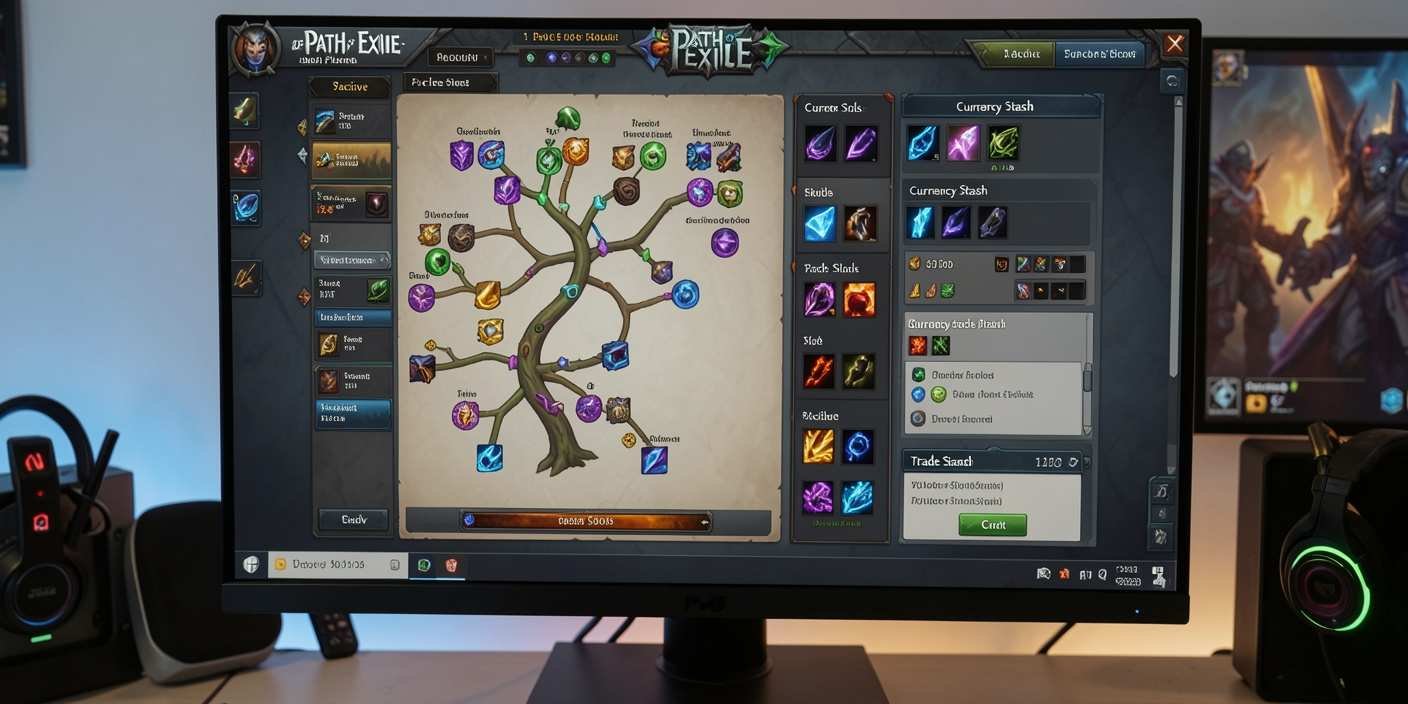
Path of Exile does not have an economy problem. It has a player problem: you can make far more purchasing mistakes than you realise.
A good Path of Exile economy build guide and trade strategy should therefore start with one rule: spend currency where it changes your character. Do not buy an item simply because it is technically better. Buy it because the improvement solves a real weakness in your build.
That mindset makes the economy much easier to understand.
Your Build Is The Budget Before Your Gear Is
Before spending currency, write down what your build actually needs. You may need capped elemental resistances. Your damage may bemay be fine, but your life pool is low. A missing attribute may prevent you from using a key gem.
A build guide should help you identify those bottlenecks. It should not turn into a shopping list where every expensive item is treated as mandatory.
For example, replacing a ring that gives 40 life and 60 total resistance with one that gives 80 life and 90 resistance may solve several problems at once. Replacing it with a luxury damage ring that gives 5 per cent more damage may not.
Learn The Difference Between Progression And Perfection
The economy rewards players who understand upgrade timing. Early gear does not need perfect rolls. It needs to meet the requirements for the content you are running.
Spend smaller amounts on obvious weaknesses first. Save major currency for upgrades that affect multiple parts of the build or unlock harder content.

This approach also protects you from market swings. You are less exposed to the temptation to chase every price movement when your character already functions well.
Trade For Specific Problems
The official Path of Exile trade site is most useful when you know the problem you are solving. Search for the base, required modifiers, and price range that fit your build.
Suppose your build needs more fire resistance and life. Search for those stats together. Do not simply search for “best belt” and sort by price. The market cannot know which stats your character is missing.
That is why build knowledge and trade skill are inseparable.
Compare Similar Listings Before Spending
One listed price is not the market. Compare several items with similar bases and modifiers. If a piece is dramatically more expensive, ask what you are actually paying for.
Sometimes the answer is a valuable implicit, high-tier modifier, or combination that is genuinely hard to replace. Sometimes the answer is simply that the seller priced it aggressively.
A five-minute comparison can save far more currency than a complicated farming strategy.
Treat Currency As A Tool, Not A Score
Players often hoard currency because seeing a large number feels like progress. Currency only matters when it helps you build a stronger character or reach a goal.
Set a target. If you need a specific weapon, estimate its market cost and save toward it. If you need several medium upgrades, divide your budget and buy them in order of impact.
This turns the economy from a vague grind into a decision system.
Stash Organization Is Part Of Your Economy
If you cannot find the items you own, your stash is costing you time. Organize valuable gear, crafting materials, maps, and trade items so that you can evaluate your inventory quickly.
Grinding Gear Games has continued to develop stash and trade systems, including Merchant’s Tabs for asynchronous trade in Path of Exile 2’s newer system. Its official FAQ explains that existing trade methods remain available and describes how Merchant’s Tabs work.
Do Not Copy A Build Guide Blindly
A build guide is a map, not a command. If a guide recommends an expensive unique or rare item, understand what it changes.
Ask whether the item provides damage, defense, mana, resistance, mechanics, or convenience. Then decide whether your current content actually requires that benefit.
Two players using the same skill can have different budgets and different goals. A league starter, a mapper, and a bossing character may all prioritize different upgrades.
Know When To Stop Upgrading
There is a point where another upgrade costs ten times more for a tiny improvement. That is when you should stop shopping and play.
The strongest economy strategy is not maximum spending. It is spending until the character comfortably handles the content you care about, then saving for a meaningful next step.
If you are also tuning the hardware side of your setup, optimizing your PC for a smoother gaming experience can improve the overall session without consuming your in-game currency.
Quick Checklist
- Identify the build’s biggest weakness before buying gear.
- Separate essential upgrades from luxury upgrades.
- Search trade listings by the stats your character actually needs.
- Compare several similar items before spending.
- Set a currency target for major purchases.
- Keep valuable trade items organized.
- Treat build guides as explanations, not shopping lists.
- Stop upgrading when the next improvement no longer justifies its cost.
Closing Thoughts
A useful Path of Exile economy build guide and trade system starts with your character, not the market. Know what your build needs, find the cheapest upgrade that solves the problem, compare listings, and save major currency for changes that genuinely expand what you can do.
That approach is less flashy than chasing the perfect item, but it is far more sustainable. You spend less time refreshing trade searches and more time playing the build you actually wanted to create.
The best PoE economy is the one that turns currency into progress, not clutter.