
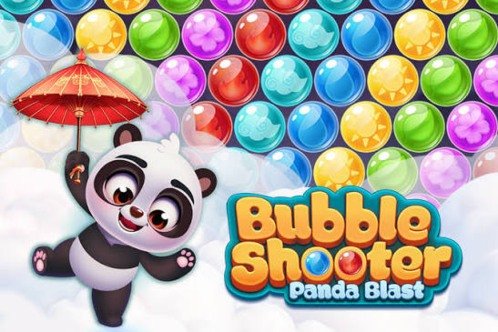


Bubble Shooter
Bubble Shooter is a colour-matching puzzle where you aim bubbles toward groups hanging above the launcher. Match three or more colours, use side-wall bank shots, clear supporting bubbles to drop larger sections, and prevent the board from reaching the lower danger line.
Bubble Shooter
Bubble Shooter is a colour-matching puzzle where you aim bubbles toward groups hanging from the top of the board. Connecting three or more bubbles of the same colour makes the group disappear. The controls are simple, but accurate bank shots, colour planning, and careful use of limited misses become important as the bubble wall moves lower.
Players looking for a closely related game can try Farm Fruit Pop Bubble, which combines bubble shooting with colourful fruit-matching puzzles.
What Is Bubble Shooter?
Bubble Shooter is a single-player aiming and matching game. A launcher at the bottom of the screen holds one coloured bubble, while rows of bubbles hang above it.
Your task is to shoot the loaded bubble into the board and connect it with at least two bubbles of the same colour. A group of three or more matching bubbles then pops.
The name Bubble Shooter is used by many browser and mobile games, so level systems, boosters, timers, and scoring can differ. The classic format normally includes an aiming arrow, coloured bubble groups, wall bounces, and a board that becomes more dangerous after unsuccessful shots.
The formula is closely related to Taito’s Puzzle Bobble series, known as Bust-A-Move in some regions. Taito identifies Puzzle Bobble as its action-puzzle property, with the series dating to 1994.
The official Puzzle Bobble page provides a useful reference for the match-three bubble rules that influenced many later bubble-shooting games.
How Bubble Shooter Gameplay Works
A round begins with several rows of coloured bubbles attached to the upper part of the board. Your launcher appears below them.
Move the aiming line toward the position where you want the bubble to travel. Select or release the shot, and the bubble moves in a straight line until it touches another bubble or the top boundary.
The bubble then remains attached to the board.
When the new bubble creates a connected group of three or more bubbles of the same colour, the whole group disappears.
A normal turn follows this pattern:
- Check the colour currently loaded.
- Look for a matching group on the board.
- Aim directly or use a side wall.
- Shoot the bubble.
- Clear groups of three or more.
- Drop unsupported bubbles when possible.
- Continue before the board reaches the lower limit.
The current Bubble Shooter Classic description also presents the game as aiming an arrow shooter toward rows of coloured bubbles.
The Main Goal
The basic goal is to remove bubbles before the board moves too close to the launcher.
Some versions end after the full board is cleared. Others continue through levels, target scores, missions, or endless rounds.
Common objectives include:
- Clear every bubble
- Reach a required score
- Rescue trapped objects
- Remove bubbles around a target
- Finish within a set number of shots
- Survive an endless descending board
- Collect bubbles of particular colours
Read the objective before shooting. A large match may raise the score without helping a trapped item or blocked section.
Matching Three or More Bubbles
A group pops when the fired bubble connects with enough bubbles of the same colour.
For example, if two blue bubbles are already touching, firing another blue bubble into that group creates a match of three.
Larger groups are also cleared. Connecting one bubble to five matching bubbles can remove all six at once.
Matching normally depends on direct contact. Two bubbles of the same colour will not count as one group when another colour separates them.
Standard bubble-popping games use the rule of attaching three or more bubbles of one colour to remove them. Taito describes Puzzle Bobble with the same core action.
Direct Shots
A direct shot travels from the launcher to the selected area without touching a side wall.
Direct shots are useful when:
- The matching group is clearly visible
- No other bubbles block the path
- The target has enough open space
- You want a predictable landing
- A narrow gap is not required
Move the aiming guide slowly. A small difference in angle can attach the bubble to the wrong side of a group.
Aim for the centre of the open landing area instead of its edge whenever possible.
Wall and Bank Shots
The side walls can redirect bubbles into areas that cannot be reached directly.
A wall shot works by aiming at one side of the board. The bubble bounces away from the wall at a matching angle and continues toward the bubble cluster.
Wall shots are useful when:
- A group is hidden behind another colour
- The direct path is blocked
- You need to reach an upper corner
- A bubble must attach behind a hanging section
- A drop shot is available through a side gap
The aiming line may show the first part of the bounce without showing the complete final route. Check the angle carefully before firing.
Begin with simple one-wall shots. Narrow double bounces are less reliable and may waste a useful colour.
Dropping Unsupported Bubbles
One of the strongest Bubble Shooter moves is removing the bubble group supporting several other pieces.
Bubbles must remain connected to the top of the board through other bubbles. When you clear a supporting connection, bubbles below it may fall even when their colours do not match.
Suppose a large mixed group hangs from two green bubbles. Matching and clearing those green bubbles can drop the entire lower section.
This technique can remove far more pieces than a normal colour match.
Before shooting, inspect the board from top to bottom and ask:
- Which bubbles connect this section to the ceiling?
- Can one colour match break that connection?
- How many bubbles would fall?
- Is the supporting group reachable?
- Would another shot create a better opening?
Dropping bubbles is normally more efficient than matching each colour separately.
Current and Next Bubble
Many versions display the bubble in the launcher and the colour coming next.
Use both pieces when planning.
A weak current colour may prepare a strong shot for the next bubble. For example, you can place one red bubble beside another when the preview shows that another red bubble is coming.
The preview can also warn you not to block an important route.
Before placing the current bubble, consider:
- Where can it create a match now?
- Where can it prepare a later match?
- Will it block another colour?
- Can the next bubble reach the same area?
- Is there a safer temporary position?
Not every browser version shows a preview, so use it only when it appears in the interface.
Managing Unhelpful Colours
Sometimes the launcher gives you a colour with no useful match.
Do not fire it randomly into the centre. A poorly placed bubble can block several later shots.
Safer temporary positions include:
- Near another bubble of the same colour
- Along an outer edge
- Under a group you plan to remove
- In an area with several open angles
- Away from an important narrow path
Try to prepare a future group of three. One unused bubble is easier to manage than several separate pieces of the same colour.
The Miss Counter
Classic versions may track shots that fail to pop a group.
After a set number of misses, a new row of bubbles may be added or the existing board may move downward. The exact number of allowed misses can change as the round progresses.
A missed shot is not always a bad shot. It can prepare a future match or support a planned bank shot.
However, several weak setup shots can make the board lower before the prepared combination is ready.
Watch any miss indicator near the launcher or lower edge. When only one safe miss remains, prioritise a reliable match over a complicated setup.
Board Movement and the Danger Line
The board becomes dangerous when bubbles move close to the launcher or cross the game’s lower boundary.
A round normally ends when the cluster reaches that limit.
As the wall moves lower:
- Shooting angles become narrower
- Side routes become blocked
- New bubbles have less room to travel
- Mistakes become harder to repair
- Colour groups become more crowded
Focus on clearing the lowest bubbles first when the board is near the danger line.
A small match near the bottom may be more valuable than a larger match high on the board because it creates immediate breathing room.
Choosing the Best Colour Group
The largest visible group is not always the best target.
Compare several possible shots before firing.
A useful target may:
- Clear a supporting connection
- Open a narrow route
- Remove bubbles close to the danger line
- Create space for the next colour
- Drop a large unsupported section
- Join two matching groups
- Prevent a new row from becoming dangerous
A large match isolated in a safe upper corner may be less urgent than a smaller group blocking the centre.
Bubble Shooter Controls
Browser Bubble Shooter games usually use a mouse or touchscreen.
| Action | Computer Control | Mobile Control |
|---|---|---|
| Aim the launcher | Move the mouse | Drag or move your finger |
| Shoot a bubble | Click | Tap or release |
| Adjust the angle | Move the pointer slowly | Slide your finger |
| Use a booster | Click its icon | Tap its icon |
| Pause the game | Select the menu button | Tap the menu button |
| Restart a round | Select Restart | Tap Restart |
| Turn sound on or off | Select the sound icon | Tap the sound icon |
Some editions fire when you click anywhere on the board. Others require you to drag an aiming arrow and release it.
Follow the instructions shown in the Gam-core version before making your first shot.
Special Bubbles and Boosters
Level-based versions may include special bubbles or optional tools.
Common examples include:
Bomb Bubble
A bomb clears several bubbles around the point where it lands.
It works best beside tightly packed groups or layered obstacles.
Rainbow Bubble
A rainbow bubble may match with any colour or change into the colour it touches.
Use it where it can join the largest useful group.
Fireball
A fireball may remove every bubble along its travel path.
Aim it through a crowded section rather than toward an isolated bubble.
Row Clearer
This tool may remove one complete horizontal section.
It is useful when the lowest row is close to the danger line.
Colour Remover
A colour remover clears one colour from the board.
Choose a colour that supports several groups or appears in many dangerous areas.
Extra Shots
Some games provide additional shots or restore part of the miss counter.
Booster names and effects differ between versions. Do not assume a feature exists unless its icon appears in the current game.
Planning Two Shots Ahead
Stronger play begins when you stop treating every shot as a separate turn.
Suppose the current bubble is yellow and the preview shows blue.
You may use the yellow bubble to:
- Clear a path toward a blue group
- Support a future yellow match
- Avoid blocking the blue route
- Remove a low yellow cluster first
- Prepare a drop shot for the next turn
Thinking one bubble ahead reduces random placement and helps keep routes open.
Players who enjoy planning combinations may also try Chain Cube 2048 3D Merge, where each cube placement affects later merges and available space.
Useful Bubble Shooter Strategies
Aim for Supporting Bubbles
Look for narrow connections holding larger sections. Clearing one support can drop many mixed colours.
Keep the Centre Open
The centre provides access to both sides of the board. Avoid filling it with unmatched bubbles.
Use the Walls Early
Practise bank shots while the board is high and there is room to correct mistakes.
Group Unhelpful Colours
Place spare bubbles beside matching colours rather than scattering them across the board.
Watch the Lowest Point
The lowest bubble, not the largest group, may be the most urgent target.
Plan Around the Preview
When a next-bubble indicator is available, make the current shot support the following colour.
Prefer Reliable Matches Near the End
Complicated bank shots become risky when one mistake could end the round.
Scan the Full Board
Do not focus only on the launcher’s current side. A stronger match or support point may exist in the opposite corner.
Avoid Blocking Narrow Gaps
A bubble placed in the wrong doorway can close access to a large upper group.
Restart With a Different Plan
After losing, identify which area became blocked rather than repeating the same early shots.
Common Bubble Shooter Mistakes
Shooting Too Quickly
The aiming line can shift with a small pointer movement. Pause long enough to confirm the landing point.
Matching Only the Largest Groups
A smaller support match may drop more bubbles than a large direct match.
Ignoring the Lower Edge
High matches can wait when the board is close to the danger line.
Scattering Spare Colours
Separate unmatched bubbles create clutter and block future routes.
Forgetting Wall Bounces
Some upper corners cannot be reached directly.
Blocking the Centre
A crowded centre reduces access to both sides of the board.
Using Every Booster Immediately
Save limited tools for layouts where they solve a clear problem.
Ignoring the Miss Counter
A setup shot can trigger a new row when no misses remain.
Aiming at the Colour Instead of the Landing Space
The bubble must physically connect with the group. Aim at the open attachment point, not the centre of an occupied bubble.
Repeating Failed Angles
When one bank shot misses, adjust the contact point on the wall rather than trying the identical path again.
Classic, Level, and Endless Modes
Bubble Shooter versions may use different structures.
Classic Mode
Classic mode normally presents one continuing board. You play until the bubbles are cleared or reach the lower boundary.
Level Mode
Level mode uses separate stages with specific layouts and objectives. Later levels may add obstacles, limited shots, trapped objects, or special bubbles.
Endless Mode
Endless play continues while new rows appear and the difficulty increases. The main goal is usually a high score.
Timed Mode
Timed rounds ask you to clear or score as much as possible before the countdown ends.
Challenge Mode
A challenge may restrict colours, shots, boosters, or available angles.
The GameDistribution listing identifies Bubble Shooter Classic as an HTML5 browser game, while many related versions use their own modes and level systems.
Graphics and Sound
Bubble Shooter games normally use bright coloured bubbles against a simple background.
Clear colour separation is important because matching depends on recognising pieces quickly. Some versions also use symbols, patterns, or faces to make colours easier to distinguish.
Animations show bubbles attaching, groups popping, unsupported pieces falling, and new rows entering.
Sound effects may confirm:
- A fired shot
- A successful match
- A falling group
- A booster activation
- A warning near the lower edge
- Level completion
Audio is optional because all essential information is shown visually.
Players who prefer a slower visual challenge can try Find Easy Hidden Differences, where the goal is to compare two pictures and locate small changes.
Difficulty and Learning Curve
The first shots are easy to understand because only aiming and colour matching are required.
Difficulty increases when:
- More colours appear
- Useful groups sit behind other bubbles
- The board moves lower
- Fewer misses are allowed
- Obstacles block the path
- Narrow wall shots are required
- Objectives appear in fixed positions
- Limited shots replace endless play
The game rewards accurate aiming, but it also contains a strong planning element. Research into the related Puzzle Bobble system has shown that solving general boards optimally can become computationally difficult, even with a limited number of colours.
Beginners do not need advanced calculations. Learning to identify supports, manage spare colours, and preserve open routes provides a strong practical foundation.
Who Should Play Bubble Shooter?
Bubble Shooter suits players who enjoy colour matching, aiming puzzles, short rounds, and games that mix simple controls with light strategy.
It may appeal to players who like:
- Match-three puzzles
- Bank shots
- Chain reactions
- Colour-based planning
- High-score attempts
- Level progression
- Quick browser sessions
- Relaxed single-player play
Players looking for direct multiplayer competition, character movement, or a detailed story may find the format too simple.
For a wider selection of short casual activities, Fun Mini Online offers different minigames with changing controls and objectives.
Honest Strengths and Limitations
| Strengths | Possible Limitations |
|---|---|
| Controls are easy to understand | Accurate bank shots take practice |
| Short rounds suit quick sessions | The central matching loop may feel repetitive |
| Wall bounces add useful strategy | Narrow angles can be difficult on small screens |
| Dropping groups rewards careful planning | New bubble colours may limit immediate choices |
| Works naturally with mouse and touch input | Features differ between versions |
| No fast character movement is required | Some level editions use limited boosters |
| Colour groups are easy to recognise | Similar shades may be hard for some players |
| Classic and level formats offer different goals | Not every edition includes both modes |
| Failed rounds can be restarted quickly | One weak shot can block an important route |
| Suitable for beginners and experienced players | The exact developer may depend on the hosted build |
Bubble Shooter Game Information
| Detail | Information |
|---|---|
| Game title | Bubble Shooter |
| Genre | Bubble shooter, matching, puzzle |
| Main mode | Usually single-player |
| Main objective | Match and clear groups of coloured bubbles |
| Minimum normal match | Three bubbles of the same colour |
| Main controls | Mouse or touchscreen |
| Special technique | Wall or bank shots |
| Common challenge | Prevent bubbles from reaching the lower boundary |
| Possible modes | Classic, level, endless, timed, and challenge |
| Platform | Web browser, depending on the hosted version |
| Historical influence | Taito’s Puzzle Bobble series |
| Exact developer | Depends on the Bubble Shooter version hosted on Gam-core |
Frequently Asked Questions
What type of game is Bubble Shooter?
Bubble Shooter is an aiming and colour-matching puzzle where players fire bubbles toward groups hanging from the top of the board.
How do I pop bubbles?
Connect the fired bubble with at least two bubbles of the same colour, creating a group of three or more.
Can I bounce bubbles off the walls?
Yes. Classic versions allow side-wall bounces, which help reach groups blocked from a direct shot.
What makes unsupported bubbles fall?
A bubble group falls when it no longer has a connection to the top of the board after its supporting bubbles are removed.
Why did the board move lower?
Some versions add a row or lower the cluster after a set number of shots that do not create a match.
What happens when bubbles reach the bottom?
The round normally ends when a bubble crosses the lower boundary or reaches the launcher area.
Should I always make the biggest match?
No. A smaller match may remove a support, open a route, or clear a dangerous lower section.
What should I do with an unhelpful colour?
Place it beside the same colour, along a safe edge, or under a group you plan to remove. Avoid blocking the centre.
Does Bubble Shooter have levels?
Some editions use separate levels, while classic versions may use one continuing board or high-score mode.
Does Bubble Shooter have multiplayer?
The standard browser format is usually single-player. Some related games include competitive or cooperative modes.
Can Bubble Shooter be played on mobile?
Many HTML5 versions support touchscreen aiming through mobile browsers. Compatibility depends on the hosted build and device.
Is Bubble Shooter timed?
Classic play is often untimed, but some editions include timed challenges or limited-shot levels.
Are boosters required?
Normal bubble matching can complete many boards. Boosters provide extra help in versions containing difficult obstacles or limited shots.
Why does my bubble attach to the wrong place?
The aiming angle may be slightly inaccurate, or another bubble may be blocking the intended landing point. Adjust the path before firing again.
What is the best beginner strategy?
Keep the centre open, group spare colours together, watch the lowest bubbles, and target supports that can drop larger sections.

Reviews
There are no reviews yet.