
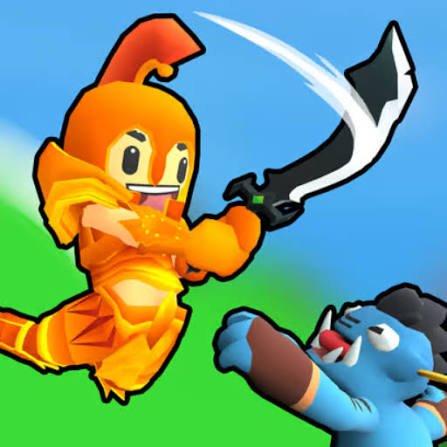


Sword Master
Sword Master is a casual 3D action game where you use mouse or touchscreen gestures to clear enemy-filled levels. Read each stage, choose the correct direction, avoid rushed movements, earn rewards, and unlock new cosmetic designs.
Sword Master
Sword Master places you inside short 3D action stages where enemies move toward your character from different positions. Instead of memorising a large control layout, you guide each on-screen attack with a mouse movement or touchscreen gesture. The challenge is deciding when to act, which direction to choose, and how to avoid wasting a move against an enemy who is still out of range.
The early stages feel simple because opponents approach slowly and leave plenty of open space. Later levels introduce busier layouts, tighter timing, and enemies that are harder to reach safely. A fast gesture may clear the immediate path, but uncontrolled movement can leave your character poorly positioned for the next threat.
Players who enjoy quick reaction-based combat can also try City Fighter vs Street Gang, which uses a side-scrolling format with movement, attacks, and several opponents.
What Sword Master Is About
Sword Master is a casual 3D action game built around short levels and gesture-based controls. You guide an on-screen warrior through small arenas, stop approaching enemies, and clear the route to the end of each stage.
The main gameplay loop is straightforward:
- Enter a compact level
- Watch where enemies are positioned
- Use mouse or touch gestures to perform attacks
- Avoid mistimed actions and stage obstacles
- Clear every required opponent
- Finish the level and collect available rewards
- Unlock new visual designs as you progress
The game does not require a long tutorial or complicated character statistics. Most of its difficulty comes from timing, direction, and understanding how the current level is arranged.
Sword Master works best as a quick arcade challenge rather than a detailed role-playing adventure. Levels are designed to be completed in short sessions, making retries feel immediate when something goes wrong.
How Sword Master Gameplay Feels
The first few levels give you time to understand how the gesture system responds. You can watch an opponent approach, move the mouse in the required direction, and see the result immediately.
The pace rises as stages become more crowded. An opponent may appear directly ahead while another approaches from the side. This forces you to look beyond the closest threat and consider what will happen after the current action finishes.
The movement feels satisfying when a gesture matches the space clearly. You choose a direction, the character responds, and the route opens without filling the screen with complicated controls.
Mistakes are just as easy to understand. You may act before an opponent is close enough, move toward the wrong side, or fail to notice an obstacle near the edge of the stage.
Short levels keep these mistakes from becoming too frustrating. You can restart quickly and test a more controlled approach while the failed moment is still fresh.
For another arena game built around watching enemy behaviour, try Battle Arena.
Sword Master Controls
Sword Master normally uses mouse or touchscreen gestures.
Desktop Controls
- Hold the left mouse button
- Drag the mouse in the direction you want the character to act
- Release when the movement is complete
- Use the mouse to select menus, rewards, and level options
Mobile Controls
- Touch and hold the screen
- Swipe in the required direction
- Release to complete the action
- Tap menu and upgrade buttons when needed
The exact response may differ slightly between browser versions. Check the instruction screen before beginning the first level.
The controls are simple, but large uncontrolled gestures are not always better. A shorter, deliberate movement can be easier to direct than dragging the pointer rapidly across the entire screen.
Read the Level Before Moving
The closest enemy is not always the only important part of the stage.
Before making the first gesture, look at:
- Where each opponent is standing
- Which one is moving toward you first
- Whether the route contains walls or obstacles
- How much open space surrounds your character
- Where the next threat may appear
- Whether the stage provides a safe direction to move
This quick check can prevent avoidable failures.
A player who reacts only to the nearest opponent may clear one side and immediately move into another dangerous position. Looking across the whole arena gives each action a clearer purpose.
The game rewards awareness more than random speed. Fast gestures help only when they are aimed in the correct direction.
How to Complete More Sword Master Levels
Wait for a Clear Opening
Do not act simply because an enemy has appeared.
Watch their distance and movement. Acting too early may waste the gesture before the target reaches the useful area.
Use Controlled Gestures
Large, rushed mouse movements can be difficult to direct.
Move clearly toward the intended side and avoid changing direction halfway through the gesture.
Check Both Sides
After handling one opponent, immediately look at the rest of the arena.
The next threat may already be approaching from another direction.
Avoid Repeating One Movement
A gesture that worked in the previous level may not suit the next layout.
Read the current enemy position instead of relying on a fixed pattern.
Restart With a Different Plan
When a level fails, remember the exact moment that caused the problem.
You may need to wait longer, choose another direction, or deal with a different opponent first.
Why Timing Matters
Sword Master may look like a game about moving quickly, but correct timing is more valuable than constant input.
An early gesture can miss its purpose. A late gesture may allow an enemy to reach your character before the action finishes.
The safest moment usually appears after you understand the opponent’s direction but before the available space becomes too small.
Timing also affects what happens next. Completing an action while another enemy is already close can leave little time to respond. Waiting for perfect timing against one opponent may therefore create pressure from another side.
The aim is not to wait as long as possible. It is to act when the current gesture solves the immediate problem without creating a worse one.
Common Mistakes New Players Make
The most common mistake is swiping as soon as the level begins. This may work in an easy stage, but later layouts require a moment of observation.
Another mistake is making gestures that are too large. Wide movements can become less accurate and may carry the action toward an unwanted part of the arena.
Players also focus too closely on one opponent. After clearing the nearest threat, they are surprised by another character approaching from the side.
Repeating the same direction causes similar problems. Each level changes enemy placement, so a memorised pattern becomes unreliable.
Some players rush immediately after failing. A fast restart is useful, but repeating the same movement without changing the plan usually creates the same result.
Dealing With Busier Levels
Later stages may place several enemies inside the same small area.
When this happens, identify which opponent will reach you first. Screen position alone may not provide the answer because enemies can move at different speeds.
Try to maintain open space around the character. Moving toward the crowded side of the arena can remove the room needed for the next response.
Handle one clear threat at a time, but remain aware of the wider stage. Your attention should move back toward the centre after every completed action.
Busy levels can feel chaotic until you recognise their sequence. After one or two attempts, the order of the threats often becomes easier to read.
Obstacles and Stage Positioning
Some versions include walls, narrow areas, or solid objects that affect how freely the character can move.
An action that would work in an open arena may fail when there is an obstacle beside your character. Check the available space before choosing a direction.
Avoid moving repeatedly toward the edge of the stage. This can leave fewer options when another opponent approaches.
When possible, keep the character near an area with several open directions. A flexible position makes unexpected enemy movement easier to handle.
Stage awareness becomes more important than speed once levels begin combining opponents with limited space.
Rewards and Cosmetic Unlocks
Completing stages may provide coins or similar in-game rewards.
These can often be used to unlock different visual designs. Depending on the browser version, rewards may include:
- New character appearances
- Different colour themes
- Cosmetic equipment designs
- Special visual effects
- Random reward selections
- Progress-based unlocks
Cosmetic changes usually affect appearance rather than the main control system. They provide a reason to continue progressing without replacing the need for accurate gestures.
Do not assume a new visual item will automatically make difficult stages easier. Timing and awareness remain the most important parts of play.
Available rewards can differ between versions, so check the game’s own menu for the exact options.
Building a Better Score
When the game includes scoring, accurate level completion is usually more valuable than random activity.
Avoid unnecessary gestures. Every input should respond to an enemy, stage layout, or clear objective.
Completing levels without repeated mistakes may help preserve a streak or improve the final result. Some versions may also reward faster completion, but speed should come after control.
Start by clearing levels consistently. Once you understand the layouts, reduce the pauses between safe actions.
Do not stare at the score while the stage is active. Watch the arena and review the result after the immediate challenge is complete.
Game Ratings and Safe Play
Sword Master contains stylised fantasy combat. Parents and players can use the ESRB ratings guide to understand common content descriptions used for fighting and fantasy violence.
European users can check the PEGI content labels for explanations of age ratings and content symbols.
The game’s actions are fictional and should remain on the screen. Its exaggerated gestures are designed as browser controls and are not instructions for handling real objects or copying combat behaviour.
Younger players should also take regular screen breaks and use the game only on trusted websites.
What Makes Sword Master Worth Playing
Sword Master takes a simple input system and turns it into a focused reaction challenge. Players can understand the controls quickly without studying a long list of buttons.
Its short stages make improvement easy to notice. You may begin by making rushed gestures, then gradually learn to read the full arena and respond more carefully.
The changing layouts prevent every level from following exactly the same pattern. Enemy positions, available space, and obstacles can alter which direction is safest.
The main limitation is its simple structure. Players looking for a long story, deep character development, or a detailed combat system may find it repetitive.
Sword Master works best for players who enjoy immediate action, quick restarts, visual rewards, and levels that can be completed during short browser sessions.
For a broader martial arts challenge with movement and defensive timing, play Martial Arts.
Who Will Enjoy Sword Master?
Sword Master suits players who enjoy casual action games, 3D stages, gesture controls, short levels, cosmetic unlocks, and quick reaction challenges.
Beginners can learn the basic mouse or touchscreen movement within the first stage. The game does not require experience with complex action titles.
More experienced players can focus on recognising enemy order, reducing unnecessary gestures, and clearing busier levels without losing control.
The game is less suitable for players seeking a realistic adventure or large multiplayer world. Its appeal comes from short, direct stages with a clear objective.
Players who like immediate feedback and fast retries are most likely to enjoy its straightforward design.
Play Sword Master Free Online
Play Sword Master free online on Gam-core.com and guide your character through short 3D stages using controlled mouse movements or touchscreen gestures.
Watch the entire arena before acting, choose a clear direction, and avoid making unnecessary moves when enemies are still too far away. Becoming the Sword Master is less about moving wildly and more about reading each stage before the next threat reaches you.




Reviews
There are no reviews yet.