
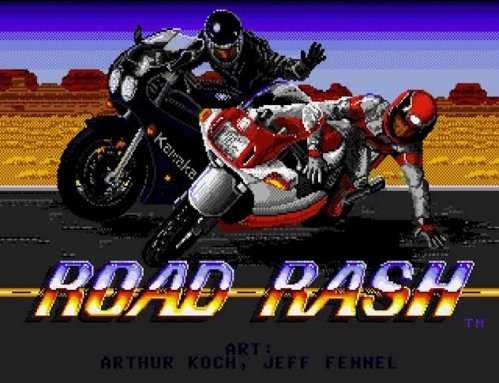


Road Rush
Road Rush is an endless arcade driving game where you steer through busy traffic and changing road hazards. Read several vehicles ahead, choose safe lanes, avoid rushed movements, collect useful rewards, and travel as far as possible without crashing.
Road Rush
Road Rush puts your car on a busy road where slower vehicles, narrow gaps, and sudden obstacles leave little time for hesitation. Your goal is to keep moving, change lanes safely, and travel as far as possible without turning one rushed decision into a crash.
The first section may feel manageable because the traffic is spread out. That comfort disappears as the speed rises and several vehicles begin occupying nearby lanes. A gap that looks safe from a distance can close before your car reaches it, so successful runs depend on reading traffic early rather than reacting at the final second.
Players who enjoy avoiding vehicles at increasing speed can also try Traffic Rider, where highway traffic and close passes create a similar test of concentration.
What Road Rush Is About
Road Rush is an endless arcade driving game based on traffic avoidance, distance, and high-score improvement.
Instead of racing around a closed circuit, you continue along an active road for as long as your run remains safe. Cars and other obstacles appear ahead, forcing you to move between lanes and choose the clearest route.
The main gameplay loop usually involves:
- Moving left and right between lanes
- Avoiding slower traffic
- Watching for roadside or construction obstacles
- Travelling farther without crashing
- Collecting available rewards or score items
- Reacting as the driving speed increases
- Improving your previous distance or score
There is no need to learn a large map before playing. The challenge stays directly in front of the vehicle. Every few seconds, the traffic pattern changes and asks you to make another decision.
The version available on Gam-core may include a different vehicle selection, scoring system, or reward structure from other games using the same title.
How Road Rush Gameplay Feels
A Road Rush run normally begins at a comfortable speed. There is enough room to test the steering and understand how quickly the vehicle changes lanes.
As the run continues, traffic becomes harder to read. Two cars may travel beside each other, leaving only one safe lane. Another vehicle can appear beyond them, turning the obvious route into a poor choice.
The game becomes most satisfying when you read several vehicles together. Instead of reacting only to the closest car, you notice the open route beyond it and position your vehicle before the gap becomes narrow.
Movement should feel quick but controlled. Changing lanes too slowly can cause a collision, while pressing repeatedly may send the car farther across the road than intended.
For a driving game with a larger city and several modes, play City Driver.
Road Rush Controls
The exact controls can differ between browser versions, so check the instructions shown inside the game before beginning.
A common desktop layout may include:
- Left Arrow or A: Move toward the left
- Right Arrow or D: Move toward the right
- Up Arrow or W: Accelerate when manual speed control is supported
- Down Arrow or S: Brake or reduce speed when available
- Spacebar: Use a special action, boost, or brake in supported versions
- Esc: Pause or open the menu
Simpler editions may use only the left and right controls because the vehicle moves forward automatically.
Mobile versions may provide:
- Left and right touchscreen buttons
- Swipe controls
- Tap-based lane changing
- Tilt steering in supported editions
Test one short movement before making a rapid series of lane changes. Some versions move the car one lane at a time, while others allow smoother steering across the full road.
Read More Than One Vehicle Ahead
The closest vehicle deserves attention, but it should not take all of it.
Suppose a slow car occupies the centre lane. The left lane may appear open, but another vehicle could be travelling there just beyond the first one. Moving left solves the immediate problem while creating another.
Try to read the road in layers:
- Identify the nearest obstacle.
- Check which lanes remain open beside it.
- Look beyond those lanes for another vehicle.
- Choose a route that remains useful after the first pass.
This habit reduces last-second corrections.
The faster the game becomes, the more important early decisions are. At high speed, there may not be enough time to cross two lanes after noticing a blocked route too late.
How to Survive Longer in Road Rush
Stay Near an Open Lane
Do not drive beside another vehicle for longer than necessary.
When possible, position your car near a lane that gives you another escape option. Driving between two vehicles removes space on both sides.
Make One Clear Movement
Repeatedly tapping left and right can make the car difficult to control.
Choose the required lane and make one deliberate movement. Correct only when the traffic pattern changes.
Avoid Late Overtakes
Waiting until your car is directly behind slower traffic creates unnecessary pressure.
Move when the gap is still clear and there is enough time to check the next vehicle.
Do Not Follow One Car Too Closely
A vehicle ahead can block your view of traffic farther down the road.
Leave enough space to see around it and prepare your next move.
Reset After a Close Call
A narrow escape can make players press another direction immediately.
Bring the car under control first. One difficult moment should not create a second rushed decision.
Choosing the Safest Lane
The emptiest lane is not always the safest lane.
A lane may be clear nearby but blocked farther ahead. Another route may contain one slower vehicle but provide more space after passing it.
Look for a lane that offers:
- Enough room to enter
- A visible route beyond the nearest traffic
- Space to move again if another obstacle appears
- Fewer vehicles travelling side by side
- A clear roadside boundary
The centre lane can be useful because it gives you movement options on both sides. However, remaining there while traffic closes in can also leave the car surrounded.
Use the centre as a flexible position, not a permanent home.
Handling Increasing Speed
Road Rush becomes more difficult because the same traffic decisions must be made in less time.
At low speed, you can wait longer before changing lanes. At high speed, the movement needs to begin earlier.
Do not respond to the faster pace by pressing controls randomly. Instead, look farther ahead.
The quicker the car moves, the farther up the road your attention should be. Watching only the area directly in front of the vehicle makes every obstacle feel sudden.
Speed can also change how the controls feel. A small steering input may move the car across the road more quickly than it did at the beginning.
Give yourself a few seconds to adjust whenever the pace noticeably increases.
Traffic Patterns and Narrow Gaps
Traffic often appears in small groups rather than as isolated vehicles.
Two cars may block the left and centre lanes, leaving the right lane open. A few seconds later, the pattern may reverse.
When a narrow gap appears, consider whether entering it is necessary. A safer route may open after one vehicle moves ahead.
Do not force the car between two vehicles simply because the space is technically wide enough. Small steering errors become more dangerous when there is no room on either side.
When you must use a narrow gap:
- Align the vehicle before entering
- Avoid changing direction halfway through
- Watch the car beyond the gap
- Return to open space after passing
A clean route produces a more consistent run than a series of risky squeezes.
Using Boost or Acceleration
Some Road Rush versions provide boost, manual acceleration, or temporary speed increases.
Additional speed can help increase the score or cover more distance, but it also shortens the available reaction time.
Use a boost when:
- The road ahead is clearly visible
- Traffic is spread across fewer lanes
- The car is already stable
- No sharp lane change is immediately required
- You understand how long the boost lasts
Avoid using it while the car is crossing lanes or entering a crowded section.
Speed should support a clear route. It cannot repair a poor position.
Collecting Coins and Rewards
Road Rush versions may place coins, score markers, fuel, or other rewards along the road.
These items can encourage you to leave the safest route. Before collecting one, check what traffic surrounds it.
A reward is rarely worth ending a strong run.
Collect it when:
- The lane is already safe
- The route beyond the item remains visible
- No vehicle is approaching from the side
- The movement does not require a late correction
Missing one item has a small effect. Crashing ends the entire attempt.
Available rewards may be used for new cars, visual changes, or temporary advantages, depending on the game version.
Common Road Rush Mistakes
The most common mistake is watching only the car directly ahead. This gives the player no plan for the traffic waiting beyond it.
Another mistake is changing lanes too often. Unnecessary movement creates more chances to enter another vehicle’s path.
Players also remain beside traffic for too long. Driving close to another car removes an escape direction and makes the next obstacle harder to avoid.
Moving toward every collectible creates similar problems. A coin placed in a crowded lane may be designed to tempt the player into taking an unnecessary risk.
Some players become more aggressive after setting a good score. They begin forcing narrow gaps because they do not want the run to feel slow. A patient decision protects the score better than one dramatic overtake.
Building a Higher Score
A strong score usually comes from surviving consistently rather than taking every available risk.
During early attempts, focus on travelling farther. Learn how traffic appears and how the steering responds at higher speeds.
Once longer runs become normal, begin improving efficiency:
- Make earlier lane changes.
- Reduce unnecessary movement.
- Collect rewards only on clear routes.
- Use speed increases on open roads.
- Avoid driving beside other vehicles.
- Look farther ahead as the pace rises.
- Keep the car centred after each manoeuvre.
Do not stare at the score while traffic is active. Review it after the run ends.
The best score is often created by a calm sequence of ordinary decisions rather than one risky moment.
Learning From Each Crash
A crash should show you what went wrong.
You may have:
- Changed lanes too late
- Moved without checking the next vehicle
- Entered a gap that was already closing
- Focused on a collectible instead of traffic
- Used boost in a crowded section
- Made a second movement before finishing the first
- Followed another car too closely
Choose one mistake to correct during the next attempt.
Restarting immediately without changing the approach usually creates the same result. A brief look at the final traffic pattern can reveal the safer route you missed.
Vehicles and Unlocks
Supported versions may include several cars that can be selected or unlocked.
Vehicles may differ in:
- Appearance
- Steering response
- Width
- Acceleration
- Maximum speed
- Reward cost
- Special bonuses
Do not assume the fastest car is automatically the easiest to use. Extra speed provides less time to read traffic.
A slightly slower vehicle may help a new player learn lane positioning and longer traffic patterns.
When changing cars, use the first run as a test. Learn how quickly the new vehicle moves across the road before trying to match your best score.
Browser and Mobile Play
Road Rush is suited to short browser sessions on desktop and supported mobile devices.
Desktop keyboard controls can make lane changes feel direct. Mobile versions may use taps, swipes, or tilt movement depending on the build.
When browser performance feels uneven:
- Close unnecessary tabs
- Reduce graphics settings when available
- Use a stable browser window
- Pause other demanding programs
- Restart the level after changing settings
Smooth performance matters in a reaction-based driving game because delayed movement makes narrow gaps harder to judge.
The version running on Gam-core should be treated as the correct guide for its supported devices and control layout.
Road Rush and Real Road Safety
Road Rush presents fast traffic movement as an arcade challenge. Its scoring and lane-changing behaviour should remain fictional.
Real driving requires legal licensing, proper instruction, seat-belt use, safe following distances, attention to road signs, and respect for speed limits.
The National Highway Traffic Safety Administration road-safety guidance provides information about responsible driving, distraction, speeding, and crash prevention.
The World Health Organization road-safety resources explain the real risks connected with speed and unsafe road behaviour.
Quick overtakes and narrow traffic gaps are game mechanics, not examples for real roads.
What Makes Road Rush Worth Playing
Road Rush creates a clear challenge from a simple idea: keep moving through traffic without crashing.
The controls are easy to understand, but the changing road patterns prevent the game from becoming automatic. Every group of vehicles creates another small route-planning problem.
The endless structure also gives each attempt a clear personal target. You can try to travel farther, improve the score, collect more rewards, or use a different car.
The game may feel repetitive for players looking for a story, open-world map, or detailed racing championship. Most of the experience remains focused on traffic avoidance.
That narrow design is also its strength. A run begins quickly, mistakes are easy to understand, and another attempt is always only a few seconds away.
Players who prefer obstacle-filled motorcycle tracks can try Moto X3M.
Who Will Enjoy Road Rush?
Road Rush suits players who enjoy endless driving, traffic avoidance, reaction challenges, score chasing, simple controls, and quick restarts.
Beginners can focus on staying in open lanes and making one controlled movement at a time.
More experienced players can look farther ahead, collect rewards safely, and maintain control as the speed increases.
The game works well for short sessions because there is no long setup before the road begins.
Players seeking realistic vehicle simulation may find the handling basic. Those who enjoy immediate arcade driving are more likely to appreciate its direct structure.
Browse the racing games collection for more online vehicle challenges.
Play Road Rush Free Online
Play Road Rush free online on Gam-core.com and guide your car through an endless road filled with traffic, narrow gaps, changing lanes, and unexpected obstacles.
Look beyond the nearest vehicle, move before a safe gap begins closing, and avoid changing lanes without a clear reason. Road Rush rewards speed, but the longest runs belong to players who can stay calm while the road becomes increasingly crowded.






Reviews
There are no reviews yet.