
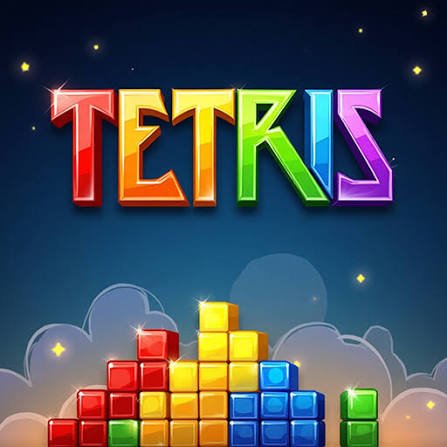

Tetris
Tetris is a classic falling-block puzzle where you move and rotate seven Tetrimino shapes to complete horizontal lines. Keep the stack low, avoid covered gaps, use upcoming-piece previews, and continue clearing rows as the falling speed increases.
Tetris Classic Falling Block Puzzle Game
Tetris is a falling-block puzzle game where seven geometric pieces drop into a rectangular playfield. You move and rotate each piece, fit it into the existing stack, and complete horizontal lines without leaving unnecessary gaps. The rules are easy to understand, but the pace becomes harder as the pieces fall faster and the stack moves closer to the top.
Players who enjoy combining shapes and numbers can also try Chain Cube 2048 3D Merge, which replaces falling pieces with bouncing cubes that merge into higher values.
What Is Tetris?
Tetris is a classic puzzle game created by computer programmer Alexey Pajitnov in 1984. Its name combines “tetra,” referring to four, with tennis, which was one of Pajitnov’s favourite sports. Each standard Tetris piece is made from four connected square blocks.
The playing area is commonly called the Matrix. Tetriminos fall from the top, and the player must move and rotate them before they settle into the stack.
Completing a full horizontal row removes that line from the board. The blocks above it move downward, creating more room for future pieces.
The game ends when the stack reaches beyond the playable area and new pieces can no longer enter safely.
The official Tetris website provides access to the licensed browser game, current products, game history, and other official information.
How Tetris Gameplay Works
A Tetris round begins with an empty vertical board. One Tetrimino appears near the top and begins falling automatically.
You can move the piece left or right, rotate it, or make it fall more quickly. Once the piece touches the floor or another block and can no longer move downward, it locks into place.
The next piece then enters the board.
Your goal is to arrange the pieces so they form complete rows without empty spaces. A completed row disappears immediately, reducing the height of the stack.
The challenge comes from balancing short-term survival with long-term board organisation. A piece may fit into an available space now but create a hidden gap that becomes difficult to repair later.
As the level increases, the falling speed normally becomes faster. You have less time to inspect the board and position each piece.
The Seven Tetrimino Shapes
Tetris uses seven standard pieces. Each one is made from four connected squares, but every shape behaves differently when rotated or placed.
| Piece | General Shape | Common Use |
|---|---|---|
| I | Long straight piece | Clearing four lines or filling deep columns |
| O | Square piece | Building flat sections without rotation |
| T | T-shaped piece | Filling central spaces and creating T-Spin setups |
| S | Forward zigzag | Joining uneven surfaces |
| Z | Reverse zigzag | Filling spaces opposite to the S piece |
| J | Hook facing left | Repairing corners and side gaps |
| L | Hook facing right | Filling spaces opposite to the J piece |
The official game design uses seven distinctive geometric pieces, each formed from four squares.
Understanding each shape is more important than memorising its name. Strong players recognise where a piece can fit before it reaches the lower half of the board.
Clearing Lines in Tetris
A line clears when every cell across one horizontal row contains a block. Empty spaces anywhere in the row prevent it from disappearing.
You can clear one, two, three, or four lines with a single piece.
Single
A Single removes one completed line. It may not provide many points, but it can lower a dangerous stack or repair an uneven board.
Double
A Double clears two lines at once. It is often created by placing a piece across two nearly complete rows.
Triple
A Triple clears three lines together. It usually requires a narrow vertical opening prepared for a suitable piece.
Tetris
A Tetris happens when the straight I piece completes four horizontal lines at once.
Creating a Tetris normally requires leaving one vertical column open while building four complete rows beside it. When the I piece arrives, it drops into the space and clears all four rows.
This can produce strong scoring, but waiting too long for the I piece may make the board dangerously high.
What Makes Tetris Difficult?
Every piece is simple, but the order in which pieces arrive changes the decisions you need to make.
An S or Z piece can fit neatly on one surface and create a hole on another. The square O piece is easy to place on a flat area but difficult to use when the board contains deep, narrow spaces.
The stack also changes after every line clear. A move that looks untidy may create a useful opening several pieces later.
The strongest placements usually achieve at least one of these goals:
- Keep the top of the stack reasonably flat
- Avoid sealed gaps
- Preserve access to deeper spaces
- Prepare a future line clear
- Keep enough room for difficult pieces
- Prevent the board from becoming too tall
Playing quickly is helpful, but speed without board control usually leads to mistakes.
Understanding Gaps and Holes
A hole is an empty cell trapped underneath another block. It cannot be filled by dropping a piece directly from above.
Holes are dangerous because the rows containing them cannot clear until the blocks above are removed.
One accidental gap may require several extra moves to repair. Multiple gaps can divide the stack into awkward sections and make future pieces difficult to place.
Before locking a piece, check the cells underneath it. A placement that creates a smooth top may still hide an empty space below.
Some advanced techniques can fill unusual openings through rotations, but beginners should focus on avoiding covered spaces whenever possible.
Keep the Stack Flat
A completely flat board is not always possible or desirable, but a controlled surface gives you more placement choices.
Try to avoid sharp towers and deep wells unless you have a clear reason for creating them.
A difference of one or two blocks between neighbouring columns is usually easier to manage than a narrow space several blocks deep.
Flat sections are useful for the O, T, J, and L pieces. Gentle steps also make the S and Z pieces easier to place without producing holes.
When the surface becomes uneven, use upcoming pieces to repair it instead of continuing to build on the highest column.
Players looking for a slower visual puzzle can also play Find Easy Hidden Differences, which focuses on careful observation rather than falling-piece speed.
Leave a Well for the I Piece
A well is an open vertical column used for placing the straight I piece.
Many players build their stack across nine columns while leaving the final column empty. When four rows are prepared, an I piece can clear them together.
The well does not always need to be on the far left or right. However, a side well is generally easier for beginners because surrounding blocks cannot trap it from both directions.
Do not keep building for a four-line clear when the stack is becoming unsafe. Clear one or two lines if necessary and rebuild the setup later.
Survival is more important than protecting a scoring plan.
Look at the Next Piece
Many Tetris versions show at least one upcoming piece. Modern editions may display a longer queue.
This preview gives you time to plan before the current piece locks.
Suppose you are holding an L piece and the next piece is an O. You can place the L in a way that creates a flat two-block space for the square.
Without checking the preview, you may place the first piece correctly but leave no useful position for the second.
Try to plan for the current piece and the next piece together. More experienced players may consider several upcoming shapes.
Using the Hold Feature
Many modern versions include a Hold area. It lets you store the current piece and replace it with another one.
Hold is useful when:
- The current piece does not fit safely
- You want to save an I piece for a four-line clear
- A different piece can repair the board immediately
- You need to delay a difficult S or Z piece
- The stored piece fits a later opening
The held piece usually cannot be exchanged repeatedly during the same turn. It becomes available again after the active piece locks.
Hold should not become an automatic action. Saving the I piece for too long can prevent you from using it to repair a dangerous board.
Features such as Hold, previews, ghost pieces, and rotation behaviour can differ between editions, so check the instructions shown with the version you are playing.
Soft Drop and Hard Drop
Tetris versions commonly provide two ways to speed up a falling piece.
Soft Drop
Soft Drop moves the active piece downward faster while allowing continued control.
It is useful when you have chosen the general position but still want time to adjust the piece before it locks.
Hard Drop
Hard Drop sends the piece immediately to its lowest available position.
It helps players move quickly, but it leaves little or no opportunity to correct the placement. Always inspect the landing position before using it.
A ghost piece may show where the active Tetrimino will land. Use this outline to check whether the piece will create a gap.
Typical Tetris Controls
Controls vary by platform and edition, but browser versions commonly use the following layout:
| Action | Typical Keyboard Control |
|---|---|
| Move left | Left arrow |
| Move right | Right arrow |
| Soft Drop | Down arrow |
| Rotate clockwise | Up arrow or X |
| Rotate counterclockwise | Z |
| Hard Drop | Spacebar |
| Hold piece | C or Shift |
| Pause | Escape or P |
| Restart | On-screen restart button |
Touchscreen versions normally provide swipe gestures or visible buttons for movement, rotation, dropping, and holding.
The official browser edition is available through Play Tetris online. Its current page includes sections for objectives, controls, scoring, and gameplay information.
Scoring in Tetris
Scoring rules depend on the version, but larger line clears generally award more points than several small clears.
Common scoring opportunities include:
- Clearing one or more lines
- Completing a Tetris
- Using Soft Drop or Hard Drop
- Performing a T-Spin
- Clearing lines on consecutive turns
- Maintaining a Back-to-Back chain
- Removing every block from the board
A player focused only on survival may clear lines whenever they become available. A score-focused player may prepare larger combinations and advanced moves.
Both approaches are valid. Beginners should learn to maintain a clean stack before attempting complicated scoring setups.
T-Spins
A T-Spin is an advanced move involving the T Tetrimino. The player rotates the T piece into a tight opening shortly before it locks.
A correctly prepared T-Spin can clear lines and provide high scoring in versions that recognise the move.
T-Spins require an appropriate cavity, enough rotation space, and good timing. Trying to force them without understanding the setup can create holes.
New players do not need T-Spins to enjoy Tetris or achieve strong runs. They become more useful after basic stacking and line clearing feel comfortable.
Back-to-Back Clears
Some modern versions reward consecutive difficult clears, such as repeated Tetrises or qualifying T-Spins.
The chain continues when another difficult clear follows without an ordinary line clear breaking the sequence.
Back-to-Back play encourages players to prepare efficient scoring patterns. However, protecting the chain should not come before keeping the board safe.
A Single that prevents the stack from reaching the top is better than losing while waiting for another four-line clear.
Increasing Speed
Tetris often becomes faster as more lines are cleared or higher levels are reached. Pieces spend less time falling, leaving less room for hesitation.
At low speed, you can study every placement. At high speed, recognising board patterns becomes more important than calculating from the beginning.
You can prepare for faster levels by:
- Watching the next-piece queue early
- Deciding on a position before the piece enters
- Keeping the board low
- Avoiding deep and complicated gaps
- Learning rotations for every piece
- Using Hard Drop only after confirming the landing
- Keeping movement controlled instead of pressing several keys at once
The official description explains that players rotate, move, and drop Tetriminos while the falling speed increases.
Game Modes and Tetris Versions
Tetris has appeared in many official versions, and the available modes depend on the platform.
Marathon
Marathon is built around clearing lines and progressing through increasingly fast levels. It is one of the most recognisable single-player formats.
Sprint
Sprint asks the player to clear a fixed number of lines as quickly as possible. Speed and efficient placement matter more than long-term survival.
Ultra
Ultra gives the player a limited amount of time to earn the highest possible score.
Puzzle Levels
Some newer mobile editions contain prepared goals and individual stages. These may ask players to clear lines, manage an unusual starting board, or complete another stated objective.
Multiplayer
Competitive editions allow players to send pressure to opponents by clearing lines. Rules, target systems, player counts, and attack mechanics differ between games.
The official mobile product page currently lists single-player levels, Marathon, Quick Play, daily challenges, offline support, and touch controls.
Because each edition has its own features, do not assume that every Tetris release contains the same modes.
Graphics and Sound
Tetris uses clear geometric graphics that make every piece easy to recognise. Colours normally help separate the seven shapes, while the grid shows exactly where blocks can be placed.
Modern versions may include animated backgrounds, visual themes, particle effects, and character designs. Classic editions often use a simpler board with limited decoration.
The best presentation keeps the playfield readable even when pieces are falling quickly.
Sound effects indicate movement, rotation, locking, line clears, level changes, and game over conditions. Music may become faster or more intense as the stack rises.
Audio is not required for normal play, making Tetris suitable for quiet sessions.
Who Should Play Tetris?
Tetris suits players who enjoy block puzzles, pattern recognition, score improvement, quick decisions, and games with straightforward rules.
A beginner can understand movement and line clearing during the first round. Reaching high speeds and maintaining a clean board requires much more practice.
It works well for short sessions because a round can begin immediately. It also supports longer play when the board remains under control.
Players who prefer stories, characters, open environments, or team-based action may find the classic structure too simple. Tetris focuses almost entirely on board management and personal improvement.
More number, board, arcade, and puzzle titles are available in the Gam-core games collection.
Honest Strengths and Limitations
| Strengths | Possible Limitations |
|---|---|
| Basic rules are easy to understand | High-speed levels require fast reactions |
| Every piece creates a meaningful decision | A single gap can damage a long run |
| Suitable for short and long sessions | Classic play has little story content |
| Encourages planning and pattern recognition | Repeated boards may feel similar to some players |
| Works well with keyboard and touch controls | Controls and scoring differ between editions |
| Offers room for advanced techniques | T-Spins and competitive systems take practice |
| Many official versions are available | Not every version includes the same modes |
| Personal scores provide replay value | Random piece order can disrupt a planned setup |
Beginner Tips for Tetris
Keep the Board Low
A low stack gives you more time and more placement options. Clear safe lines rather than allowing the board to rise for a perfect setup.
Avoid Covered Gaps
Check underneath every piece before locking it. Empty spaces trapped below blocks are difficult to repair.
Build With Gentle Steps
Sharp towers and deep holes limit where future pieces can go. A mostly flat surface accepts more shapes.
Leave Space for the I Piece
Keep one open vertical column when preparing a four-line clear. Place it near an edge while learning.
Watch the Preview
Decide where the next piece might fit before the current one locks. This reduces rushed choices.
Use Hold With a Reason
Store a piece when it does not fit or when it has clear future value. Do not exchange pieces automatically.
Learn Every Rotation
Practise rotating J, L, S, Z, and T pieces in open space. Understanding their shapes makes tight placements easier.
Repair Problems Early
Do not build several rows over a mistake. Open the damaged section and clear the gap while the stack is still low.
Avoid Waiting Forever for One Piece
The I piece may not arrive when you expect it. Take a smaller line clear when the board becomes unsafe.
Choose Control Before Speed
Accurate placement is more important than dropping every piece immediately. Speed develops naturally with practice.
Tetris Game Information
| Detail | Information |
|---|---|
| Game title | Tetris |
| Original designer | Alexey Pajitnov |
| Original creation | 1984 |
| Genre | Falling-block puzzle |
| Standard pieces | Seven Tetriminos |
| Main objective | Complete horizontal lines and prevent the stack reaching the top |
| Classic mode | Single-player |
| Other modes | Vary by edition |
| Typical controls | Keyboard, controller, or touchscreen |
| Platforms | Browser, mobile, PC, console, and other licensed devices |
| Official browser game | Play.Tetris.com |
| Difficulty | Simple rules with a high skill ceiling |
Tetris was created in 1984, and the original design used seven pieces made from four squares.
Players interested in its development can view the official history of Tetris, while the current official Tetris products page lists licensed digital and physical releases.
Frequently Asked Questions
What type of game is Tetris?
Tetris is a falling-block puzzle game. Players move and rotate geometric pieces to complete horizontal lines and stop the stack from reaching the top.
Who created Tetris?
Tetris was created by computer programmer Alexey Pajitnov in 1984.
How many pieces are used in Tetris?
Standard Tetris uses seven Tetrimino shapes: I, O, T, S, Z, J, and L. Each piece contains four connected squares.
How do I clear a line?
Fill every cell across one horizontal row. The completed line disappears, and the blocks above it move downward.
What is a Tetris line clear?
A Tetris is a four-line clear completed with one piece, usually the straight I Tetrimino placed into a vertical opening.
Can I play Tetris in a browser?
Yes. The official Tetris website provides a licensed browser version that can be played online.
Does Tetris have multiplayer?
Some Tetris editions include competitive or cooperative multiplayer, while the classic format is mainly single-player. Available modes depend on the specific release.
What does the Hold button do?
Hold stores the active piece and replaces it with another one. The feature is available in many modern versions but may not appear in older editions.
What ends a Tetris game?
The game ends when the stacked blocks reach beyond the allowed play area and a new piece cannot enter correctly.
Is Tetris based only on luck?
No. The arriving pieces create uncertainty, but good stacking, preview use, rotation knowledge, gap prevention, and quick decisions have a major effect on the result.
Can Tetris be played offline?
Offline availability depends on the version. The official mobile product page lists offline support for its single-player modes.
Is Tetris suitable for beginners?
Yes. Moving pieces and clearing rows are easy to learn. Higher speeds, advanced scoring methods, and competitive play require more practice.




Reviews
There are no reviews yet.