
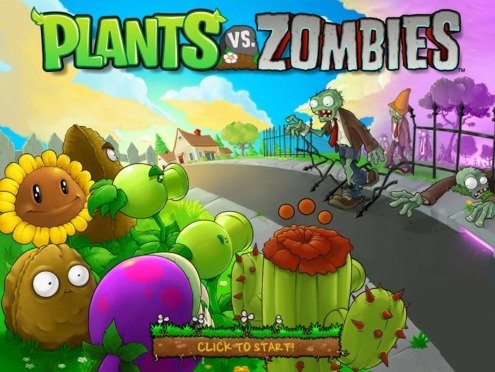


Plants vs. Zombies
Plants vs. Zombies is a colorful tower defense game where you collect sun and grow attacking, defensive, and support plants across the lawn. Build a balanced formation, counter unusual zombie abilities, and protect the house through day, night, pool, fog, and rooftop stages.
Plants vs. Zombies Backyard Tower Defense Game
Plants vs. Zombies turns an ordinary front lawn into a surprisingly clever battlefield. A line of zombies is slowly approaching your home, and the only defense available is a collection of plants with very unusual abilities.
You collect sunlight, place plants in different lanes, and build a defense before the zombies reach the house. The rules are easy to understand, but later stages introduce darkness, swimming pools, fog, rooftops, tougher zombies, and limited planting space that can quickly expose a weak plan.
What Is Plants vs. Zombies?
Plants vs. Zombies is a lane-based tower defense game created by PopCap Games. Instead of placing soldiers or mechanical towers, you grow plants that produce resources, fire projectiles, block enemies, explode, freeze targets, or protect nearby spaces.
Zombies enter from the right side of the lawn and move toward the house on the left. Most stages are divided into horizontal lanes, so a plant normally attacks only the zombies directly in front of it.
Your job is to choose a useful group of plants before the stage begins and place them carefully once the attack starts. Every plant costs sun, and most plants need time before they can be used again.
Players who enjoy building defenses and preparing for enemy waves may also like Clash Royale, where troops and spells are used to protect towers during short competitive battles.
How Plants vs. Zombies Gameplay Works
A normal level begins with an empty lawn and a small amount of sun. Zombies start arriving after a short preparation period, giving you time to place your first resource-producing plants.
Sunflowers are usually one of the most important early choices. They create additional sun, which allows you to buy stronger defensive plants later.
Peashooters provide basic ranged damage. Wall-nuts stand in the path and delay zombies, while explosive plants can remove dangerous groups when a lane begins to collapse.
The central gameplay loop is simple:
- Collect falling sun.
- Grow plants that produce more resources.
- Place attacking plants behind protective ones.
- Watch which lanes are becoming dangerous.
- Replace defeated plants when possible.
- Save emergency plants for difficult moments.
- Stop every zombie before it enters the house.
The challenge comes from balancing preparation with immediate defense. Too many Sunflowers can leave the lawn unprotected, but too few can prevent you from buying the plants needed for later waves.
Understanding the Lawn Lanes
Most Plants vs. Zombies stages use five horizontal lanes. Zombies remain in their lane unless a special ability or level rule changes their movement.
This makes every row its own small battle. A powerful defense in the top lane does not help when three zombies are walking through an empty bottom lane.
Before planting, check where the first zombie appears. You do not always need an attacking plant in every lane immediately.
Starting with the threatened lane allows you to spend more sun on resource production. However, waiting too long can become risky when zombies begin appearing across the full lawn.
The lawnmower at the left side of each lane provides one final layer of protection. When a zombie reaches it, the mower moves across the lane and removes the zombies in its path.
A lawnmower can save a failing defense, but it normally works only once. After it is gone, any later zombie reaching the house can end the level.
Collecting and Managing Sun
Sun is the main resource in Plants vs. Zombies. Nearly every plant requires a certain amount before it can be placed.
Some sun falls naturally during daytime stages. Sunflowers and similar plants can produce additional sun over time.
A common beginner mistake is spending every piece of sun immediately. This can leave you unable to respond when a stronger zombie enters an unprepared lane.
Try to keep enough sun available for an emergency plant. A Potato Mine, Squash, Cherry Bomb, or other quick defense can rescue a lane when a normal Peashooter does not have enough time.
Resource plants should usually be placed toward the back of the lawn. This keeps them away from the first zombies and gives defensive plants room to protect them.
Building a strong economy early makes the final waves easier, but do not sacrifice the entire lawn to produce more sun. The best setup grows resources while still controlling the first attackers.
Choosing Plants Before a Level
Before many stages, you select a limited number of seed packets. This choice determines which plants will be available during the level.
A balanced selection usually includes:
- A plant that produces sun
- A dependable ranged attacker
- A defensive plant that slows zombies
- A cheap early option
- An emergency attack
- A plant suited to the level environment
- A counter for any unusual zombie expected in the stage
Do not choose several plants that perform nearly the same job unless the stage gives you a clear reason.
For example, filling most seed slots with basic projectile plants may provide damage but leave no answer for heavily protected zombies or large groups.
The preview at the beginning of a level shows which zombies may appear. Look closely before confirming your plants.
A Ladder Zombie, Balloon Zombie, Screen Door Zombie, or another unusual enemy may require a different response from an ordinary slow-moving zombie.
Important Plant Roles
Plants vs. Zombies includes plants with very different jobs. Understanding these roles is more useful than simply choosing the plants with the highest cost.
Sun Producers
Sunflowers and related plants support the entire defense by generating resources. They are usually most valuable when planted early.
Ranged Attackers
Peashooters, Repeaters, Snow Peas, and other ranged plants attack zombies from a distance. They normally work best behind a defensive barrier.
Defensive Plants
Wall-nuts, Tall-nuts, and Pumpkins absorb damage and give attacking plants more time to work.
Instant Plants
Cherry Bombs, Squash, Jalapenos, and similar plants act quickly and are then removed. They are useful during emergencies or large waves.
Slowing Plants
Some plants reduce zombie movement or create more time for the rest of the defense. Slowing can be as valuable as direct damage.
Environment Plants
Lily Pads, Flower Pots, Planterns, Coffee Beans, and other special plants allow different defenses to function in pools, on roofs, at night, or in fog.
A good plant setup combines several roles. Damage alone is rarely enough when later stages introduce faster movement, armor, jumping, swimming, and other zombie abilities.
Day and Night Levels
Daytime stages provide natural sunlight, making it easier to build a resource supply. They are a comfortable place to learn basic plant placement.
Night levels remove the regular falling sun. This makes resource management more important and introduces mushroom plants with different costs and abilities.
Some mushrooms are cheap enough to support an early defense before a larger sun supply becomes available. Others provide unusual attacks or effects that are useful against specific zombies.
Daytime mushrooms may remain asleep unless another plant wakes them. Check the description of each plant before bringing it into a level where it cannot work normally.
Night stages also change the mood of the lawn. Gravestones may block planting spaces or produce additional zombies during the final wave.
Removing or controlling those obstacles can prevent the center of the lawn from becoming overcrowded.
Pool and Fog Stages
Pool stages add water lanes through the middle of the lawn. Normal land plants cannot be placed directly on the water.
Lily Pads create a planting space on the pool, allowing most standard plants to grow above them. This means water defenses often cost more because you need both the Lily Pad and the main plant.
Pool lanes should not be ignored. Zombies can swim through them, and some water-based enemies move differently from those on the grass.
Fog stages reduce visibility across part of the lawn. Zombies may approach without being fully visible until they are already close to the defense.
Certain plants can clear or reveal sections of fog. Others allow you to attack hidden zombies even when their exact type is difficult to see.
When visibility is limited, build a dependable defense in every active lane rather than waiting to identify each attacker.
Rooftop Challenges
Rooftop levels change the shape of the battlefield. The sloped roof can block straight projectiles, making some familiar plants less useful.
Flower Pots provide spaces where plants can grow. Without enough pots, you may not be able to build the defense needed across the roof.
Lobbed attacks work well because they travel over the roof’s raised sections. These plants can hit zombies that normal straight shots may fail to reach.
The rooftop also introduces enemies designed around the new environment. Some can bypass basic barriers, drop into unexpected spaces, or place greater pressure on the back rows.
A setup that worked perfectly on the lawn may fail on the roof. Choose plants based on the battlefield rather than using the same group in every level.
Learning Zombie Abilities
Ordinary zombies are slow and have little protection, but later enemies arrive with equipment and special movement.
Conehead and Buckethead Zombies can absorb more damage. Pole Vaulting Zombies can jump over the first plant they meet, while Newspaper Zombies become more dangerous after losing their paper.
Other zombies may swim, fly, dig underground, dance, carry ladders, use vehicles, or protect themselves with doors and other objects.
Watch what happens the first time a new zombie appears. The game normally introduces unusual enemies in a way that allows you to learn their behavior.
Once you understand the ability, choose a plant that directly counters it. A strong general defense is useful, but a well-selected counter can solve the same problem for much less sun.
Main Plants vs. Zombies Features
- Lane-based tower defense: Every row must be protected because zombies normally move straight toward the house.
- Sun resource system: Players collect and produce sun to grow new plants during each stage.
- Plants with clear roles: Attackers, barriers, resource producers, explosive plants, and support plants allow different strategies.
- Varied zombie types: Armor, jumping, swimming, flying, digging, and other abilities prevent every wave from feeling the same.
- Changing environments: Day, night, pool, fog, and rooftop levels require different plant selections.
- Adventure progression: New plants and enemies are introduced gradually as the main campaign continues.
- Short strategic levels: Individual stages are easy to start but can become demanding during the final waves.
- Optional game modes: Some editions include Mini-Games, Puzzle, Survival, Zen Garden, and other bonus activities.
- Humorous presentation: Plant animations, zombie designs, item descriptions, and music give the game a playful personality.
- Simple interaction: Most actions use a mouse or touchscreen, depending on the edition.
Plants vs. Zombies Controls
The game mainly uses pointing and selecting controls.
| Action | Control |
|---|---|
| Choose a seed packet | Click or tap the plant |
| Place a plant | Click or tap a valid lawn square |
| Collect sun | Click or tap the sun icon |
| Remove a plant | Select the shovel, then the plant |
| Collect coins or items | Click or tap the object |
| Pause the game | Select the pause or menu button |
| View plant information | Open the plant or Almanac menu |
The exact controls and interface may vary between PC, console, and mobile editions. The basic goal remains the same: select a plant and place it on an available square.
Building a Strong Lawn Defense
A reliable defense usually places Sunflowers near the house, attackers in the middle rows, and defensive plants closer to the approaching zombies.
This arrangement gives ranged plants time to attack while Wall-nuts or other barriers hold enemies in place.
Avoid placing expensive attackers at the front unless they are designed for close contact. A zombie can quickly remove them before their cost has been recovered through useful damage.
Try to create consistent damage across every lane. One lane with several powerful plants may look impressive, but it cannot protect another row.
It is also useful to leave a small amount of open space near the front. These squares can hold Potato Mines, Squash, Spikeweed, or another plant needed during an emergency.
Players who like planning several moves ahead may also enjoy Master Chess, where positioning and anticipation are more important than fast clicking.
Common Mistakes New Players Make
Planting Too Many Sunflowers First
A large sun supply is useful later, but the first zombie can reach the house while you are still building it. Add early protection in the threatened lane.
Ignoring One Lane
Every active lane needs an answer. Check the full lawn frequently instead of watching only the busiest row.
Spending Emergency Plants Too Early
Instant plants have long recharge times. Save them for groups, armored zombies, or a lane that is about to fail.
Placing Barriers Without Attackers
A Wall-nut can delay zombies but usually cannot remove them. Make sure another plant is dealing damage from behind it.
Using the Same Plants Everywhere
Night, pool, fog, and roof stages require different tools. Read plant abilities and adapt the seed selection.
Forgetting Recharge Times
Having enough sun does not always mean a plant is ready. Watch the seed packet recharge before depending on it.
Filling Every Square
Open spaces can be useful for emergency plants, replacement barriers, or environment-specific support.
Mini-Games, Puzzle, and Survival Modes
Depending on the edition, Plants vs. Zombies includes several activities beyond the main Adventure mode.
Mini-Games change familiar rules and create unusual challenges. Some may provide plants automatically, alter zombie behavior, or turn a normal defense into a special scenario.
Puzzle modes can ask you to solve a fixed situation or even control zombies instead of plants. These challenges help players understand how both sides of the lawn work.
Survival mode continues through repeated waves and tests how long a defense can remain effective. Resource management becomes increasingly important because small weaknesses grow more serious over time.
Zen Garden offers a quieter break from defending the house. Players care for collected plants and receive rewards as the garden develops.
The exact selection of modes differs between versions, so some editions may contain fewer or additional activities.
Graphics and Sound
Plants vs. Zombies uses colorful cartoon graphics that keep each plant, zombie, projectile, and lawn square easy to recognize.
The designs communicate gameplay clearly. A Buckethead Zombie looks tougher than a normal zombie, while a frozen enemy visibly moves more slowly.
Animations add humor without hiding important information. Zombies lose equipment as they take damage, and plants react when they attack, produce sun, or become damaged.
The music changes between environments and becomes more urgent during large waves. Sound effects also help players notice falling sun, approaching zombies, and plants activating.
The presentation remains readable even when many plants and zombies are on the screen at once.
Difficulty and Learning Curve
The early levels are designed to teach one idea at a time. New plants are introduced gradually, giving players a chance to understand each ability.
Later stages combine multiple problems. You may need to handle limited visibility, water lanes, armored zombies, and a large final wave during the same level.
The game does not require complicated controls, but it rewards quick decisions. A useful plant placed a few seconds too late may not stop a fast zombie.
Failed stages usually reveal where the defense was weak. You might need more sun production, a stronger final barrier, a better counter, or earlier protection in one lane.
This makes replaying a level useful rather than frustrating. A small change in plant choice or placement can completely change the result.
Tips for Playing Plants vs. Zombies
Start Producing Sun Early
Place resource plants near the back of the lawn, but add an attacker when the first zombie begins approaching.
Check the Zombie Preview
Look at the enemies shown before the stage. Choose plants that can handle their special abilities.
Protect Resource Plants
Sunflowers are valuable throughout the level. Keep attackers and barriers between them and the zombies.
Build From the Back
Place ranged plants farther from the approaching enemies. This gives them more time to attack before they are reached.
Save an Emergency Plant
Keep enough sun for a Cherry Bomb, Squash, Jalapeno, or another fast response when a lane becomes dangerous.
Replace Damaged Barriers
A Wall-nut that has taken heavy damage may not survive the next group. Replace or support it before the final wave.
Use Slowing Effects
A slower zombie remains inside attack range longer. Freezing or delaying can improve the value of every nearby attacker.
Avoid Wasting Powerful Plants
Do not use a large explosive attack on one weak zombie unless that zombie is about to enter the house.
Prepare Before the Final Wave
Build missing barriers, collect available sun, and check every lane before the largest group arrives.
Who Should Play Plants vs. Zombies?
Plants vs. Zombies is a good choice for players who enjoy strategy games but do not want complicated menus or long tutorials.
The plant abilities are easy to recognize, and each level introduces its challenge clearly. Younger players can understand the basic idea, while experienced players can improve efficiency, test different plant combinations, and complete harder bonus modes.
The game also works well for short sessions. A single level provides a complete challenge without requiring a long multiplayer match.
Players looking for direct character movement, realistic combat, or online competition may find the lane-based structure too controlled. Plants vs. Zombies focuses on preparation, placement, and resource decisions.
For another puzzle game built around careful placement and combining pieces, try Chain Cube 2048 3D Merge. More strategy, action, and casual titles are available in the Gam-core games collection.
Honest Strengths and Limitations
| Strengths | Possible Limitations |
|---|---|
| Simple rules are easy to understand | Early stages may feel easy for strategy experts |
| Plants have clear and useful abilities | Most levels use the same lane structure |
| New zombies keep the defense changing | Some stages require repeated attempts |
| Environments require different strategies | Certain plants are useful only in specific situations |
| Humor makes the game welcoming | Players wanting realistic visuals may prefer another style |
| Short stages work well for casual sessions | Bonus modes vary between editions |
| Resource management adds real strategy | A weak early setup can be difficult to repair |
| Mouse and touch controls are accessible | Direct control over attacks is limited |
Plants vs. Zombies Game Information
| Detail | Information |
|---|---|
| Game title | Plants vs. Zombies |
| Developer | PopCap Games |
| Genre | Tower defense and strategy |
| Original release | 2009 |
| Main mode | Single-player |
| Main objective | Stop zombies from reaching the house |
| Primary resource | Sun |
| Core mechanic | Place plants across lawn lanes |
| Controls | Mouse, touchscreen, or controller depending on edition |
| Environments | Day, night, pool, fog, and roof |
| Bonus content | Varies by edition |
Frequently Asked Questions
What type of game is Plants vs. Zombies?
Plants vs. Zombies is a lane-based tower defense game. Players use plants with different abilities to stop zombies from reaching a house.
How do I earn sun?
Sun falls naturally during many daytime stages. Sunflowers and certain other plants also produce sun after being placed.
What happens when a zombie reaches the house?
A lawnmower may clear the lane the first time. If no mower remains and another zombie enters the house, the level ends.
Can plants attack zombies in other lanes?
Most plants attack only the lane directly in front of them. Some special plants can affect several lanes or larger areas.
Why can I not plant in the pool?
Most land plants need a Lily Pad before they can be placed on a water square.
Why are mushrooms sleeping?
Some mushrooms sleep during daytime stages. A special plant may be needed to wake them, depending on the edition.
Does Plants vs. Zombies have multiplayer?
The original adventure is mainly a single-player experience. Certain console editions and later games in the series may include additional multiplayer options.
What is the best plant in Plants vs. Zombies?
There is no single best plant for every level. The strongest choice depends on the environment, available sun, and zombie types.
Does Plants vs. Zombies have different game modes?
Many editions include Adventure, Mini-Games, Puzzle, Survival, and Zen Garden modes. Available content can vary by platform.
Is Plants vs. Zombies suitable for beginners?
Yes. The game introduces plants and zombies gradually, allowing new players to learn the main systems before facing harder combinations.





Reviews
There are no reviews yet.