
Escape Room Board Games At Home: The Best Way To Host A Puzzle Night

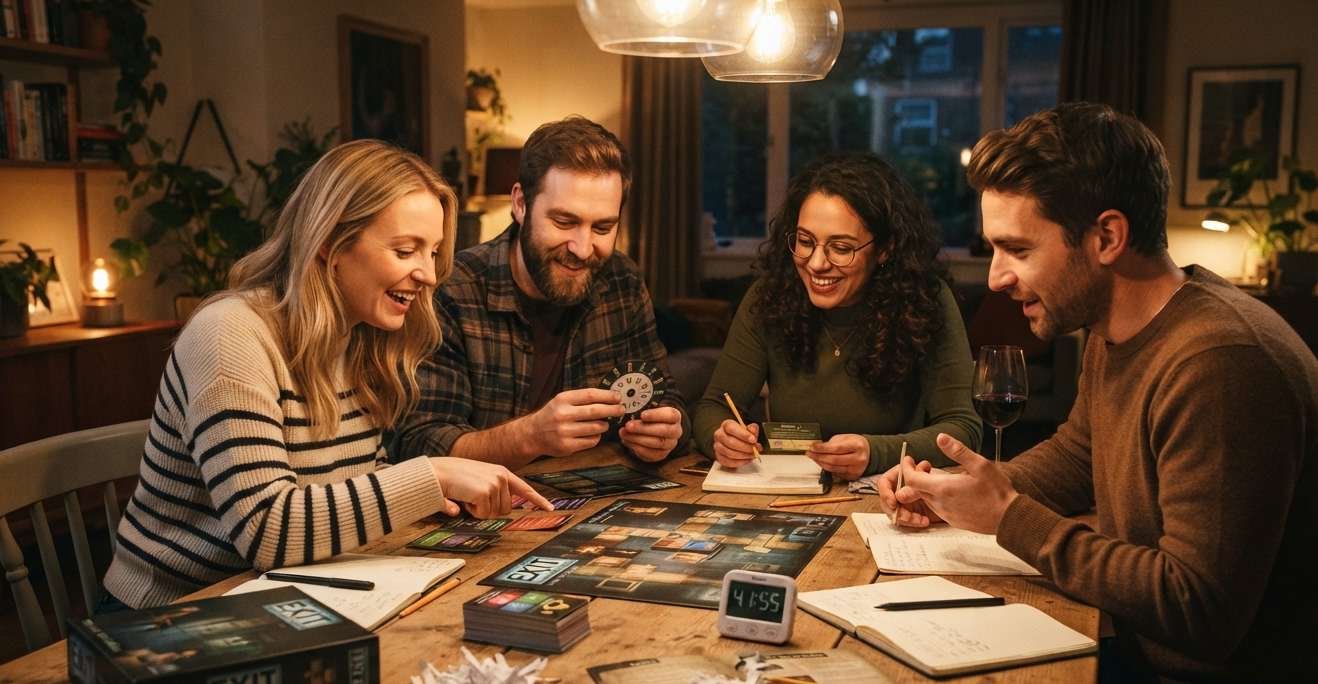
The best escape room night I have had at home did not involve a clever room makeover. It involved four people leaning over a dining table, arguing about one tiny clue while a phone timer kept getting louder in everyone’s head.
That is the appeal of escape room board games at home. You get the pressure, teamwork, dead ends, and sudden breakthrough without booking a venue or arranging a trip across town. My suggestion is simple: buy the game for the group you actually have, then build the evening around the puzzles instead of trying to imitate a commercial escape room.
Choose The Right Game Before You Decorate The Room
The biggest mistake is treating every escape room game as the same experience. They are not.
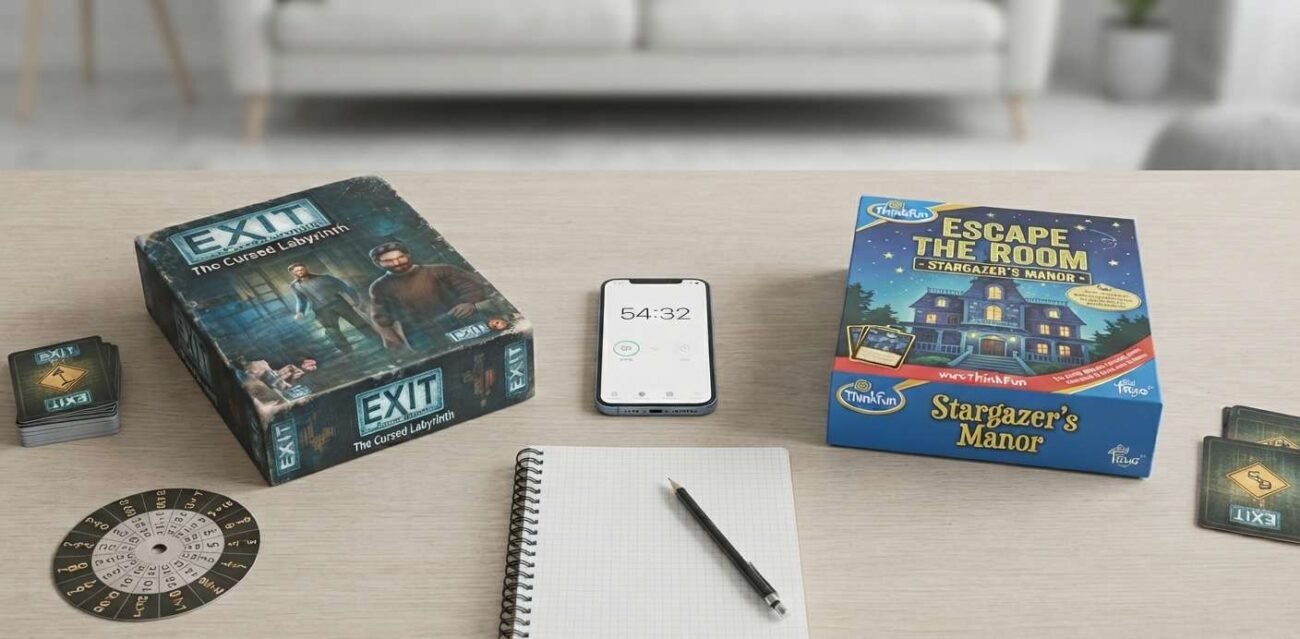
EXIT: The Game is a strong choice if your group enjoys tactile puzzles and does not mind a one-session experience. Thames & Kosmos describes the series as card-based and unplugged, with some components designed to be marked, folded, torn, or otherwise manipulated. For example, EXIT: The Professor’s Last Riddle supports 1 to 4 players, is aimed at ages 12 and up, and runs about 60 to 120 minutes.
ThinkFun’s Escape the Room line takes a different route. Murder in the Mafia supports 1 to 4 players, ages 14 and up, and is listed at about 90 to 120 minutes. Its box includes interactive objects, five chapters of puzzles, and a solution wheel.
So choose based on the kind of night you want. Pick EXIT for inventive physical puzzle work. Pick ThinkFun when you want a more object-driven mystery with a stronger staged story.
Set Up The Table Like A Real Puzzle Room
You do not need fake cobwebs, padlocks on every drawer, or a soundtrack full of thunder. You need a table that gives everyone access to the clues.
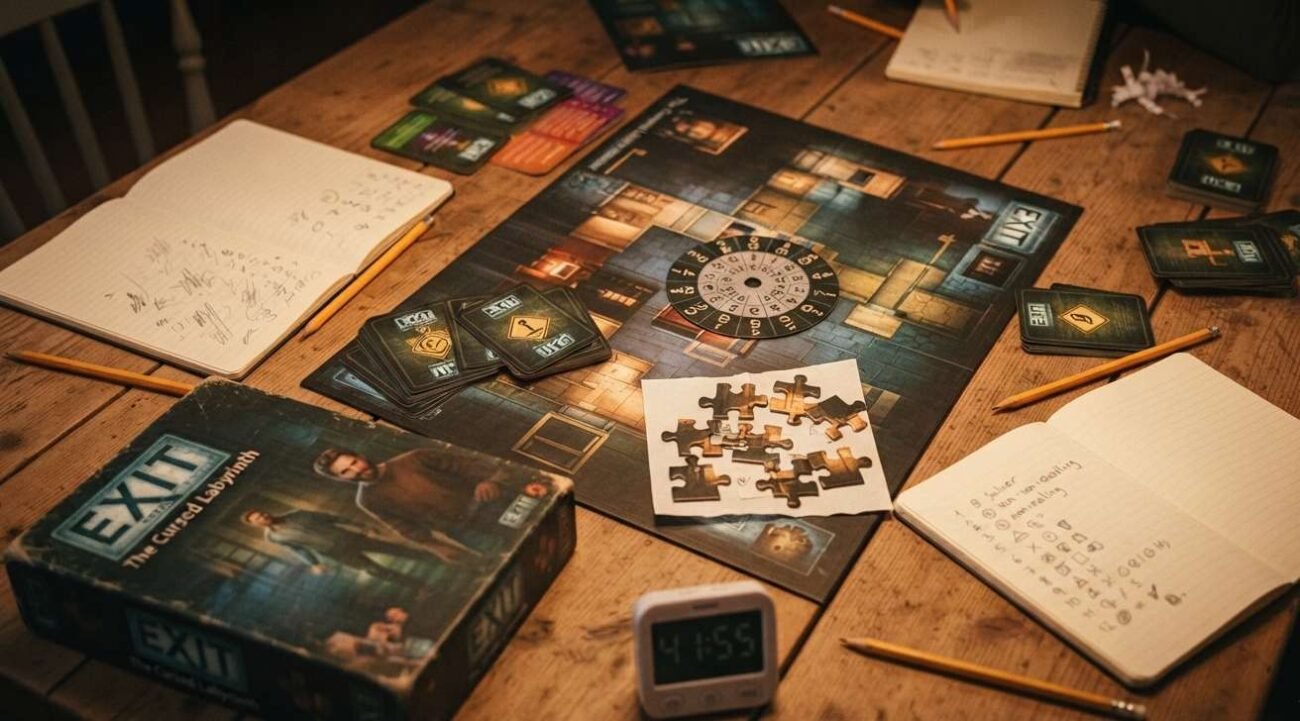
Clear one central space for shared evidence. Put pencils, scrap paper, a timer, and the rule sheet within reach. Keep phones away unless the specific game needs one. A messy table creates accidental difficulty because players lose track of which cards or objects have already been examined.
A four-player group works particularly well when everyone has a defined job. One person can inspect physical components, another can track codes, another can take notes, and another can test assumptions. Rotate those jobs instead of letting one fast solver dominate.
If you are building a larger home gaming space, choosing useful accessories for your game room can help, but you do not need expensive gear for an enjoyable puzzle night.
Use The Clock To Create Pressure Without Ruining The Fun
A timer should make your group focus, not make everyone panic.
For a 60 to 120 minute game, I would use a visible countdown and agree before starting that hints are allowed. The point is to solve the puzzle, not to prove that your group can stare at the same clue for twenty minutes without asking for help.
EXIT games are especially suited to this approach because the official product pages list play lengths and difficulty levels. EXIT: The Cursed Labyrinth, for example, is rated difficulty 2 of 5, supports 1 to 4 players, and is listed at 1 to 2 hours. That gives a newer group a much safer starting point than buying a box because its artwork looks mysterious.
Keep The Puzzle Solving Cooperative
Escape room board games at home work best when the table behaves like a team, not four separate competitors.
If someone finds a peculiar symbol, say it out loud. If another player has a theory, test it against the evidence. Do not hide information because you think you are about to solve everything yourself.
This matters with games built around linked clues. EXIT describes its format as a chain in which correct solutions uncover new riddles and objects. A player who keeps a clue secret can accidentally slow the entire table.
The best groups also separate confidence from evidence. Saying ‘I think this is the code’ is useful. Saying ‘this has to be the code’ when you have not checked the other clues is how puzzle nights turn into arguments.
Know When A One-Time Game Is Actually A Good Buy
Replayability sounds like an obvious buying factor, but for escape room games it can be misleading.
If the solution depends on knowing the answer, a second playthrough with the same group loses much of the mystery. EXIT embraces that limitation. Thames & Kosmos explicitly notes that components in some EXIT games may be marked, folded, torn, or manipulated during play.
That is not a flaw. It is part of the design. You are buying a two-hour joint experience rather than a game you expect to play every Friday for five years.
If you want a box that can move between groups, favor a non-destructive format. If your priority is a memorable single night, I would not let replayability talk you out of a great EXIT title.
Pick The Difficulty For Your Actual Group
Do not choose difficulty based on how clever your friends claim to be.
Choose based on whether they enjoy puzzle conventions. A group that plays logic games regularly will recognize patterns faster than a group that mainly plays party games, even if both groups are equally intelligent.
For a first attempt, a lower difficulty title is the safer choice. EXIT: The Cursed Labyrinth is rated 2 of 5, while EXIT: Dead Man on the Orient Express is rated 4 of 5 and runs 1 to 2 hours for 1 to 4 players. Those are very different starting points.
That difference is useful. Start easier, learn how the series communicates clues, then move up. Your first home escape game should make your group want another one, not make everyone wonder why they agreed to this.
Make The Evening Bigger Than The Box
The game should be the center of the evening, not the entire schedule.
Put out snacks that do not leave greasy fingerprints on cards. Give everyone a drink before the timer starts. Take a short break between chapters if the game allows it. After the final solution, talk about which clue fooled everyone.
This is also where a domestic setup has an advantage over a commercial escape room. You control the pace. You can pause for dinner, move to another table, or invite another pair of friends for the next box.
For a wider home gaming environment, building a setup without overspending holds the focus on experiences rather than decorative equipment.
Avoid These Three Hosting Mistakes
First, do not open every component before the group is ready. Many escape games depend on discovering information in sequence.
Second, do not let the strongest puzzle solver become the permanent leader. Ask quieter players what they see. A person who is not solving the obvious code may notice a pattern everyone else missed.
Third, do not refuse hints out of pride. A good hint system protects the evening. If your group spends fifteen minutes stuck on one connection, a small nudge can restore momentum but without giving away the whole puzzle.
For a longer multiplayer night, planning a cooperative game session around limited time can also help you keep the evening structured.
The best escape room board games at home turn the dining table into the main event.
For first-timers, escape room board games at home are easier to enjoy when the rules and difficulty are clear. That is why escape room board games at home work so well for date nights and small groups.
Quick Checklist
- Choose the game by group size and puzzle difficulty.
- Clear the table before opening the box.
- Keep pencils, scrap paper, and a timer ready.
- Decide how your group will request hints.
- Keep discovered information public unless the rules say otherwise.
- Do not expect a one-time escape game to deliver traditional replay value.
- Plan food and drinks that will not damage game components.
- Start with a lower difficulty if your group is new to the format.
Closing Thoughts
Escape room board games at home are not a cheaper copy of the real thing. They are a better option when what you really want is the puzzle-solving part.
You control the room, the people, the food, the pace, and the difficulty. A strong title such as EXIT can make an ordinary dining table into a two-hour problem-solving session. A ThinkFun title such as Murder in the Mafia can add physical objects and a chapter-based mystery for a different kind of group.
The winning formula is not complicated. Choose the right difficulty, give everyone a role, keep clues visible, and let the puzzles create the drama.
The best home escape room is the one your table is still arguing about after the timer stops.
For concrete product specifications, see the EXIT: The Professor’s Last Riddle product page from Thames & Kosmos and the ThinkFun Murder in the Mafia listing from Ravensburger.
For another EXIT example, compare the Cursed Labyrinth details and the Dead Man on the Orient Express details before choosing difficulty.
3 thoughts on “Escape Room Board Games At Home: The Best Way To Host A Puzzle Night”