

Lost Castle
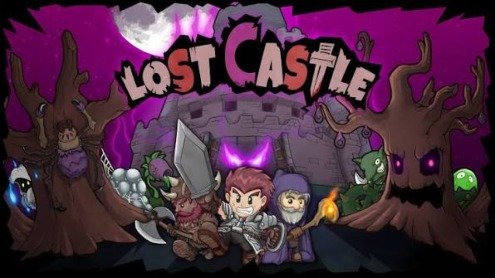
Lost Castle is a side-scrolling roguelite action RPG where treasure hunters enter randomized rooms inside corrupted Castle Harwood. Collect equipment, manage limited items, learn boss patterns, unlock permanent abilities, and play alone or with up to four players through supported local and online modes.
Lost Castle Roguelike Dungeon Crawler Action Game
Lost Castle is a side-scrolling action RPG where treasure hunters enter a corrupted fortress filled with randomized rooms, strange creatures, valuable equipment, unpredictable items, and challenging bosses. Each run gives the player a different combination of rooms and rewards, so success depends on adapting to what the castle provides.
The game can be played alone or with up to four players through supported local and online modes. Its combat follows the movement and crowd-control style of classic beat-em-up games, while its roguelite progression allows failed heroes to contribute toward permanent abilities for future attempts.
What Is Lost Castle?
Lost Castle is an action RPG developed by Hunter Studio and published by Neon Doctrine. The PC version launched on Steam on August 31, 2016. It combines side-scrolling beat-em-up action with randomized dungeon generation, equipment drops, permanent progression, cooperative multiplayer, and player-versus-player options. (Steam Store)
The adventure takes place inside Castle Harwood, once the center of a peaceful kingdom. Evil magic has corrupted the fortress, driven out its former rulers, and filled its rooms with demons and other dangerous creatures. Treasure hunters continue entering because the castle still contains the wealth of its defeated Earl. (Steam Store)
Players who enjoy direct side-view action can also try City Fighter vs Street Gang. Lost Castle adds randomized levels, RPG progression, equipment changes, and cooperative dungeon runs to the familiar beat-em-up structure.
How Lost Castle Gameplay Works
A normal run begins with a newly generated treasure hunter.
The character’s starting appearance and available equipment may differ from the previous attempt. You then enter Castle Harwood and move through connected rooms containing enemies, treasure containers, shops, events, recovery opportunities, and bosses.
A typical run follows this pattern:
- Enter the castle with a new treasure hunter.
- Learn the starting equipment’s basic actions.
- Clear the enemies blocking the current room.
- Collect food, money, items, armor, and replacement equipment.
- Choose between available routes when the dungeon branches.
- Manage health and limited supplies.
- Defeat the area boss.
- Continue into a more difficult section.
- Gain permanent progression after the run ends.
- Begin again with stronger unlocked abilities.
The randomized structure prevents players from memorizing one exact route. Familiar enemy behaviors remain useful, but room layouts and available rewards can change from one run to another.
Randomly Generated Dungeons
Lost Castle creates a different arrangement of rooms, items, enemies, and bosses across its runs. The official store description lists procedural dungeon generation as one of the game’s central features. (Steam Store)
Random generation affects several parts of the experience:
- Room order
- Enemy combinations
- Treasure availability
- Shops and events
- Equipment choices
- Recovery opportunities
- Boss encounters
- Optional routes
One run may provide strong equipment early but very little recovery. Another may offer several helpful items while delaying a useful armor upgrade.
This system makes flexibility more valuable than following one fixed plan.
Understanding the Room Structure
Most rooms must be cleared before the exit opens.
Enemies may enter from different parts of the screen, appear in groups, or combine several movement styles. Some rooms provide more open space, while others restrict movement through walls, objects, pits, or environmental features.
Before moving into the center, check:
- Where enemies are standing
- Which opponent is closest
- Whether another group can approach from behind
- How much open movement space is available
- Whether a dropped item is worth collecting immediately
- Where the next exit is located
Walking directly into the middle of every group can leave the character surrounded.
Side-Scrolling Beat-Em-Up Combat
Lost Castle uses the lane-based movement found in traditional beat-em-up games.
Characters move left and right while also shifting slightly upward or downward across the battlefield. This allows players to avoid standing directly in front of an approaching enemy.
The combat system includes normal actions, movement, jumping, equipment-based abilities, and special attacks. The exact actions depend on the current equipment and platform controls. Steam and console listings describe the game as retro beat-em-up action with a large collection of skills and special moves. (Steam Store)
Players looking for a wider selection of direct action characters can also visit Ultimate Heroes.
Lost Castle Controls
Exact button assignments differ between PC, Nintendo Switch, and PlayStation editions. PC players may also change their keyboard or controller layout.
| Action | Common Function |
|---|---|
| Move | Directional keys, stick, or movement buttons |
| Normal action | Primary action button |
| Equipment skill | Assigned skill button |
| Jump | Jump button |
| Use an item | Item button |
| Change selected item | Inventory or item-selection control |
| Pick up equipment | Interaction button |
| Open menu | Pause or menu button |
| Confirm a selection | Confirm button |
| Cancel or return | Cancel button |
Follow the control prompts shown by the version being played. Equipment can change the available attacks and skills, so learning the current item is more important than memorizing one permanent move list.
Moving Between Lanes
Vertical movement is one of the most useful defensive tools in Lost Castle.
Many enemy actions travel in a straight horizontal line. Moving slightly above or below that line can create space without forcing the player to retreat across the entire room.
Useful movement habits include:
- Approach from a different lane
- Move away before an enemy finishes its animation
- Avoid standing between two groups
- Leave space near the screen edge
- Reposition after completing a short combination
- Keep bosses near the center when possible
Remaining mobile is usually safer than continuing a long sequence while another enemy approaches.
Normal Actions and Combos
Normal actions are the most frequently used part of combat.
Repeated presses may create a short combination based on the currently equipped item. The final action in a sequence can leave the character unable to move briefly, so continuing every combo to its end is not always safe.
Use shorter sequences when:
- Several enemies are nearby
- A boss is preparing another move
- The player is close to a wall
- Another enemy is approaching from behind
- Health is already low
Longer combinations become safer after an opponent is isolated or unable to respond.
Jumping
Jumping can avoid certain ground-level actions and help reposition the character.
It should not be used continuously without watching the landing area. Jumping away from one opponent can place the character directly beside another.
Before jumping, check:
- Where the character will land
- Whether another enemy occupies that lane
- Whether the current equipment includes an aerial action
- Whether the boss is creating a large area effect
- Whether a teammate needs space
A controlled landing is more useful than repeatedly moving through the air.
Equipment Skills
Different equipment can provide different special abilities.
Some may support close-range action, while others create space, reach a distant target, affect a wider area, or provide another temporary benefit. Lost Castle’s official listings emphasize its large variety of skills, special attacks, equipment, and armor combinations. (Steam Store)
Use the early rooms to understand a newly collected item before entering a boss encounter.
Pay attention to:
- Activation speed
- Recovery time
- Effective distance
- Whether movement is possible during the skill
- Whether the action affects one target or a group
- Whether the skill has a cooldown
- Whether it changes the character’s position
The strongest-looking item is not automatically the most comfortable one for every player.
Random Equipment
Lost Castle contains a large loot pool.
The current Steam listing advertises more than 190 equipment options and over 60 armor sets, while earlier console descriptions listed more than 150 and 50 respectively. The difference reflects content added across updates and editions. (Steam Store)
Equipment affects more than visual appearance.
A new item may change:
- Normal action speed
- Reach
- Special skill
- Movement during attacks
- Area coverage
- Character statistics
- Preferred distance from enemies
Experimenting with different drops is part of each run.
Armor and Character Appearance
Armor provides statistical benefits and changes how the treasure hunter looks.
A complete set may support a particular type of build, but random drops mean the player cannot always depend on finding the same set during every attempt.
When comparing armor inside the game, consider:
- Current health
- Defensive value
- Other statistical changes
- Whether the current equipment benefits from the item
- How far the run has progressed
- Whether another player needs it more in cooperative mode
Do not keep weaker armor only because its appearance matches the character.
Consumable Items
Lost Castle includes more than 100 items in its current PC version. These can provide recovery, temporary effects, utility, or unusual results. (Steam Store)
Some items are immediately understandable, while others encourage experimentation.
A useful item-management approach is:
- Keep recovery items for serious health loss.
- Test unknown items in a relatively safe room.
- Avoid wasting limited effects on one weak enemy.
- Check whether the item affects nearby teammates.
- Remember useful item appearances for future runs.
- Do not leave a better item behind accidentally.
Inventory space and item availability can make decisions more difficult later in a run.
Potions and Uncertain Effects
The game includes more than 60 potions in its current Steam version. Their effects may be useful, harmful, or humorous. (Steam Store)
Unknown potions create a risk-and-reward choice.
Using one may provide a valuable improvement, but it can also cause an inconvenient temporary effect. Players should avoid testing an unknown potion immediately before a difficult room when their current condition is already manageable.
Once a potion’s effect becomes familiar, recognizing it in later runs can make decisions easier.
Food and Recovery
Health recovery is limited, making food and restorative items valuable.
Do not automatically collect every recovery drop when only a small amount of health is missing. In some situations, it may remain available until the room is cleared and can be collected afterward.
During cooperative play, the player with the lowest health may need the food more than the person who reached it first.
Good recovery management often determines whether a party reaches the next boss.
Gold and Shops
Gold collected during a run can be spent at available shops or special rooms.
A shop may offer equipment, armor, food, consumable items, or another temporary advantage. Inventory varies, so the same purchase is not guaranteed to appear every time.
Before buying, consider:
- Current health
- Quality of existing equipment
- Distance to the next major encounter
- Cost of other available items
- The needs of teammates
- Whether saving money may be useful later
A small recovery purchase can be more valuable than an exciting equipment change when the character is close to losing the run.
Boss Encounters
Bosses appear as major tests at important points in the castle.
Each has recognizable movement patterns, pauses, and special actions. Randomized progression means players may not encounter every boss in the same order.
A reliable boss-learning process is:
- Keep some distance at the beginning.
- Watch one complete action cycle.
- Move between lanes instead of standing directly ahead.
- Respond during clear pauses.
- Avoid continuing a combination when the boss begins moving.
- Save limited recovery for real damage.
- Use special abilities when the boss is in a stable position.
- Repeat patiently after an unsuccessful run.
Bosses become more manageable after their visual signals are familiar.
Crowded Enemy Rooms
Normal enemy groups can sometimes be more difficult than one large boss.
Several smaller enemies may surround the player, interrupt actions, or attack from different lanes.
To manage a crowded room:
- Move toward open space
- Keep enemies on one side when possible
- Avoid the screen corners
- Use wide in-game abilities when several targets gather
- Separate faster enemies from slower ones
- Watch for ranged pressure
- Reposition before collecting drops
The objective is to reduce the number of active threats rather than attempting to handle the whole group at once.
Death and Roguelite Progression
A failed treasure hunter does not end all progress.
Lost Castle allows dead heroes to be sacrificed so later characters can gain new abilities. This permanent progression is one of the systems that separates it from a traditional arcade beat-em-up. (Steam Store)
Future attempts can therefore begin with useful improvements earned through earlier runs.
Permanent progression may support areas such as:
- Starting strength
- Health
- Resource value
- Item usefulness
- Additional opportunities
- Wider character abilities
The exact upgrade path should be reviewed inside the game because different versions and progression stages may display different choices.
Learning From Failed Runs
Failure is expected in a roguelite game.
A lost run can still provide useful information about:
- Enemy behavior
- Boss signals
- Equipment skills
- Potion effects
- Room types
- Useful shop purchases
- Cooperative team roles
- Permanent upgrade priorities
Instead of repeating the exact same approach, identify the moment where the run became difficult.
A player who regularly loses health in ordinary rooms may need better movement habits. Someone reaching bosses safely but failing there may need more patience during attack openings.
Permanent Upgrades
Permanent abilities make future runs more manageable, but they do not remove the need for careful play.
Upgrade choices should support the problem that appears most often.
| Common Problem | Helpful Upgrade Focus |
|---|---|
| Health runs out early | Durability or recovery support |
| Progress feels slow | Resource or reward improvements |
| Starting rooms feel difficult | Early character strength |
| Good items rarely appear useful | Item-related progression |
| Boss attempts end quickly | Survival and damage balance |
| Cooperative runs feel uneven | Broad upgrades benefiting different setups |
A balanced upgrade path is normally better than spending everything on one narrow improvement.
Single-Player Mode
Lost Castle can be completed alone.
Solo play gives one player complete control over movement, equipment choices, food, routes, and shop purchases.
Advantages of playing alone include:
- No competition for drops
- Easier visual tracking
- Full control of the pace
- Simpler boss positioning
- Freedom to pause between decisions
- Consistent item planning
The disadvantage is that every enemy focuses on one character. There is no teammate to create space or recover the run after a mistake.
Cooperative Multiplayer
Lost Castle supports up to four players online and locally on supported platforms. Steam includes online and shared-screen cooperative modes, while Nintendo Switch supports one to four players on one system and one to four players online. (Steam Store)
Cooperative play changes the dungeon significantly.
Players can:
- Cover different lanes
- Divide enemy attention
- Share food and useful drops
- Combine equipment skills
- Help control crowded rooms
- Coordinate boss movement
- Revive or support one another when the mode allows
Communication becomes important because the group shares limited resources.
Sharing Items in Cooperative Play
The person standing closest to a drop should not always collect it automatically.
Before taking an item, check:
- Who has the lowest health
- Which player’s equipment is weakest
- Whether someone’s current setup works better with it
- Who already has several recovery items
- Whether the item could support the whole group
- Whether the team is approaching a boss
Balanced parties often survive longer than one powerful player surrounded by poorly equipped teammates.
Cooperative Positioning
Four players and several enemies can make the screen difficult to read.
Spread across nearby lanes rather than standing in one exact position.
A useful team arrangement may include:
- One player controlling the front
- One player covering another lane
- One player responding to enemies approaching from behind
- One player saving a wide ability for crowded moments
The group should still remain close enough to help each other.
Online Multiplayer Requirements
Online play depends on the platform.
Steam provides online cooperative and player-versus-player support. PlayStation supports up to four online players, but online play requires PlayStation Plus. Nintendo Switch also supports up to four online players and requires the appropriate Nintendo Switch Online service. (Steam Store)
A stable connection helps reduce delays during fast rooms.
When friends cannot join, check:
- Game version
- Region or lobby settings
- Invite permissions
- Platform subscription
- Firewall or network restrictions
- Whether everyone owns required downloadable content
- Whether the lobby is already full
Local Multiplayer
Local cooperative play allows several people to share one system.
Steam supports shared-screen play, while Nintendo Switch lists up to four players on one console. PlayStation also lists one to four players. (Steam Store)
Local play works well because every participant can discuss equipment and routes directly.
Each player normally needs a suitable controller or input method supported by the platform.
Player Versus Player Mode
Lost Castle also includes PvP options.
Steam lists online PvP and shared-screen PvP, while the main feature list describes both cooperative and player-versus-player modes for four participants. (Steam Store)
PvP uses the same fictional action systems but shifts the focus from dungeon survival to competition between treasure hunters.
The exact rules may depend on the selected mode and version.
Daily Challenges
The PC version includes Daily Challenges for treasure hunters.
These challenges can change the normal conditions and give experienced players another reason to return after completing standard runs. Steam lists Daily Challenges among the main game features. (Steam Store)
A daily challenge may place greater importance on:
- One equipment type
- A modified rule
- A particular enemy group
- Limited resources
- Score improvement
- Faster completion
- Cooperative coordination
Daily content may require an online connection to retrieve the current challenge.
The Old Ones Awaken DLC
The Old Ones Awaken is an expansion for the original Lost Castle.
The Steam DLC launched on September 28, 2020. It adds two large areas, nine bosses, twenty enemy types, thirty-four additional equipment options, and seven armor sets. The Nintendo Switch version of the DLC was released on February 16, 2024. (SteamStore)
The expansion requires the base game.
It is best suited to players who already enjoy the original dungeon structure and want more late-game variety.
Base Game Versus The Old Ones Awaken
| Lost Castle Base Game | The Old Ones Awaken |
|---|---|
| Required to play | Requires the base game |
| Main Castle Harwood adventure | Expands areas beneath the castle |
| Large randomized loot pool | Adds more equipment and armor |
| Original enemy and boss groups | Adds twenty enemy types |
| Standard dungeon regions | Adds two large levels |
| Core progression system | Extends the challenge |
| Included with a normal purchase | Sold separately or through Deluxe bundles |
Players should confirm DLC ownership when a friend’s online lobby uses expansion content.
Lost Castle on PC
The PC version is available through Steam for Windows and macOS.
Steam lists:
- Single-player
- Online cooperative play
- Shared-screen cooperative play
- Online PvP
- Shared-screen PvP
- Steam Cloud
- Remote Play Together
- Family Sharing
- Ninety-eight Steam achievements
- Nine supported interface languages (Steam Store)
The current Steam client requires a modern supported operating system even though the game’s original minimum requirements mention older Windows versions.
Lost Castle on Nintendo Switch
The Nintendo Switch version launched on September 19, 2019.
Nintendo lists:
- One to four players on one system
- One to four players online
- TV mode
- Tabletop mode
- Handheld mode
- Save Data Cloud
- A 1.3 GB file size
- Nintendo Switch 2 compatibility
- Ten listed language variants (닌텐도 홈페이지)
Online multiplayer requires Nintendo Switch Online.
The portable format suits shorter dungeon attempts, while TV mode gives local players more screen space.
Lost Castle on PlayStation
The PlayStation 4 edition was released in September 2019.
The PlayStation Store lists one to four players, optional online play, support for up to four online players, and DUALSHOCK 4 vibration. Online multiplayer requires PlayStation Plus. The PS4 version can also run on PS5 through backward compatibility, although some PS4 features may not be available. (PlayStation Store)
No separate native PS5 edition is listed on the official store page used here.
Is Lost Castle Available on Mobile?
A standard native Android or iOS edition is not listed on the official Steam, Nintendo, or PlayStation pages used for this description.
Steam includes Remote Play on supported phones and tablets, but that feature streams the PC game rather than providing a separate mobile edition. (Steam Store)
A browser or mobile page using the same title may contain another game, a streaming service, or an unofficial adaptation.
Is Lost Castle a Browser Game?
Lost Castle was designed as a downloadable computer and console game.
The official version does not normally run as a standard free browser title.
A Gam-core page using this name may present information, an embedded service, or another adaptation. Check the developer name and in-game presentation.
The official game described here is the Hunter Studio title set in Castle Harwood.
Graphics and Presentation
Lost Castle uses colorful hand-drawn 2D characters and environments.
The art combines cartoon humor with dark fantasy locations. Character equipment changes are visible, helping players recognize what each treasure hunter is currently using.
Steam and Nintendo both highlight the hand-drawn presentation as a main feature. (Steam Store)
The visual style keeps the action readable while allowing enemies, bosses, treasure, food, and equipment to remain clearly different.
Sound and Feedback
Sound effects help confirm:
- Successful actions
- Enemy contact
- Item collection
- Equipment skills
- Boss transitions
- Room completion
- Shop purchases
- Character defeat
Music changes the mood as players move between ordinary rooms and larger encounters.
Important information is also shown visually, so players can still follow the game at a moderate volume.
Age Rating and Content
Nintendo gives Lost Castle an ESRB rating that includes Blood, Use of Alcohol, and Violence. The PlayStation listing also identifies violence-related content. (닌텐도 홈페이지)
The game uses a cartoon fantasy style rather than realistic presentation, but parents and younger players should still follow the rating shown in their regional store.
Online multiplayer may include interaction with other users, depending on platform communication settings.
Who Should Play Lost Castle?
Lost Castle suits players who enjoy:
- Side-scrolling action games
- Roguelite progression
- Randomized dungeons
- Beat-em-up combat
- Cooperative multiplayer
- Equipment experimentation
- Boss challenges
- Short repeatable runs
- Permanent upgrades
- Hand-drawn fantasy games
Players who prefer survival exploration can try TEGRA Zombie Survival Island. Those looking for slower room-based problem-solving may enjoy Escape Game Basic.
More action, role-playing, multiplayer, survival, and casual titles are available in the Gam-core games collection.
Honest Strengths and Limitations
| Strengths | Possible Limitations |
|---|---|
| Randomized rooms improve replay value | Unlucky drops can make a run harder |
| Supports solo and four-player play | Multiplayer screens can become crowded |
| Equipment changes the available actions | New items take time to understand |
| Permanent upgrades reward failed runs | Early attempts may feel difficult |
| Beat-em-up movement is easy to recognize | Precise positioning requires practice |
| Large item and armor collection | Comparing frequent drops can slow the pace |
| Bosses reward pattern learning | Repeating a failed section may frustrate some players |
| Local and online cooperative modes | Online play may require platform subscriptions |
| Daily Challenges add another mode | Current challenges may need an internet connection |
| Hand-drawn graphics remain readable | Visual effects can become busy with four players |
| DLC expands the base game | The expansion is a separate purchase |
| Available on PC, Switch, and PlayStation | No standard native mobile edition is listed |
Tips for Playing Lost Castle Better
Learn the Current Equipment First
Test its normal action and special skill before entering a difficult room.
Move Between Lanes
Many enemy actions can be avoided by moving slightly upward or downward.
Do Not Finish Every Combination
Stop early when another enemy is approaching.
Keep Space Behind the Character
Standing against the edge makes escaping more difficult.
Save Recovery Items
Use them when the missing health is large enough to justify the full effect.
Read Enemy Animations
Most dangerous actions provide a short visual warning.
Avoid Collecting Everything Immediately
Clear nearby threats before walking toward a drop.
Use Shops According to the Run
Buy recovery when health is low instead of waiting only for exciting equipment.
Share Fairly in Cooperative Mode
Give food and useful drops to the player who benefits most.
Keep the Team in Nearby Lanes
Players should spread out without becoming completely separated.
Accept Unsuccessful Runs
Permanent progression and gameplay knowledge both support the next attempt.
Change One Habit at a Time
Focus on movement, item use, or boss timing rather than trying to improve everything at once.
Lost Castle Game Information
| Detail | Information |
|---|---|
| Game title | Lost Castle |
| Developer | Hunter Studio |
| Publisher | Neon Doctrine |
| PC release date | August 31, 2016 |
| Nintendo Switch release | September 19, 2019 |
| PlayStation 4 release | September 2019 |
| Genre | Action RPG, beat-em-up, roguelite |
| Perspective | 2D side view |
| Main setting | Castle Harwood |
| Player role | Treasure hunter |
| Dungeon structure | Randomly generated |
| Main modes | Single-player, co-op, PvP, and Daily Challenges |
| Maximum players | Four |
| Local multiplayer | Supported |
| Online multiplayer | Supported |
| Permanent progression | Abilities gained from failed heroes |
| Current Steam items | More than 100 |
| Current Steam potions | More than 60 |
| Current Steam equipment options | More than 190 |
| Current Steam armor sets | More than 60 |
| Steam achievements | 98 |
| Expansion | The Old Ones Awaken |
| Main platforms | Windows, macOS, Nintendo Switch, and PlayStation 4 |
| Native mobile edition | Not officially listed |
| Browser edition | Not the standard official format |
The developer, publisher, dates, game modes, content totals, platform support, and expansion details are documented by Steam, Nintendo, and PlayStation. (Steam Store)
Frequently Asked Questions
What Type of Game Is Lost Castle?
Lost Castle is a side-scrolling action RPG with roguelite progression, randomized dungeons, equipment drops, bosses, and cooperative multiplayer.
Who Developed Lost Castle?
Lost Castle was developed by Hunter Studio and published by Neon Doctrine. (Steam Store)
When Was Lost Castle Released?
The Steam version launched on August 31, 2016. Nintendo Switch and PlayStation versions followed in September 2019. (Steam Store)
What Is the Story of Lost Castle?
Castle Harwood has been corrupted by evil magic and occupied by demons. Treasure hunters enter the fortress searching for the Earl’s lost riches and the source of the corruption. (Steam Store)
Is Lost Castle Randomized?
Yes. Dungeons, items, enemies, and bosses are generated differently across runs. (Steam Store)
Is Lost Castle a Roguelike?
It uses roguelike and roguelite systems, including randomized runs, lost progress after defeat, and permanent abilities that help future characters.
Can Lost Castle Be Played Alone?
Yes. The full dungeon adventure supports single-player play.
Does Lost Castle Have Multiplayer?
Yes. Supported versions include local and online cooperative play for up to four players. Steam also includes PvP modes. (Steam Store)
Can Four People Play on One System?
Yes. Steam supports shared-screen play, Nintendo Switch supports one to four players on one system, and PlayStation lists one to four players. (Steam Store)
Does Lost Castle Have Online Co-op?
Yes. Online cooperative play supports up to four players on compatible platforms.
Does Online Play Require a Subscription?
Steam online play does not require a separate console subscription. PlayStation requires PlayStation Plus, while Nintendo Switch requires Nintendo Switch Online. (닌텐도 홈페이지)
What Happens When the Character Is Defeated?
The current run ends, but the failed hero can contribute toward permanent abilities that help later treasure hunters.
Does Lost Castle Have Permanent Upgrades?
Yes. Sacrificing failed heroes allows future characters to gain additional abilities. (Steam Store)
How Many Items Are in Lost Castle?
The current Steam description lists more than 100 items and more than 60 potions. (Steam Store)
How Much Equipment Is Available?
Steam lists more than 190 equipment options and over 60 armor sets in the current PC version. Console descriptions may show smaller earlier totals. (Steam Store)
Does Lost Castle Have Bosses?
Yes. Boss encounters appear throughout the randomized dungeon progression.
What Are Daily Challenges?
Daily Challenges provide changing conditions for treasure hunters and offer another way to replay the game. (Steam Store)
What Is The Old Ones Awaken?
The Old Ones Awaken is an expansion adding two areas, nine bosses, twenty enemy types, thirty-four equipment options, and seven armor sets. (Steam Store)
Does the DLC Require the Base Game?
Yes. The Old Ones Awaken cannot be played without Lost Castle. (Steam Store)
Is Lost Castle Available on Nintendo Switch?
Yes. The Switch edition supports handheld, tabletop, and TV modes, along with local and online multiplayer for up to four players. (닌텐도 홈페이지)
Is Lost Castle Available on PlayStation?
Yes. The PS4 version supports one to four players and optional online multiplayer. It is also playable on PS5 through backward compatibility. (PlayStation Store)
Is Lost Castle Available on Mobile?
A native Android or iOS edition is not listed on the official store pages. Steam Remote Play can stream the PC version to supported mobile devices.
Is Lost Castle Free?
Lost Castle is normally sold as a paid PC or console game. Prices and discounts vary by store and region.
Is Lost Castle Suitable for Younger Players?
The Nintendo edition is rated for Blood, Use of Alcohol, and Violence. Parents should review the regional age rating and online settings before play. (닌텐도 홈페이지)




Reviews
There are no reviews yet.